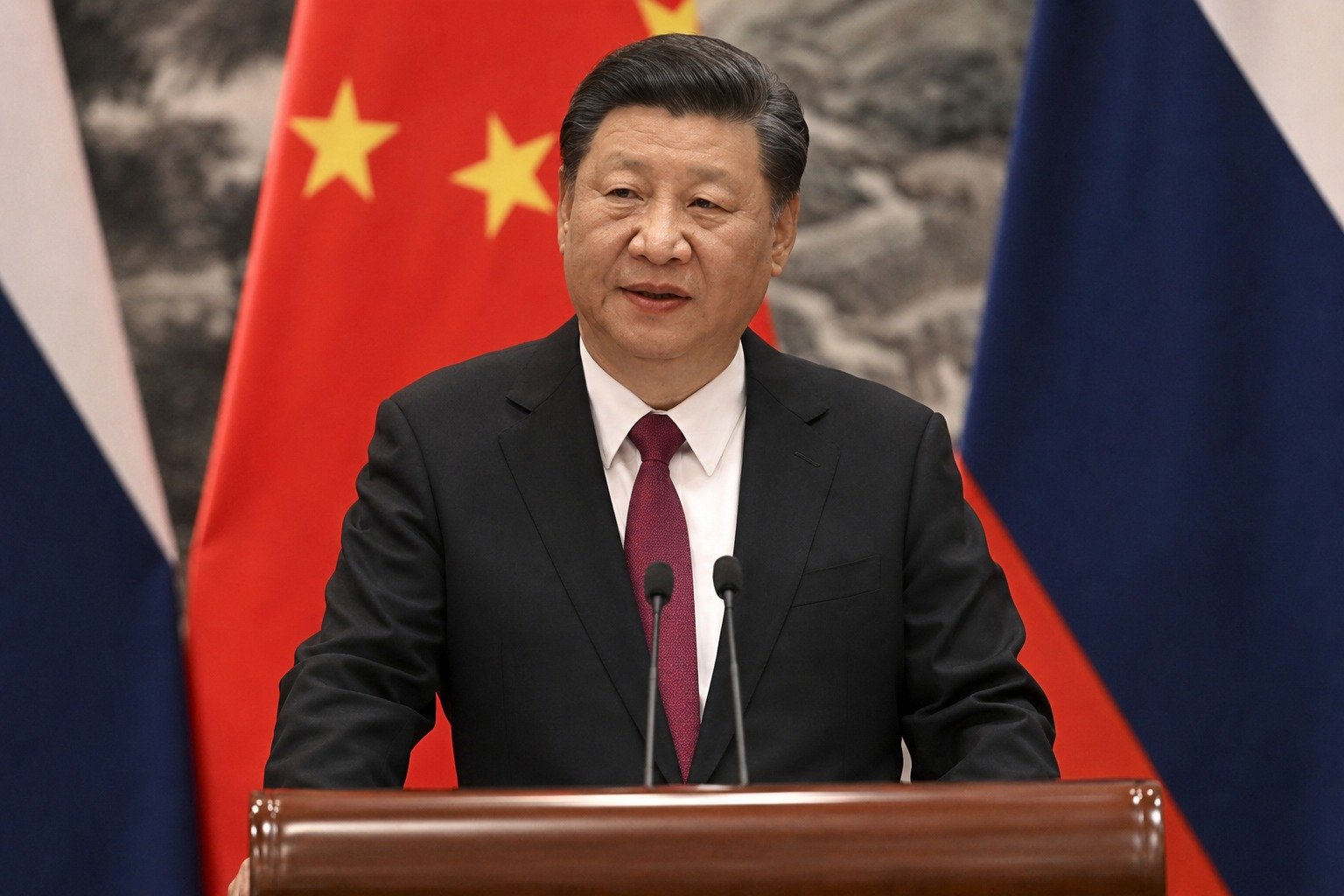
China is making one of its boldest diplomatic moves yet in the Middle East. In the weeks following the US-Israeli war against Iran, Chinese President Xi Jinping unveiled a four-point initiative aimed at what Beijing describes as “peace and stability” across the region. Laid out in a series of conversations with Gulf leaders, the plan signals that China wants to be seen as a steady mediator at a moment when the region is reeling from conflict.
What Xi Actually Proposed
According to Chinese state readouts, Xi’s framework rests on two central ideas: national sovereignty and non-interference. Beijing argues that no country’s borders should be violated and that externally driven “regime change” is the wrong model for resolving the region’s disputes. Instead, Xi has encouraged the Gulf states to develop their own shared security architecture rather than leaning on Western military power to guarantee their safety.
The initiative also calls on both Israel and Iran to de-escalate, with China offering itself as a potential go-between. It is a posture Beijing has cultivated for years, most notably when it helped broker a 2023 diplomatic thaw between Saudi Arabia and Iran. The latest proposal extends that brand of mediation into the fallout from a far more dangerous flashpoint.
A Deliberate Balancing Act
One of the most striking features of Xi’s messaging is what it avoids. China has been careful not to single out any one nation as the region’s villain. Beijing maintains working relationships with the United States, Israel, Iran, and the Gulf Arab states all at the same time, and that balancing act appears to be the entire point. Where Washington has spent decades framing Iran as the core threat to regional order, Xi has advanced a different narrative — one that treats outside military intervention itself as the primary destabilizing force.
That framing matters. It allows China to position itself as an alternative to the US-led security order without directly attacking any single government. By emphasizing sovereignty and non-interference, Beijing appeals to Gulf governments that have grown wary of being drawn into wars not of their choosing, while still leaving the door open to continued cooperation with everyone in the region.
The Economic Engine Behind the Diplomacy
China’s interests in the Middle East are not abstract. The region is central to Beijing’s energy security and to its sprawling Belt and Road infrastructure ambitions. China is one of the largest buyers of Gulf oil, and stability in the region directly affects the prices and supply chains that keep its economy running. Every diplomatic overture carries an economic subtext: locking in long-term energy deals and deepening trade ties with some of the world’s wealthiest states.
Critics and Supporters Are Split
Reaction to the initiative breaks along familiar lines. Critics see a power grab dressed up as diplomacy — a calculated effort to lock in oil contracts and gradually pry the Gulf away from Washington’s orbit. They point out that China rarely shoulders the security burdens that come with regional influence, preferring to reap economic rewards while others police the sea lanes and respond to crises.
Supporters counter that Beijing is offering a genuine alternative to a cycle of Western-backed conflict that has destabilized the region for a generation. To them, a great power emphasizing sovereignty, de-escalation, and economic partnership over military intervention is exactly what the Middle East needs. Whichever interpretation proves correct, the underlying fact is hard to dispute: the world’s second-largest economy has planted its flag firmly in the most volatile region on Earth.
What This Means for Americans
For everyday Americans, the stakes are real even from thousands of miles away. The Middle East still shapes the price of gas at the pump, the stability of global markets, and the security commitments that draw US forces overseas. If China succeeds in reshaping the region’s security order, it could shift the balance of global influence in ways that ripple through American foreign policy, defense spending, and energy costs for years to come.
The open question is whether Xi’s peacemaker pitch represents a sincere path to stability or a strategic maneuver to push the United States out. The answer will play out over the months ahead, in boardrooms, oil markets, and capitals across the region.
Stay informed on the stories that matter most. Follow Your Daily Updates on Facebook and bookmark yourdailyupdates.news for breaking news and analysis.