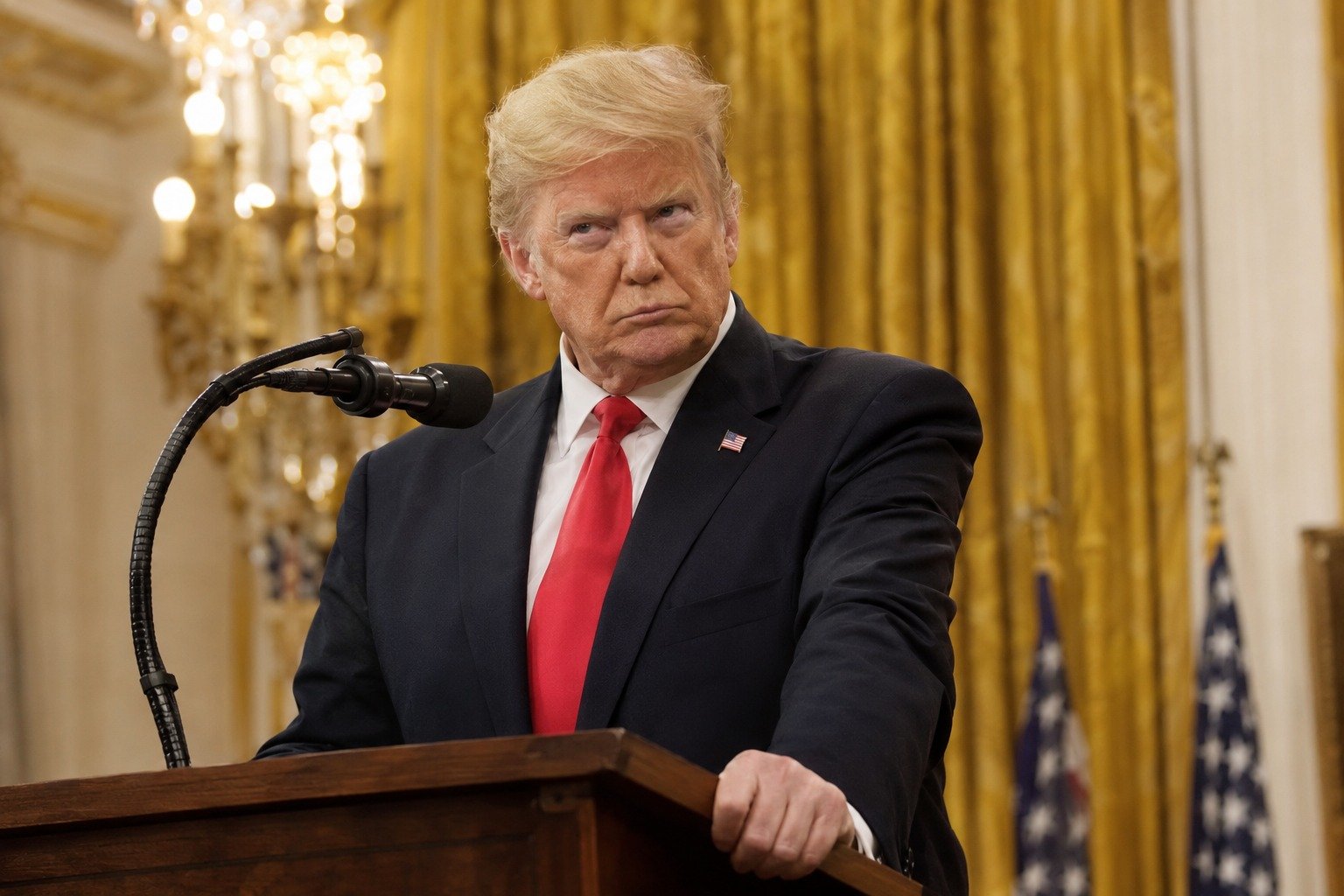
President Donald Trump stood before reporters at the White House on Friday, Nov. 20, and delivered a message that sounded less like a plan for the next two years than a warning. “I wasn’t on the ballot, I hope you remember that,” he said, according to The Hill, just weeks after Democrats won control of the House and flipped Senate seats in the Nov. 3 midterm elections.
Then he went further. Speaking about the incoming Democratic majority, Trump told reporters: “They could go two years and one month, because that’s what we have, and I’m going to veto them,” CNN reported.
A Midterm Rebuke He Says Wasn’t About Him
Midterm elections have long been treated as a referendum on the sitting president and the party in power. This year, voters delivered a clear result: Democrats took the House and picked up seats in the Senate. The outcome hands Democrats real leverage in Washington for the remainder of Trump’s term, including control over which bills move through the House and the power to conduct oversight of the administration.
Trump rejected the idea that the results reflected on him personally. “If I were on the ballot, it would have been a whole different story,” he said, according to CBS News. The Hill described the president as “in a sour mood” during the news conference, which came as the White House adjusted to the new balance of power on Capitol Hill.
The Veto Threat
The most striking moment came when Trump addressed what the new Democratic majority might try to pass. His answer was not an invitation to negotiate, but a promise to block. “They could go two years and one month, because that’s what we have, and I’m going to veto them,” he said.
A presidential veto can only be overridden by a two-thirds vote in both the House and the Senate, a high bar in a closely divided Congress. That means a president determined to veto legislation can stop much of what reaches his desk. Trump’s remark signaled that he is prepared to use that power broadly against the people voters just elected.
At the same time, Trump floated the possibility of working with Democrats on several issues. He mentioned potential deals on health care, a tax credit for film and television production, college sports reform and immigration, though he offered few details on any of them, according to CNN and The Hill. He also had a kind word for House Democratic leader Hakeem Jeffries, calling him “a smart guy,” CBS News reported.
Miller’s Prediction and an Unexpected Question
Stephen Miller, now serving as White House chief of staff, struck an upbeat tone, saying the next two years “are going to be the greatest two years in American history.” Trump then turned to Miller and asked him, “Do you want to run for president?” according to The Hill and CBS News.
The exchange underscored the mixed signals coming from the White House: a president promising to veto the opposition’s agenda, while also teasing deals and praising the opposing party’s House leader in the same appearance.
Reactions and What Comes Next
For Democrats, the president’s comments set up a clear test. With control of the House, they can pass their own priorities, from health care to worker protections, and force the White House to decide whether to sign or veto them in full public view. Every veto becomes a record that voters can see heading into the 2028 elections.
For the White House, the question is whether Trump will follow through on the deals he floated or whether the next two years become a cycle of bills passed and vetoed. Trump did not lay out a specific legislative agenda for working with the new Congress, and the details of any potential agreements remain unclear.
What This Means for Americans
Voters went to the polls on Nov. 3 and changed who controls the House. A president who answers that result by promising to veto the newly elected majority for the rest of his term is telling those voters their choice may not translate into new laws. Issues like health care costs and immigration affect millions of families, and progress on them now depends on whether the White House is willing to work with Congress or is committed to gridlock. Americans deserve leaders who respond to election results by governing, not by stonewalling.
Stay informed on the stories that matter most. Follow Your Daily Updates on Facebook and bookmark yourdailyupdates.news for breaking news and analysis.