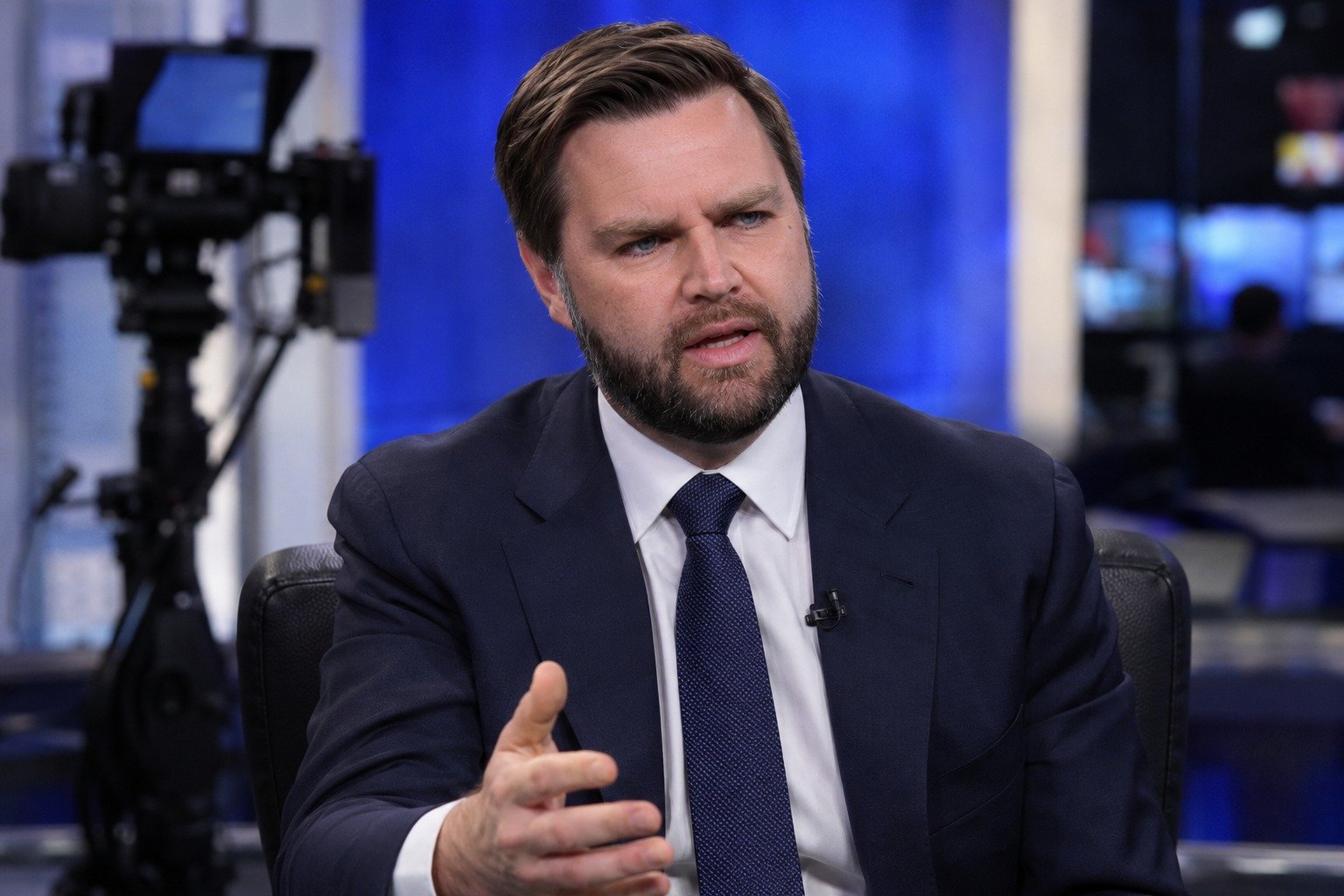
Vice President JD Vance told a national television audience on Monday, Nov. 16, that President Trump “is not going to let this become a forever war” with Iran. But in an interview with Fox News host Laura Ingraham, Vance did not say when the war will end – and offered no timeline at all.
The comments come as the conflict approaches its ninth month, with American personnel killed, a third U.S. aircraft carrier now in the region, and a clear majority of the public saying they want Congress to act to end it.
What Vance Said
Vance tried to reassure viewers that the administration does not intend an open-ended commitment. “We are not going to allow this to become a 10- or 15-year commitment, or frankly even a two-year commitment,” he said.
He added that he has “full confidence the president will get us out of this thing with great results.” What he did not provide was a date, a deadline, a set of conditions, or any benchmark the public could use to judge whether the war is winding down.
Some coverage of the interview framed Vance’s remarks as a promise to end the war before 2028. That is not what he said. His words set an outer limit of “even a two-year commitment” – he did not commit to any end date.
A War Nearing Its Ninth Month
The war with Iran is now about eight months old. According to Iran International, Iranian attacks have killed at least 23 American personnel – service members who answered their country’s call and whose families are now living with that loss.
Rather than drawing down, the U.S. military presence in the region is growing. The aircraft carrier USS Theodore Roosevelt arrived in the Middle East on Nov. 15-16, making it the third U.S. carrier deployed there. More carriers mean more sailors, more aviators, and more American families waiting at home.
Vance Has Already Named the Political Cost
This is not the first time Vance has spoken bluntly about the war. On Nov. 4, after Republicans suffered losses in the midterm elections, Vance pointed directly at the conflict. “The reason we lost is the war,” he said.
That admission makes Monday’s interview stand out. The vice president has acknowledged that the war is unpopular enough to cost his party at the ballot box. Yet when asked how it ends, the answer was confidence in “great results” – not a plan the public can see.
What the Public Wants
Americans have been clear. A post-election Reuters/Ipsos poll found that 71% of adults support legislation to end the war – including 51% of Republicans. That is not a partisan split. It is a broad, cross-party demand for a defined exit.
The Constitution gives Congress the power to declare war and control military funding. With nearly three-quarters of the country backing legislation to end the conflict, the question of who sets the end date is no longer abstract.
Supporters of the administration will point to Vance’s assurance that the war will not stretch into years. Critics will point to the same interview and note that a promise without a timeline is difficult to hold anyone to. Both sides can agree on one thing: the vice president did not say when it ends.
What This Means for Americans
Every month a war continues, it is paid for with American tax dollars and, far more painfully, with the safety of the men and women in uniform. Telling the country it won’t be a “forever war” is not the same as telling it when the troops come home. Those deployed and their families deserve specifics, and voters deserve to know what “great results” actually means before more is asked of them. Accountability starts with a timeline.
Stay informed on the stories that matter most. Follow Your Daily Updates on Facebook and bookmark yourdailyupdates.news for breaking news and analysis.