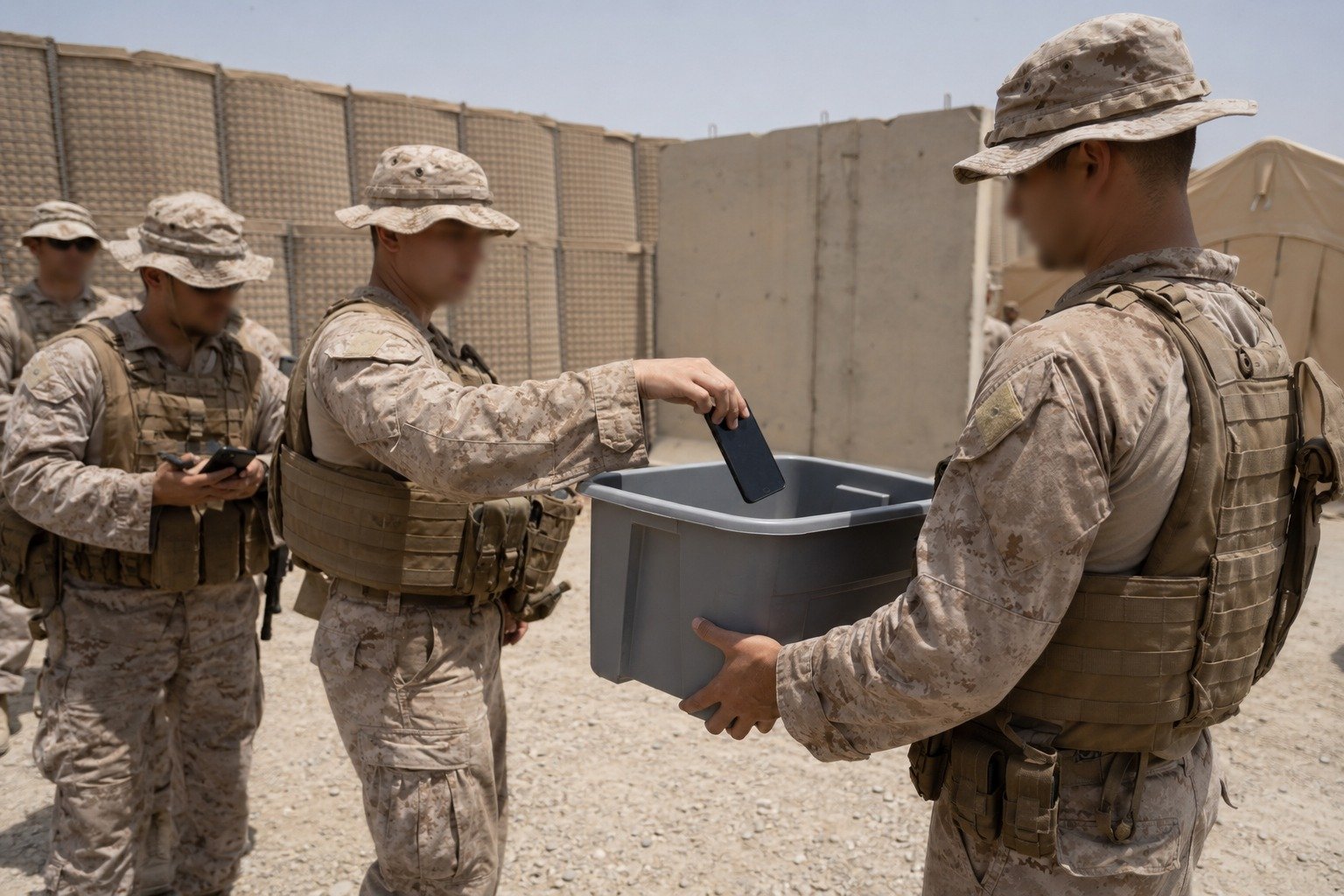
The US military is considering an extraordinary security measure: requiring some troops stationed across the Middle East to turn in their personal cell phones. According to a Reuters exclusive published on July 29, 2026, the step is being weighed after a senior US commander warned that troops’ own photos and videos could be helping Iran locate American forces and refine its targeting.
No order has been issued yet. Officials describe the idea as under active consideration, and it would likely apply only to certain units in higher-risk locations rather than to every service member in the region. But the fact that commanders are even discussing it signals how seriously the threat of Iranian surveillance is now being treated.
Why a Personal Phone Became a Security Risk
The concern is rooted in the simple reality of modern smartphones. Every photo a service member snaps and shares can carry hidden geolocation metadata, timestamps, and background details that reveal far more than the person intended. A selfie at a base, a quick clip of vehicles in a motor pool, or a video sent home to family can inadvertently expose a unit’s location, layout, and daily patterns.
In an age of open-source intelligence, adversaries no longer need to breach a secure network to gather actionable information. They can piece it together from public posts. A single recognizable landmark in the background of an image, matched against satellite maps, can be enough to fix a position. Multiply that across thousands of troops posting routinely, and the picture an adversary can assemble becomes alarmingly detailed.
The Commander’s Warning
The push reportedly stems from a warning by a senior US commander that personal videos and photos shared by troops could help Iran with targeting. Tensions between Washington and Tehran have kept US forces across the region on heightened alert, and commanders are increasingly focused on shrinking the digital footprint that those forces leave behind.
Collecting personal devices is one of the few measures that directly cuts off the flow of casual, real-time imagery from the field. It is a blunt tool, but it addresses a vulnerability that briefings and reminders about operational security have struggled to close on their own.
A Difficult Trade-Off
For troops deployed far from home, a personal phone is far more than a convenience. It is the primary link to spouses, children, and parents, and a critical outlet for morale during long deployments. Taking that away, even temporarily, carries a real human cost that military leaders openly acknowledge.
That is why the proposal remains a consideration rather than a directive. Any policy would have to balance the security benefit against the impact on the well-being of the very people it is meant to protect. Officials would also need to weigh how such a rule would be enforced, how long devices would be held, and whether troops would retain any alternative means of staying in touch with loved ones.
What This Means for Americans
The debate cuts to a question that reaches well beyond the military: how much personal privacy and connection should people surrender in the name of safety? For the families of deployed service members, a phone ban would mean fewer calls and messages during already stressful separations. For the troops themselves, it is a reminder that the tools everyone else takes for granted can become liabilities in a war zone.
Ultimately, the decision will rest on whether commanders judge the security risk to have grown too large to ignore. If they do, thousands of Americans in uniform could soon find themselves handing over the devices that keep them tethered to home.
Stay informed on the stories that matter most. Follow Your Daily Updates on Facebook and bookmark yourdailyupdates.news for breaking news and analysis.