It’s official: the United States has lost its measles elimination status. The Pan American Health Organization (PAHO), the World Health Organization’s regional office for the Americas, formally announced on Tuesday, November 17, that the U.S. no longer meets the standard – ending a public health achievement the country had held since 2000. The Wall Street Journal first reported the panel’s decision around November 14.
A country loses elimination status when the same strain of measles circulates continuously for 12 months or more. After a year of spreading outbreaks, that is exactly what happened here.
A year of outbreaks in nearly every state
The scale of the 2026 outbreak is hard to overstate. According to the Centers for Disease Control and Prevention, there have been 5,412 confirmed measles cases this year across nearly every state, tied to 48 separate outbreaks. Pennsylvania alone has recorded more than 1,500 cases. Large outbreaks have also hit Wisconsin, Minnesota, Indiana, Utah and South Carolina, and New York declared a state of emergency.
The human toll has been real. Multiple deaths have been reported, including infants and children – lives lost to a disease that a safe, widely available vaccine prevents.
The vaccination gap behind the numbers
Public health experts have warned for years that falling vaccination rates would open the door to measles. The data bears that out. Kindergarten coverage for the measles, mumps and rubella (MMR) vaccine has slipped from 95% in the 2019-20 school year to about 92% in 2025-26. That three-point drop leaves nearly 300,000 kindergartners unprotected.
It matters because measles is one of the most contagious diseases known. Communities need roughly 95% vaccination coverage to sustain herd immunity – the level that keeps the virus from finding enough unprotected people to spread. Once coverage dips below that line, outbreaks can take hold and keep going.
Kennedy promises to “regain” the status
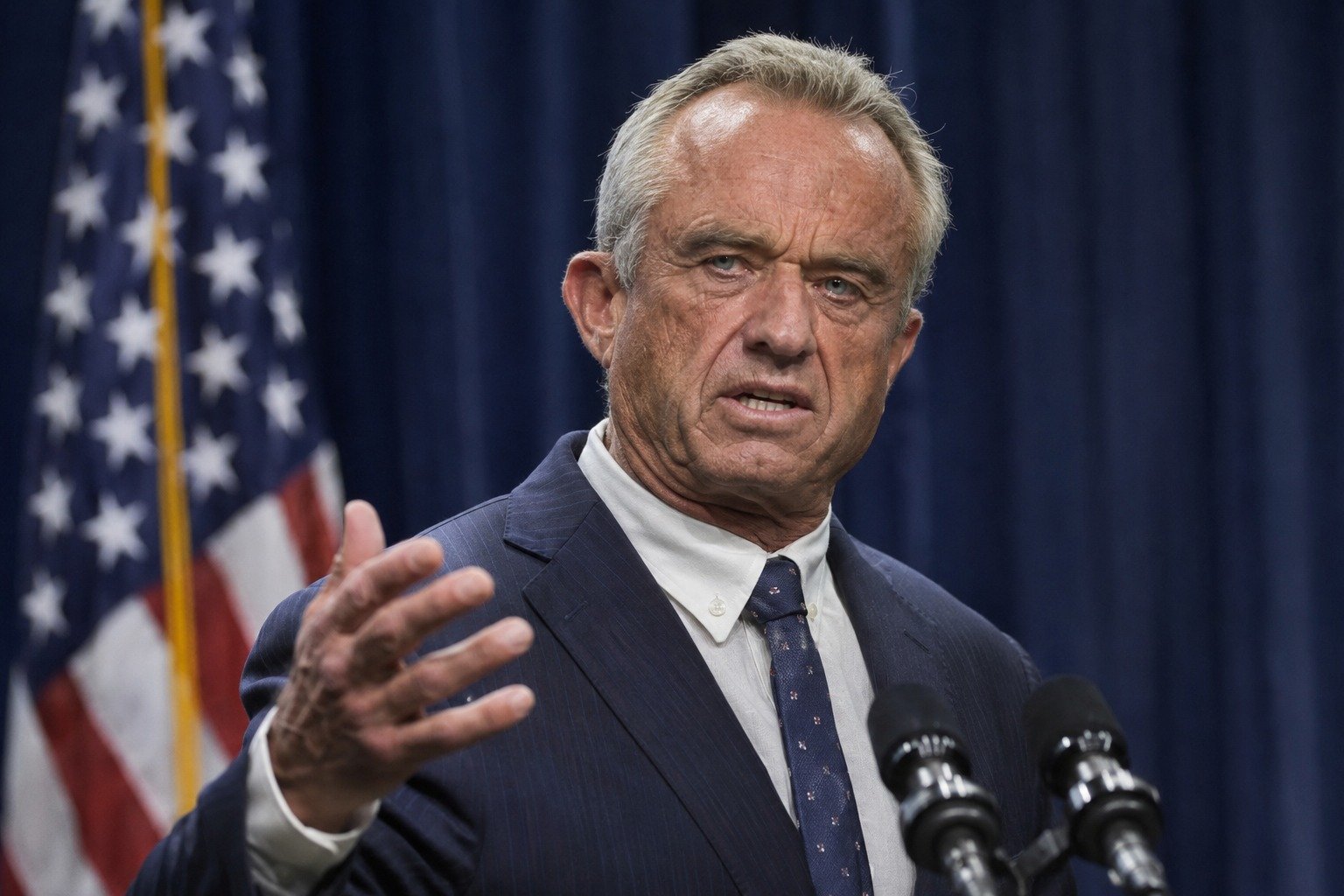
Health and Human Services Secretary Robert F. Kennedy Jr. responded on X. “We will stop measles outbreaks, protect American families, and work to regain U.S. measles elimination status,” he wrote. Kennedy also pointed to “COVID-era disruptions” in other countries as a factor.
His own CDC director struck a different note. “The measles elimination designation is not what protects Americans. Vaccination does,” said CDC Director Dr. Erica Schwartz.
That line cuts to the heart of the issue. The elimination label is a measurement. What actually keeps children safe is getting them vaccinated – and the numbers show fewer children are protected than were just a few years ago.
A Republican doctor breaks ranks
The sharpest criticism came from inside the president’s own party. Sen. Bill Cassidy of Louisiana, a physician and the outgoing chair of the Senate Health, Education, Labor and Pensions (HELP) Committee, who lost his reelection bid, spoke bluntly on CBS’s “Face the Nation” on November 15.
“This has been a failure,” Cassidy said. “If I were president, I would choose someone else.” He added: “This is about covering a series of failures.”
Cassidy’s message was that President Trump should choose a new health secretary – though he dismissed the idea of impeachment.
Vaccine scientist Dr. Peter Hotez put it simply, calling the loss of elimination status “incredibly embarrassing.”
What it means
Losing elimination status does not change the science. The MMR vaccine remains safe and highly effective, and vaccination remains the way to protect children and communities. But the designation is a clear signal of how far the country has slipped – and a public scorecard on the officials responsible for national health policy.
For a quarter century, measles was something most American families never had to think about. In 2026, thousands of families have had to. The question now is whether the people in charge will be held accountable for letting it come back – and whether anyone in the administration will act on Cassidy’s warning.