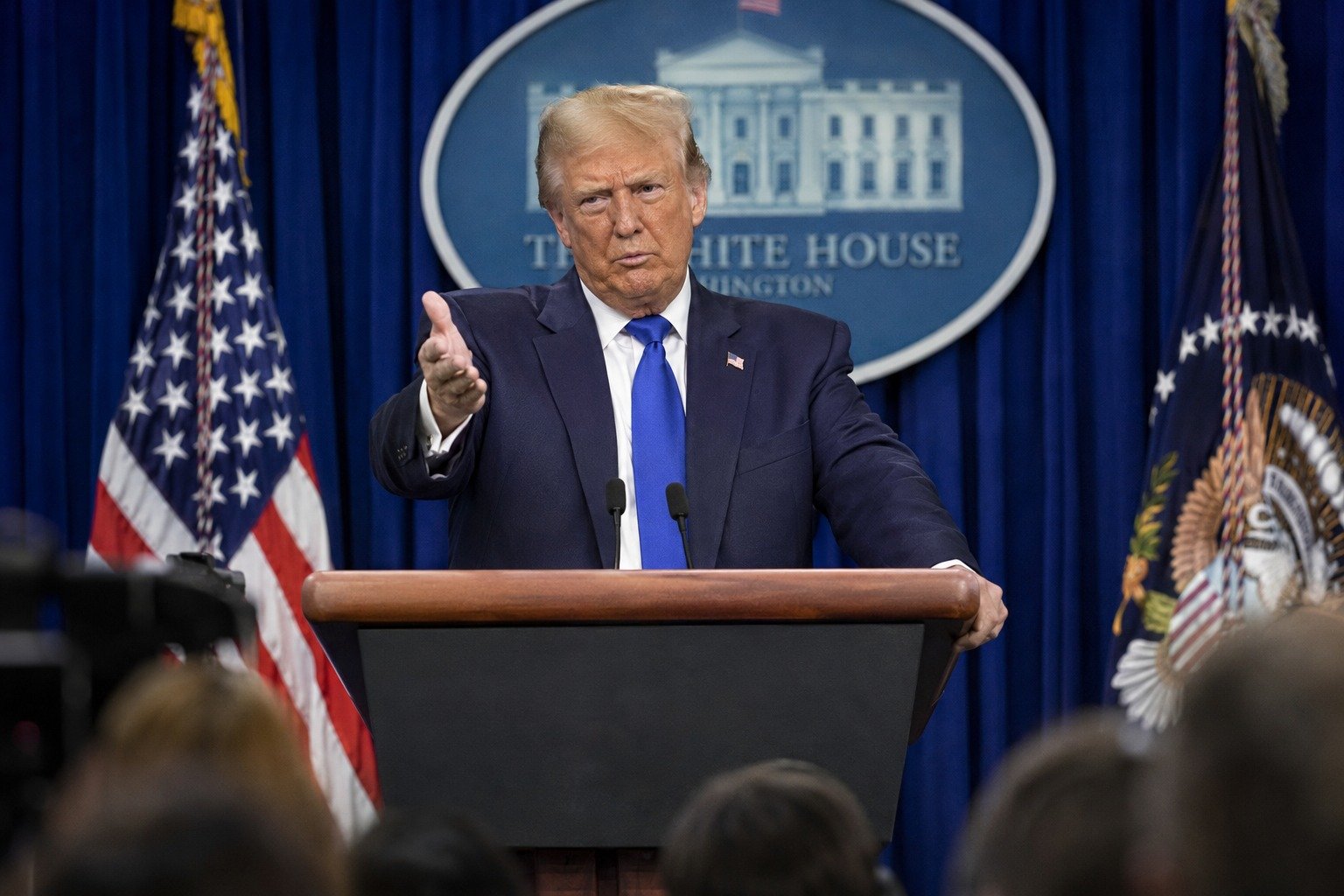
At a White House news conference on Friday, CNN’s Kaitlan Collins put a direct question to President Donald Trump: is Vladimir Putin a friend “to America”? Trump did not answer yes. “I can’t speak to America,” he said.
It was a striking reply from a president who has repeatedly called the Russian leader “my friend” – and it came as Russian missiles were again making headlines, this time on NATO soil.
A Long News Conference After a High-Stakes Trip
The Friday news conference ran nearly two hours, according to CBS, CNN and The Hill. It followed Trump’s trip to Asia, which included a three-way meeting with Chinese President Xi Jinping and Putin.
CNN reported that the trip produced “little progress on ending the Ukraine war.” There is no peace deal, and nothing announced at the summit has stopped the fighting.
What Trump Said About Putin
When Collins pressed him on whether Putin is a friend to the United States, Trump answered, “I can’t speak to America.” He added that he had been dealing with Putin during what he called the “fake Russia-Russia-Russia hoax,” and that Putin “was very nice about it.”
Trump also made clear how he sees his relationships with Moscow and Beijing. “I get along with Russia. I get along with China,” he said, according to CNN.
He argued that his personal relationship with Putin gives the United States “additional strength.” And he offered his own account of a private conversation, claiming Putin told him the war in Ukraine “would have never happened” if Trump had been president in 2022. That is Trump’s description of what Putin said; it has not been independently confirmed.
Meanwhile, Russia Kept Attacking
The president’s warm words stood in sharp contrast with events on the ground. CBS reported that Russia launched more attacks on Ukraine after Putin left China. Poland accused Russia of “intentional provocation” after missiles hit NATO soil – an alarming development for an alliance the United States is pledged to defend.
Those attacks followed a summit meant to showcase diplomacy. For Ukrainians living under bombardment, and for NATO allies watching missiles cross their borders, the results of that diplomacy are hard to see.
Rubio Defends the Summit
Secretary of State Marco Rubio defended the trilateral meeting, arguing that it would be “dangerous” if leaders like Trump, Xi and Putin could not engage with one another, according to The Hill.
Few would argue that talking to rivals is wrong in itself. Diplomacy often requires sitting across the table from adversaries. The question raised by Friday’s news conference is different: whether the president is willing to say clearly where a hostile government stands with the country he leads.
Why the Answer Matters
A president’s words carry weight with allies and adversaries alike. When NATO members are accusing Russia of deliberate provocation, a clear statement of where America stands can reassure partners and deter further escalation. A shrug, or “I can’t speak to America,” can send a very different signal.
Americans pay for that uncertainty. U.S. commitments to NATO, aid decisions on Ukraine and the safety of service members stationed in Europe all depend on how Washington reads Moscow’s intentions. Voters are entitled to know whether their president views Putin’s government as a partner or a threat, especially while its missiles are striking near allied territory.
There is still no deal to end the war in Ukraine. Until there is, the attacks continue, and so do the questions about whose interests the White House is putting first.
Stay informed on the stories that matter most. Follow Your Daily Updates on Facebook and bookmark yourdailyupdates.news for breaking news and analysis.