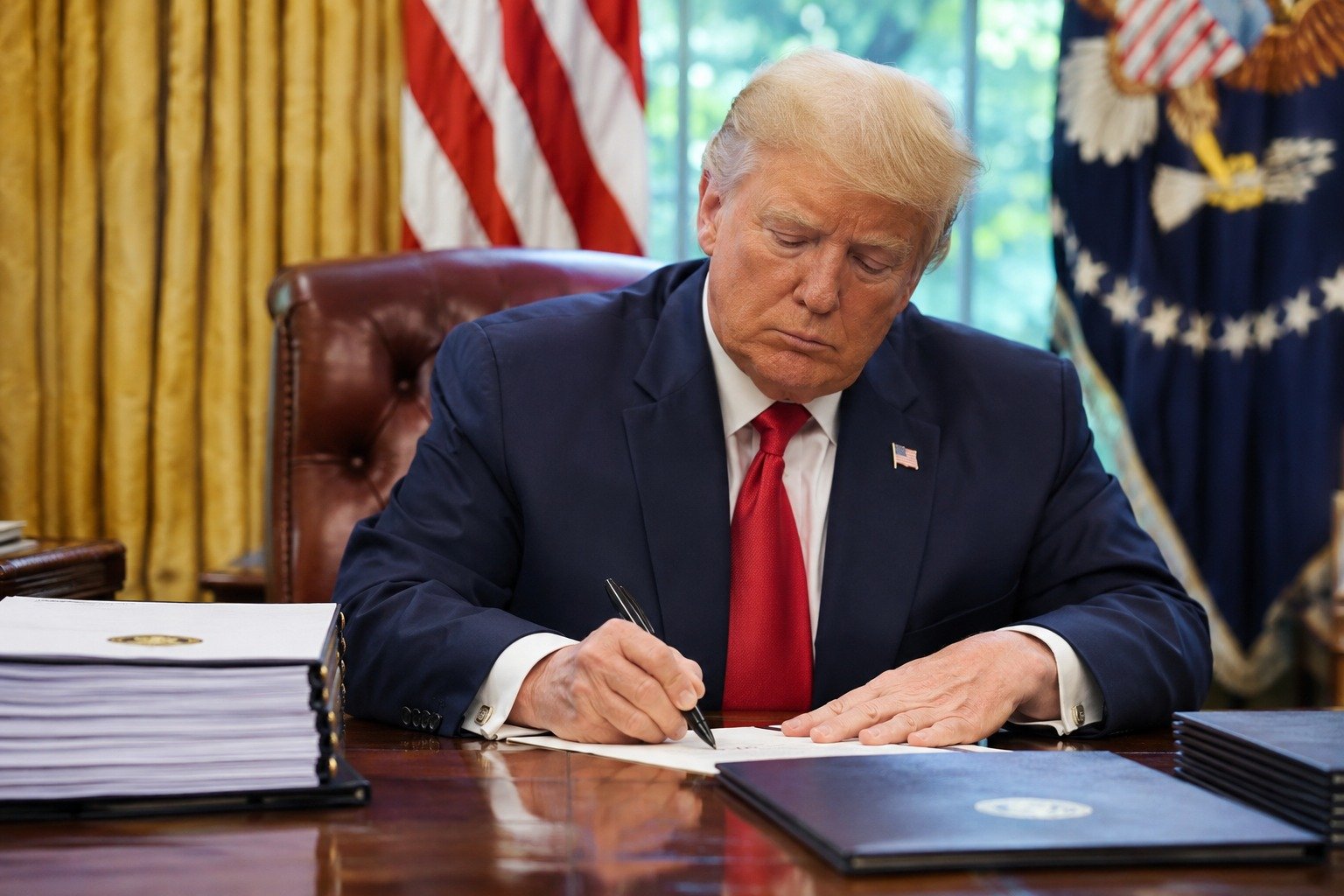
President Donald Trump has nominated Eric Ueland, the deputy director of the White House Office of Management and Budget and a close ally of OMB Director Russ Vought, to serve as comptroller general of the United States. If confirmed, Ueland would lead the Government Accountability Office, the nonpartisan congressional watchdog that investigates whether the executive branch is illegally withholding money Congress has already approved. The nomination was announced on Nov. 16, and the position carries a 15-year term.
Why the GAO Matters
The Government Accountability Office works for Congress, not the president. Its job is to follow the money: auditing federal programs, investigating waste, and telling lawmakers whether the executive branch is following the law. One of its most important responsibilities is enforcing the Impoundment Control Act, the 1974 law that limits a president’s ability to refuse to spend funds Congress has appropriated.
That responsibility has put GAO on a collision course with this administration. As of July 2025, GAO had opened at least 46 investigations into possible illegal impoundments and had found some violations of the Impoundment Control Act. The administration, for its part, wants to challenge that law as unconstitutional. The budget office at the center of those spending decisions is OMB, the agency run by Vought, where Ueland serves as deputy.
In other words, the official nominated to lead the watchdog comes directly from the office the watchdog has been examining.
Who Is Eric Ueland?
Ueland currently serves as deputy director of the Office of Management and Budget. He previously served as acting administrator of the U.S. Agency for International Development, which has since been shut down, and as acting director of the Office of Government Ethics.
The comptroller general is one of the most independent posts in the federal government. The 15-year term is designed to outlast any single president, insulating the office from political pressure. Whoever fills it will shape how aggressively Congress’s watchdog scrutinizes federal spending well into the 2040s.
A Rushed Selection Process
Under the law, a bipartisan, 10-member congressional commission recommends candidates for comptroller general to the president. This time, that commission was given just 24 hours’ notice, on a federal holiday, to name at least three candidates. By comparison, the last search for a comptroller general, in 2010, took more than a year.
Henry Wray, a former GAO attorney, said the fast-track “violates both the letter and the spirit of the law.”
The Senate Homeland Security and Governmental Affairs Committee has scheduled Ueland’s confirmation hearing for Thursday, Nov. 19, alongside nine other nominees. The hearing falls during the lame-duck session, before Democrats take over. No date has been set for a full Senate vote.
Reaction on Capitol Hill
Democratic senators were blunt. Sen. Patty Murray called approving Ueland “lunacy” and said he is “the last person who should be leading GAO.” Sen. Gary Peters criticized the “rubber stamp of this nomination.”
The concern is straightforward: a watchdog only works if it is independent from the people it is watching. Critics argue that placing a senior official from the White House budget office atop the agency that reviews that office’s spending decisions undermines the basic idea of oversight. The compressed timeline, they say, makes it harder for Congress to weigh in before the nomination moves forward.
It is important to be clear about where things stand. Ueland has been nominated, not confirmed. He has not taken over GAO, and the agency continues to operate under its existing leadership while the Senate considers the nomination.
What This Means for Americans
When Congress passes a budget, that money is meant to reach real people: disaster aid, public health programs, research grants, infrastructure, and services that working families depend on. The Impoundment Control Act exists so that a president cannot quietly cancel those decisions by refusing to spend the money. GAO is the referee that tells Congress and the public when that line is crossed.
Who leads that referee for the next 15 years will determine whether taxpayers get an honest accounting of how their money is spent, or whether the office most responsible for spending freezes ends up overseeing its own conduct. Senators will have their chance to question Ueland on Nov. 19, and the public will be watching how they vote.
Stay informed on the stories that matter most. Follow Your Daily Updates on Facebook and bookmark yourdailyupdates.news for breaking news and analysis.