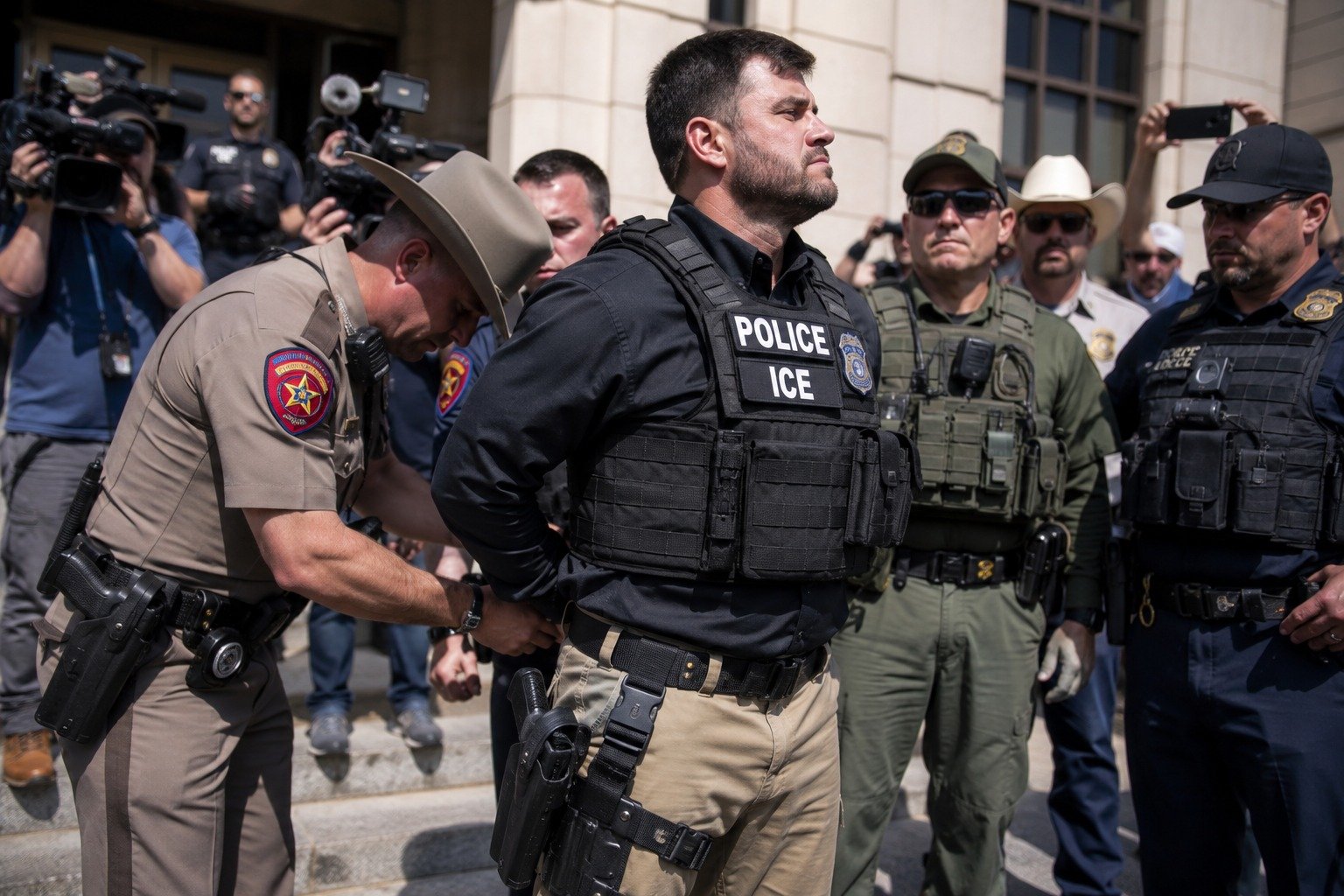
A federal ICE agent has been arrested in Texas after allegedly shooting an unarmed Venezuelan immigrant through the front door of a Minneapolis home and then lying to investigators about what happened. Christian Castro, 52, was taken into custody Friday by Texas Rangers — marking a rare instance of state criminal charges against a federal immigration officer.
What Happened on January 14
The shooting took place during Operation Metro Surge, the Trump administration’s largest immigration enforcement sweep in the Minneapolis–St. Paul metropolitan area. Castro was working alone in the front yard of a home when he fired his weapon through the closed front door, striking Julio Sosa-Celis in the leg. According to investigators, Castro was standing upright and was not in physical danger when he pulled the trigger.
No threat, no altercation, no justification — just a bullet through a door and a man bleeding on the other side.
The Cover-Up
What made Castro’s case stand out wasn’t just the shooting — it was what he allegedly did afterward. Castro claimed that the men inside the home had attacked him with a broom and a shovel, giving investigators a story that would explain his use of force. But the story fell apart quickly.
Video evidence directly contradicted Castro’s account. A medical examination of his body found no significant injuries — only a single minor abrasion on his left hand. Investigators concluded that not only was Castro not attacked, but that there was no credible threat present when he fired. Hennepin County prosecutors charged him with four counts of second-degree assault with a deadly weapon and one count of falsely reporting a crime.
The Arrest
After Minnesota investigators identified Castro as the suspect and filed charges in Hennepin County District Court earlier this month, they tracked him to Texas. On Friday, Texas Rangers — one of the most storied law enforcement agencies in the country — took him into custody alongside agents from the Department of Homeland Security’s Office of Inspector General. The arrest was coordinated across state lines, signaling that investigators were serious about bringing Castro to account regardless of his federal employment status.
Castro is the second ICE agent to face criminal charges arising from Operation Metro Surge, raising serious questions about the conduct of officers deployed during the sweep.
The Response
Hennepin County Attorney Mary Moriarty addressed the case directly: “His federal badge does not make him immune from state charges for his criminal conduct in Minnesota.” That statement landed like a shot across the bow — a clear declaration that state prosecutors intend to hold federal agents to the same legal standards as everyone else, regardless of which administration deployed them or what policy goals they were serving.
Civil liberties advocates and immigration attorneys have pointed to the Castro case as evidence that Operation Metro Surge involved dangerous tactics and insufficient oversight. Supporters of aggressive immigration enforcement argue that officers in the field face real threats and should not be second-guessed by local prosecutors. The divide tracks almost perfectly with the broader national argument over how immigration enforcement should be conducted.
What This Means
For most Americans, the Castro case touches something fundamental: the idea that no badge — federal, state, or local — grants the right to shoot first and fabricate a justification after. The victim, Julio Sosa-Celis, was unarmed, standing inside his home, and is now dealing with the physical and emotional aftermath of being shot by a government agent who then allegedly lied about it. The outcome of this case will test whether accountability in immigration enforcement is real or rhetorical. If Castro is convicted, it sends a message that the law applies to everyone. If the case falls apart on jurisdictional or political grounds, it sends the opposite one.
Stay informed on the stories that matter most. Follow Your Daily Updates on Facebook and bookmark yourdailyupdates.news for breaking news and analysis.