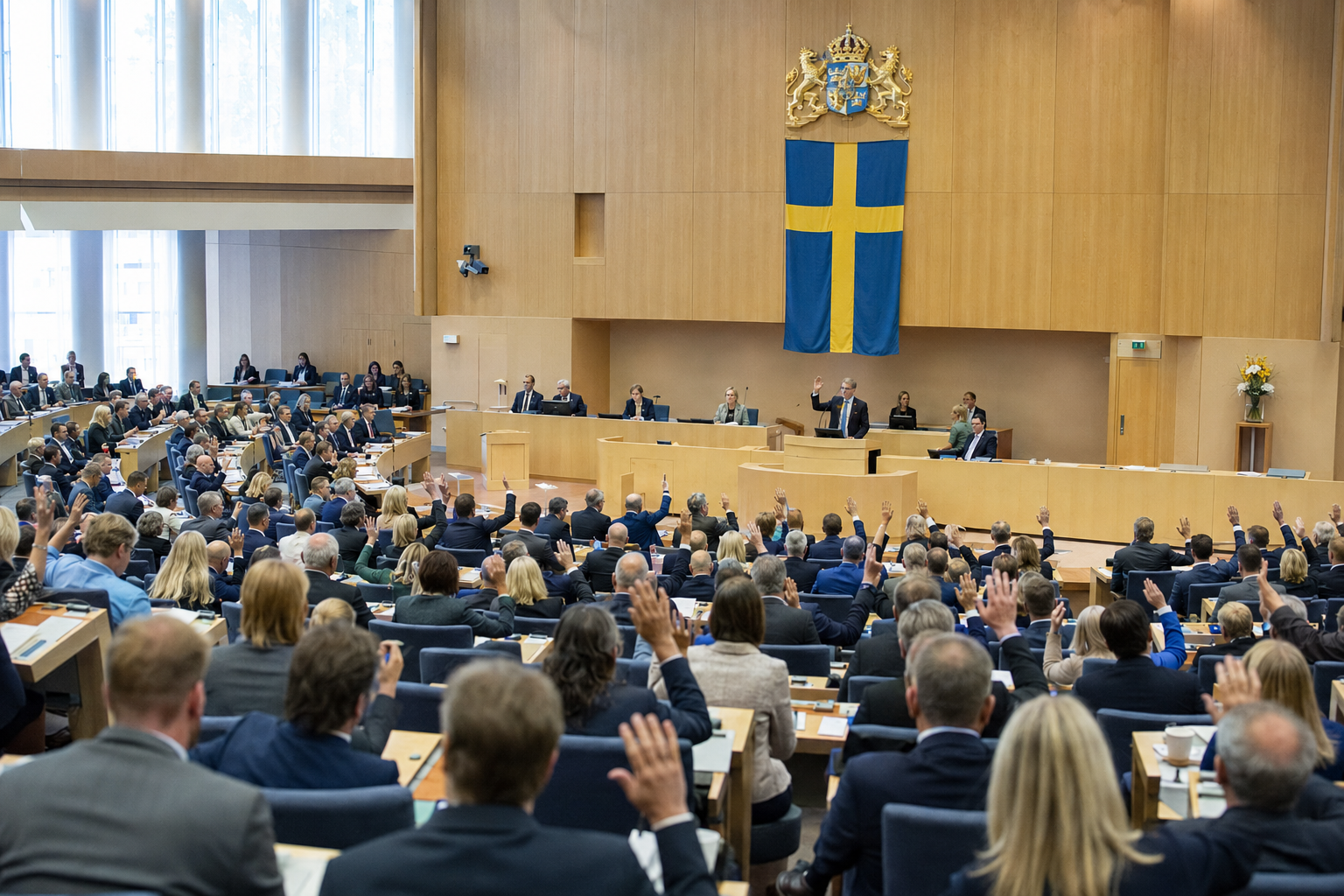
Sweden’s parliament has voted to ban marriage between first cousins, and it did so without a single dissenting vote. The new law, approved on May 26, 2026, takes effect on July 1 and marks one of the most significant changes to the country’s marriage rules in decades.
What stands out is not just the ban itself, but the unanimity behind it. In a chamber that is usually sharply divided between left and right, lawmakers from across the political spectrum came together to back the measure. The current center-right majority introduced it, but parties on every side signed on.
What the Law Actually Does
Starting July 1, 2026, cousins will no longer be permitted to marry in Sweden. The ban is unconditional, meaning there are no exceptions or special permissions available. Just as importantly, Sweden will, as a general rule, stop recognizing cousin marriages performed in other countries.
The law reaches further than first cousins alone. It also blocks a person from marrying their sibling’s child, and it prohibits marriage between half-siblings and between siblings related through adoption. In short, the new rules close off a wider category of close-relative unions that had previously fallen into a legal gray area.
Why Sweden Acted Now
Lawmakers behind the measure say the central goal is protection. Their stated aim is to shield people from being pressured or forced into marriage by their own families. Supporters framed the ban as a stand against honor-based control and coercion inside the home, arguing that the old marriage rules no longer matched the realities of modern Swedish society.
Sweden had allowed cousin marriage for generations, and for most of that history it was rarely a subject of national debate. Over time, however, officials began to view the existing rules as outdated. The vote reflects a broader consensus in the parliament that the country had changed and that its laws needed to change with it.
A Rare Moment of Agreement
Unanimous votes are uncommon in any modern legislature, and Sweden’s is no exception. That every member who voted backed this particular law tells you something about how the issue cut across the usual political lines. This was not a narrow partisan win pushed through by one bloc. It was a collective decision.
That breadth of support also makes the law durable. Measures passed on razor-thin margins are often challenged, watered down, or reversed when the balance of power shifts. A law that every party endorsed is far harder to unwind, which means this change is likely to stick for the long term.
Part of a Wider Trend
Sweden now joins a small but growing list of nations rethinking who should be allowed to marry whom, and why. Countries across Europe and beyond have been revisiting marriage and family law in recent years, weighing questions of consent, coercion, and public health against long-standing traditions and personal freedom.
For people watching from outside Sweden, the decision raises a familiar set of questions. Where should the line sit between protecting vulnerable individuals and respecting private family choices? Sweden’s answer, at least for now, is a firm and unanimous one.
What This Means Going Forward
For couples already married, the immediate practical effects will take time to become clear, particularly for those whose marriages were performed abroad and may no longer be recognized under Swedish law. For everyone else, the message is simple: as of July 1, the rules are different, and the country has drawn a new line that did not exist before.
Stay informed on the stories that matter most. Follow Your Daily Updates on Facebook and bookmark yourdailyupdates.news for breaking news and analysis.