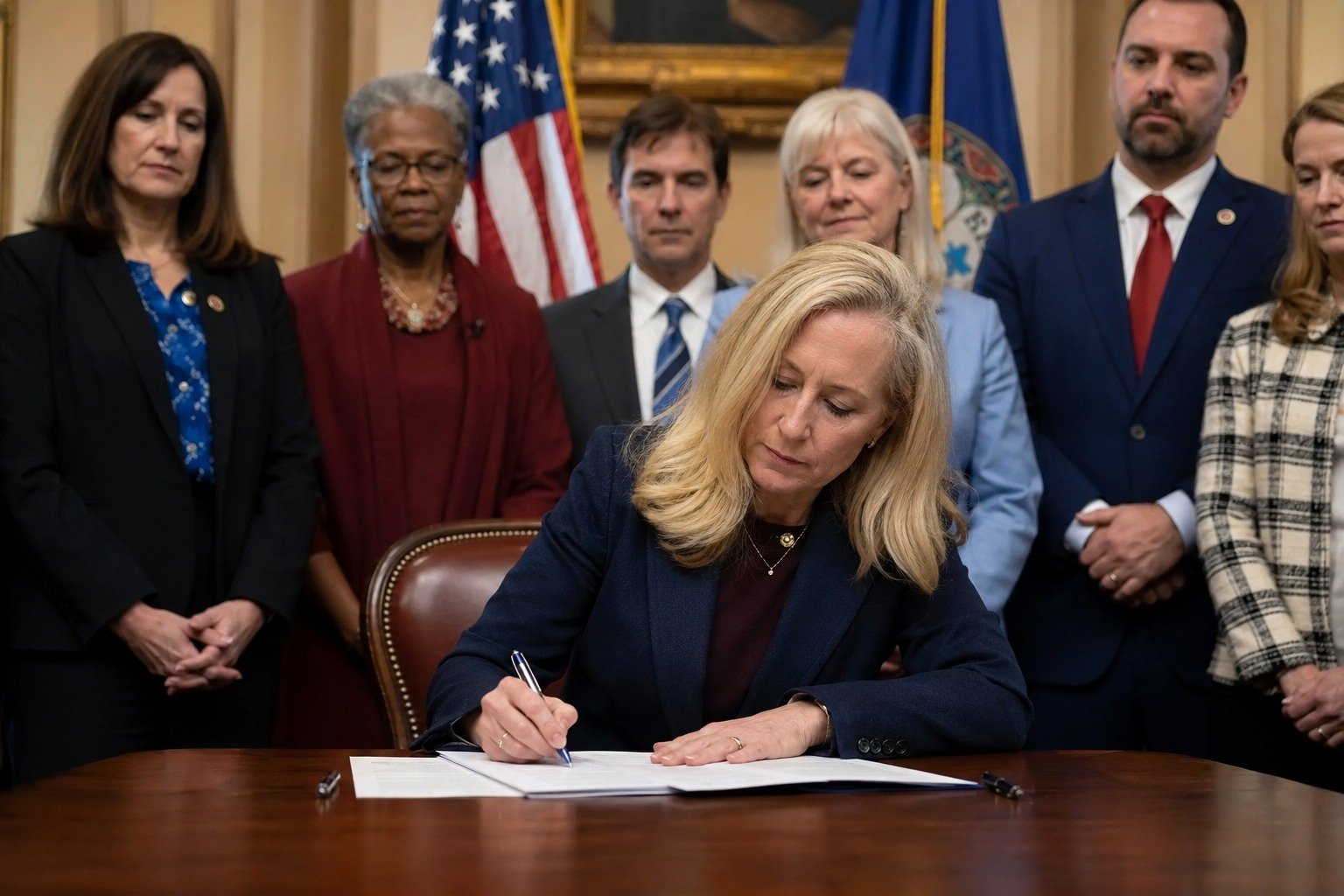
Virginia has closed one of the most dangerous gaps in its gun laws. On June 16, Governor Abigail Spanberger signed legislation barring people convicted of misdemeanor domestic violence against an intimate or dating partner from possessing firearms. The new law takes effect July 1, 2026.
The change targets what advocates have long called the “boyfriend loophole” – a gap that left a whole category of abuse survivors without the protection the law already offered to others.
What Actually Changed
Virginia was not starting from zero. State law already barred firearms for people convicted of assault and battery against a family or household member, and it already disarmed people subject to protective orders and those who were married to or living with their victims. But the prohibition stopped at the edge of cohabitation and marriage.
That meant an abuser who was a boyfriend, girlfriend, or dating partner – someone who had never married the victim and never moved in – could be convicted of domestic violence and still legally keep a gun. The two bills Spanberger signed, HB 19 (sponsored by Delegate McClure) and SB 160 (sponsored by Senator Perry), extend the firearm prohibition to those dating and intimate partners. A conviction is now a conviction, regardless of the relationship’s legal status.
Why It Matters
The reasoning behind the law is grounded in years of research on domestic violence. Study after study has found that the presence of a firearm in an abusive relationship dramatically increases the likelihood that the violence will turn fatal. The risk to a victim does not depend on whether there is a marriage license or a shared address – it depends on the abuser and the gun.
By closing the dating-partner gap, Virginia joins federal law and roughly half the states that have already eliminated this loophole. Supporters describe the move as a straightforward survivor-safety measure: if the state has decided that a domestic violence conviction should cost a married abuser the right to own a gun, the same logic should apply when the abuser was a partner the victim was dating.
The Debate
Not everyone supports the expansion. Gun-rights opponents argue that the broadened prohibition reaches too far and raises questions about how dating relationships are defined and documented in the eyes of the law. Those critics frame the measure as government overreach into gun ownership.
Backers counter that the core of the law is narrow and specific. The prohibition only kicks in after a person has been convicted of domestic violence – it is not a blanket restriction on dating partners or a tool for casual accusations. The single question the legislation answers is whether that conviction should carry the same consequence for a dating partner as it does for a spouse. As of July 1, Virginia’s answer is yes.
What This Means for Virginians
For survivors of domestic abuse, the practical effect is significant. People who were previously left exposed because they were never married to or living with their abuser now fall under the same firearm protections the state already extended to others. For everyone else, the change is a measured one: it applies only to people already found guilty of domestic violence in court.
The law reflects a broader national trend toward keeping firearms out of the hands of convicted domestic abusers, regardless of marital status – a recognition that the danger of an abusive relationship does not stop at the courthouse door.
Stay informed on the stories that matter most. Follow Your Daily Updates on Facebook and bookmark yourdailyupdates.news for breaking news and analysis.