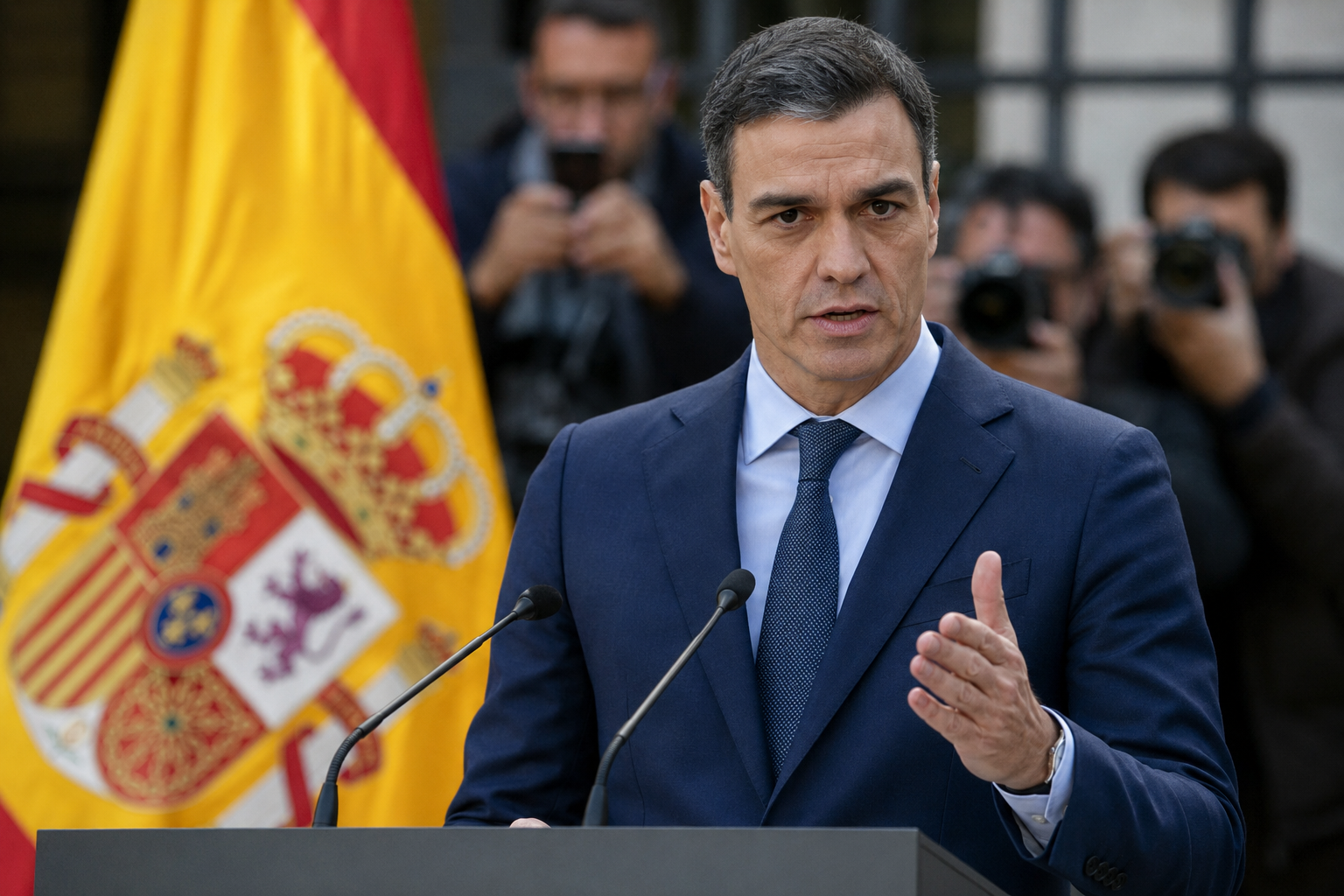
Spain made history this week — and not by winning a trophy. For the first time since 1961, Spain is not participating in or broadcasting the Eurovision Song Contest. Prime Minister Pedro Sánchez made the call himself: as long as Israel remains in the competition, Spain is out.
Sánchez Makes It Personal
The Spanish Prime Minister did not hide behind diplomatic language. In a video posted to X, Sánchez called the decision “coherent” with Spain’s position on the conflict in Gaza and said his country is “convinced we are on the right side of history.” He drew an explicit comparison to Russia’s expulsion from Eurovision following its 2022 invasion of Ukraine — arguing that if one country can be removed for military action, the same standard should apply to Israel for its campaign in Gaza, launched after Hamas’s October 7, 2023 attack.
The European Broadcasting Union (EBU), which runs Eurovision, has refused to expel Israel. The EBU maintains that the contest is a cultural competition, not a political forum, and that excluding a country based on government policy sets a dangerous precedent. Spain disagrees — and walked.
Five Countries Out — The Lowest Field Since 2003
Spain is not alone. Four other public broadcasters — the Netherlands, Ireland, Iceland, and Slovenia — have joined the full boycott, declining both to participate and to broadcast the event. That brings the 2026 field down to 35 competing nations in Vienna, the fewest since 2003. It is a significant blow to a contest that typically draws hundreds of millions of viewers across Europe and beyond.
Spain’s withdrawal carries particular weight. The country has been one of Eurovision’s most consistent participants for decades, and Spanish broadcaster RTVE is a major contributor to the EBU. Walking away is not just a symbolic gesture — it is a financial and institutional statement that adds real pressure to the EBU’s position on Israel’s continued participation.
The Double-Standard Debate
The core argument from boycotting countries is straightforward: if Russia was expelled for invading Ukraine, why is Israel allowed to compete while conducting a military campaign in Gaza that has resulted in widespread civilian casualties? Supporters of the boycott say the inconsistency reveals how geopolitical bias shapes the decisions of Western cultural institutions.
Opponents see it differently. They argue Eurovision was never designed to be a venue for geopolitical punishment — and that using it as one sets a precedent that could unravel the contest entirely. If countries can be excluded based on one group’s interpretation of their government’s foreign policy, nearly every nation on Earth could eventually face exclusion for something. Critics also note that the artists themselves — who train for years to reach Eurovision — are being penalized for decisions made by their governments.
What This Means for You
This is not just a European music contest story. It is a window into a growing global debate about whether cultural institutions — sports leagues, film festivals, music competitions — should be used as tools of political pressure. Where you draw the line on that question has real consequences for everything from the Olympics to the FIFA World Cup. As more countries follow Spain’s lead, the pressure on the EBU and similar organizations will intensify — and the decisions they make will shape how the world handles geopolitical disputes for years to come.
Stay informed on the stories that matter most. Follow Your Daily Updates on Facebook and bookmark yourdailyupdates.news for breaking news and analysis.