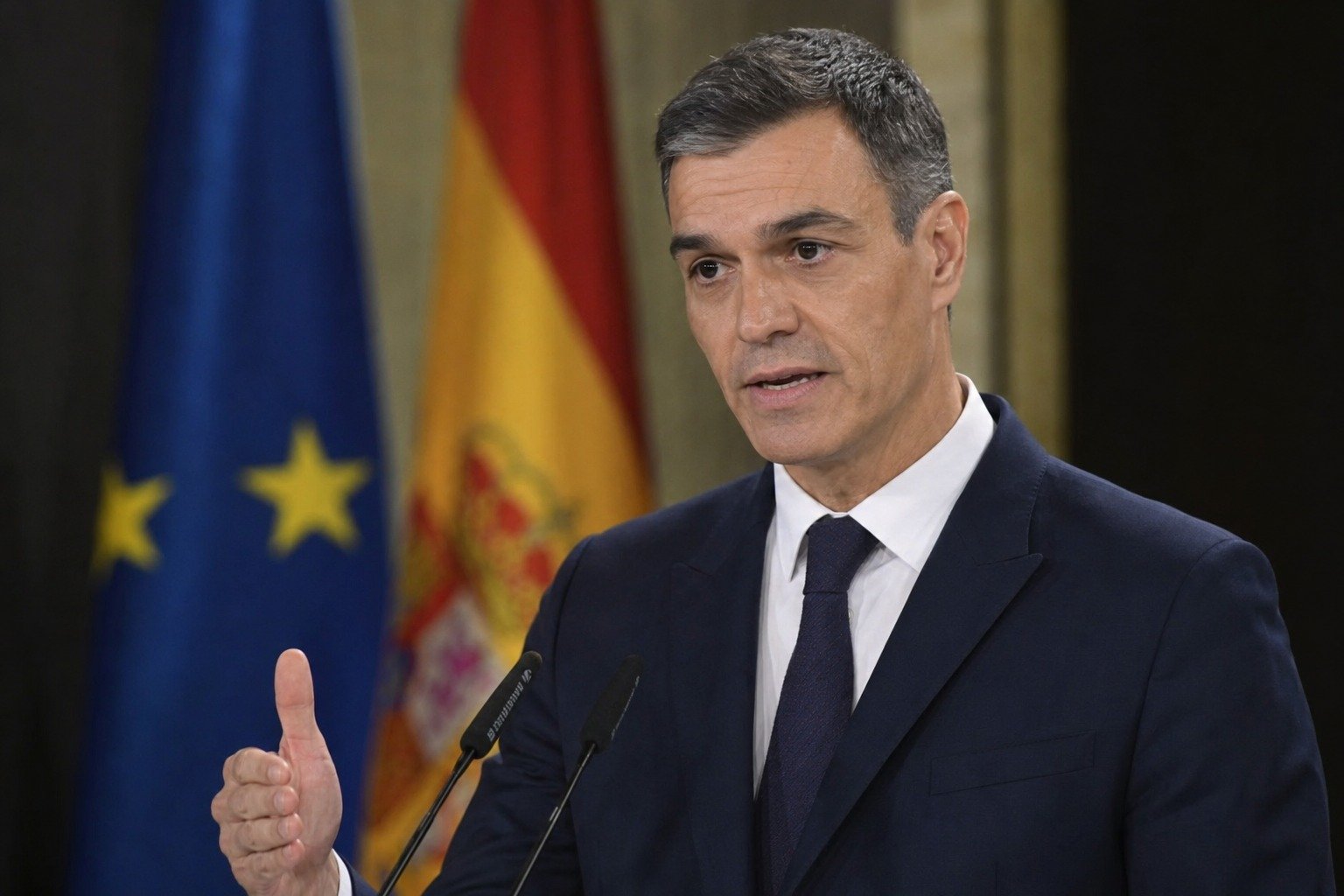
Spain’s Prime Minister Pedro Sánchez has accused some of Europe’s governments of abandoning his country during one of the most severe migration surges in recent memory. In a letter dated July 30, 2026 to European Commission President Ursula von der Leyen, Sánchez described the response of certain EU member states to the crisis at Ceuta as “selfish, polarising and unlawful.”
A Crisis on Europe’s Southern Edge
Ceuta is a small Spanish city on the North African coast, one of two Spanish enclaves that share a land border with Morocco. That location makes it a rare point where the European Union meets the African continent by land — and, at moments of tension, a pressure valve for migration. According to Spanish authorities, roughly 60,000 migrants crossed from Morocco into Ceuta, an extraordinary number for a territory of its size and a sudden test of Spain’s border and humanitarian systems.
Spain says it moved quickly. Sánchez told the Commission that his government restored border control within 48 hours of the surge. But the speed of Spain’s response is not the heart of his complaint. His frustration, laid out directly to Brussels, is with what happened next — or rather, what did not.
Sánchez’s Message to Brussels
In the letter, Sánchez called for an urgent meeting of EU interior ministers to address how the bloc shares responsibility for border security. His argument is that a crisis that lands on one member state’s territory is, in practice, a European crisis — and that leaving a frontline country to absorb the strain alone runs against both the spirit and the rules of EU cooperation.
The language he chose was pointed. Describing the reaction of some governments as “selfish, polarising and unlawful” is unusually blunt for a sitting head of government writing to the Commission. Notably, Sánchez aimed the criticism at some EU countries — those he says are refusing to share the load — rather than at the European Union as an institution, or at the migrants themselves. That distinction matters: his case is about fair burden-sharing among governments, not about turning people away.
Solidarity vs. Every Country for Itself
The dispute cuts to a long-running question inside the EU: when migrants arrive at the bloc’s external border, whose responsibility are they? Southern and Mediterranean countries have long argued that geography leaves them carrying a disproportionate share, while some other governments have resisted binding commitments to redistribute arrivals or share costs. Sánchez’s letter reopens that fault line — and does so with a concrete demand for ministers to sit down and agree on a fairer division of responsibility.
By calling parts of the response “unlawful,” Sánchez is also signaling that he sees a legal dimension, not just a political one — a suggestion that some governments’ conduct may run counter to EU obligations on cooperation and shared border management. The letter was reported by Bloomberg and wire services.
Why It Matters
For ordinary people, this is more than a diplomatic spat. How Europe answers Sánchez’s challenge shapes whether border emergencies are met with a coordinated, humane response or left to whichever country happens to sit on the map’s edge that week. It affects the migrants caught in the middle, the residents of border communities like Ceuta, and the credibility of the EU’s promise that its members stand together. Sánchez is betting that solidarity, not go-it-alone politics, is the only durable answer — and he is daring the rest of Europe to prove him right.
Stay informed on the stories that matter most. Follow Your Daily Updates on Facebook and bookmark yourdailyupdates.news for breaking news and analysis.