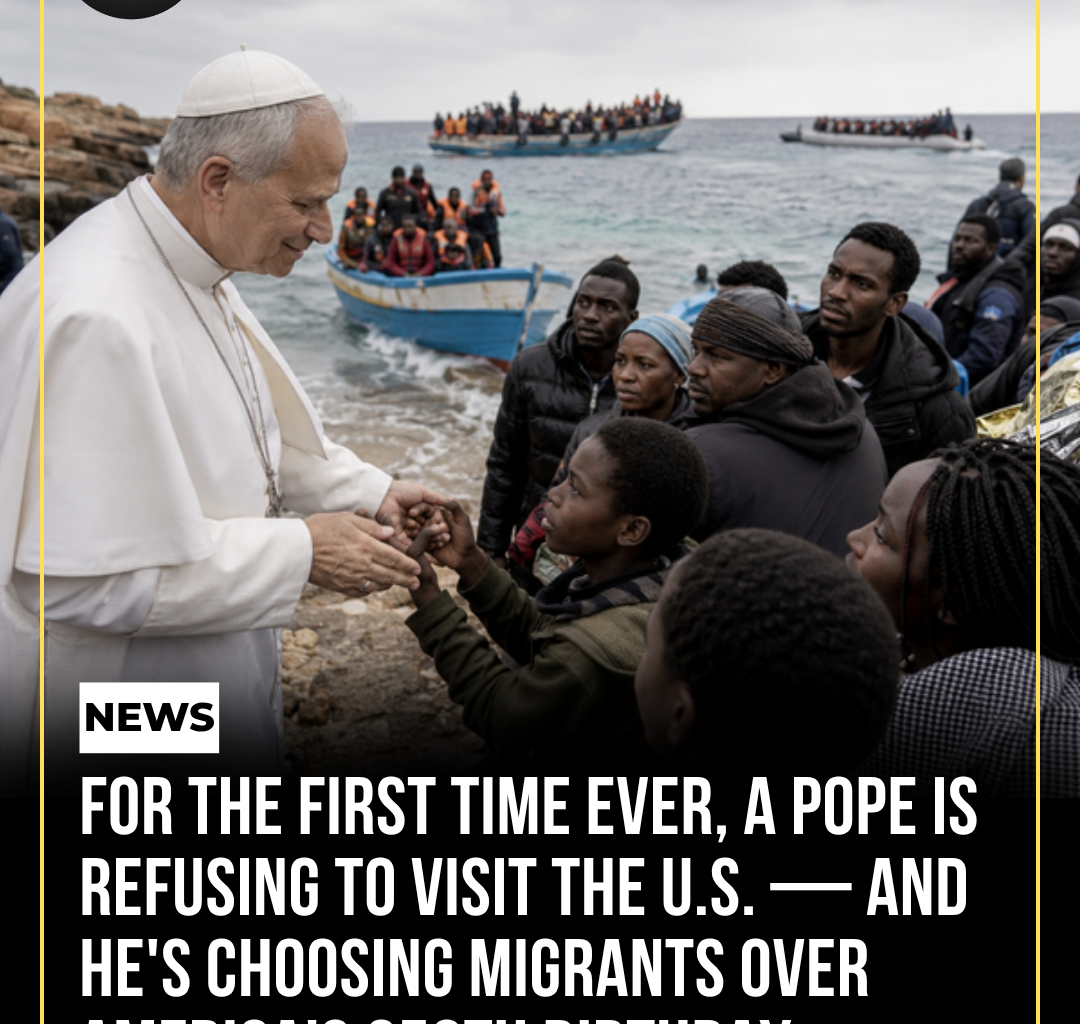
Pope Leo XIV — the first American-born pope in history — will not attend America’s 250th birthday celebration on July 4, 2026. Instead, he will be on the tiny Mediterranean island of Lampedusa, standing alongside African migrants who risked their lives crossing the sea on overcrowded boats. The Vatican confirmed the decision without apology or explanation.
The First American Pope Turns Down the Invitation
Leo XIV’s election in early 2025 was historic — an American at the helm of the Catholic Church for the first time. But his papacy has been defined by sharp independence from Washington rather than a homecoming. He has consistently positioned himself as an advocate for migrants, the poor, and those caught in the crossfire of geopolitical conflicts — placing him directly at odds with the Trump administration’s agenda on multiple fronts.
Lampedusa, a small island off the southern coast of Sicily, has long been ground zero for Europe’s migrant crisis. Every year, tens of thousands of people — most from sub-Saharan Africa — attempt dangerous crossings on makeshift boats and rafts. Many don’t survive. The island has become one of the most recognizable symbols of what the global migration crisis looks like in human terms, and Leo made his choice clear.
Vance Personally Delivered the Invitation — Leo Said No
Vice President JD Vance personally delivered the invitation to Leo in 2025, asking the first American pontiff to join the July 4th festivities on U.S. soil. Leo declined. The refusal was not a scheduling conflict — it was a statement. Rather than stand on the National Mall for fireworks, Leo will accept the prestigious Liberty Medal remotely, delivering virtual remarks to a crowd at Philadelphia’s Independence Mall from Rome. He’ll be honored. He just won’t show up.
Tensions With Washington Had Already Been Boiling
The relationship between the Vatican and Washington had been under strain for months. In January 2026, U.S. military officials confronted Leo at a Pentagon meeting over a speech they interpreted as a direct rebuke of Trump’s foreign policy approach in the Middle East. Leo had criticized what he described as disproportionate military force and called for diplomatic engagement — comments that didn’t sit well in Washington.
The tension deepened when the Vatican publicly refused to participate in Trump’s proposed “Board of Peace” for Gaza — a council the White House was assembling to pursue a ceasefire framework. Leo’s representatives declined without joining, signaling the Vatican would not lend its moral authority to a process it apparently viewed as politically compromised. Leo has also been consistent in his public opposition to U.S. military strikes in the Middle East, making him one of the most prominent global voices to challenge aspects of American military policy.
A Nation Divided on What This Means
The reaction split predictably along political lines. Trump supporters view Leo’s choice as a calculated political statement dressed in pastoral clothing — a deliberate snub of America wrapped in the language of charity. Some have questioned whether an American pope should be this openly antagonistic toward the country of his birth, particularly on its most significant national milestone in a century.
Critics of the administration see it differently. To them, Leo is doing exactly what a moral leader should — refusing to provide legitimacy to a government whose policies he views as incompatible with Catholic teaching on human dignity, migration, and the use of military force. They argue it takes genuine courage to decline an invitation that would have been personally and institutionally comfortable to accept.
What This Means for Americans
This moment puts two competing visions of American identity on full display. The Trump administration is staging what promises to be a massive national celebration of American power and patriotism. The first American pope will be on a rocky Mediterranean island, holding the hands of people who crossed the sea in desperation to reach safety. Whatever your politics, that contrast is real — and it will drive one of the defining conversations of 2026 about who speaks for American values and what moral leadership actually looks like.
Stay informed on the stories that matter most. Follow Your Daily Updates on Facebook and bookmark yourdailyupdates.news for breaking news and analysis.