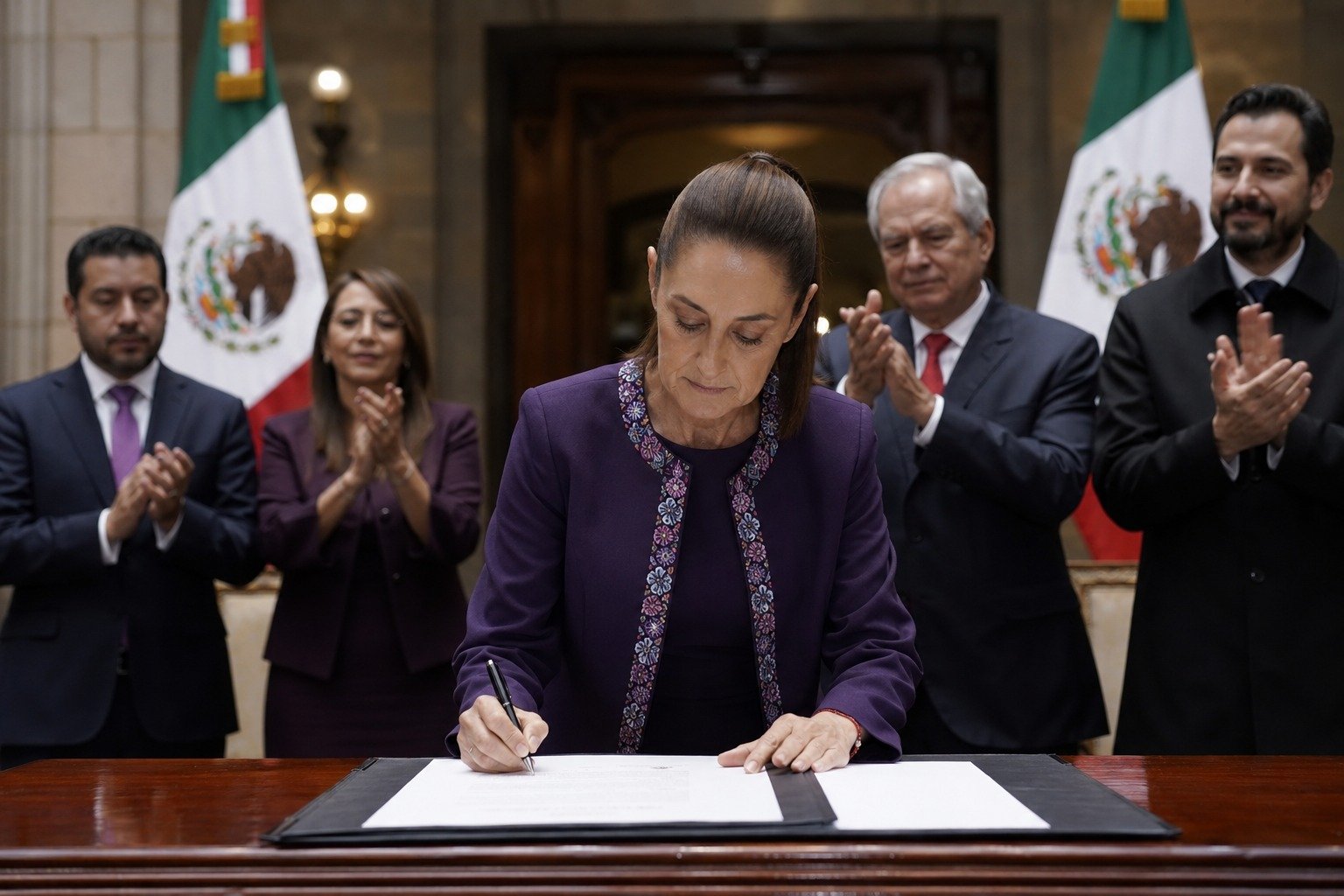
With the stroke of a pen, Mexican President Claudia Sheinbaum just changed healthcare in her country forever. On Wednesday, Sheinbaum signed a landmark decree officially launching the Universal Health Service — a sweeping new system that guarantees free medical coverage to every single one of Mexico’s 120 million citizens. No premiums. No copays. No eligibility requirements. If you live in Mexico, you are now covered.
The End of Mexico’s Two-Tiered Healthcare System
For decades, Mexico’s healthcare system operated in two very different worlds. Formal-sector workers with employer benefits accessed the Social Security Institute (IMSS) or the State Workers’ Institute (ISSSTE). Everyone else — tens of millions of informal workers, the rural poor, and the self-employed — was largely on their own. A 2020 reform replaced the previous Seguro Popular program with INSABI, but that agency was plagued by medicine shortages and administrative chaos before being dissolved just two years later.
Sheinbaum’s Universal Health Service is designed to end that divide entirely. Under the new decree, all public hospitals, clinics, and health centers fall under a single unified federal system. There will be no more patchwork of programs based on employment status, income, or geography. The promise is simple: every Mexican citizen has the same right to healthcare, and it is free.
How It Works: The National Health Credential
The new system operates through a national health credential — a government-issued ID card that grants access to the full range of public health services. Holders can present the card at any participating public clinic or hospital to receive consultations, medications, laboratory tests, and hospital care at no out-of-pocket cost. The government says the card will be issued to all citizens over the coming months, with priority given to rural communities and indigenous populations historically underserved by the health system.
The rollout is phased. Primary care services go live first, with specialty care — including surgeries and advanced diagnostics — expanding into the system over the next 18 months. The federal government has committed to hiring thousands of additional doctors, nurses, and health workers to meet the surge in anticipated demand. Health spending is set to increase significantly, funded through budget reallocations and revenue from Mexico’s recent corporate tax reforms targeting the country’s wealthiest sectors.
Critics: The Devil Is in the Delivery
Not everyone is celebrating. Opposition lawmakers and healthcare analysts have raised pointed questions about the government’s ability to deliver on such a sweeping promise. Mexico’s public health system has suffered from chronic medicine shortages, understaffing, and crumbling infrastructure in rural states for years — problems that a decree alone cannot fix overnight. The National Action Party (PAN) called the announcement “political theater” and demanded a detailed funding plan before declaring victory.
Private hospital associations have also raised concerns. If millions of Mexicans who previously sought care at private clinics switch to the free public system, private providers could see significant revenue declines. Some economists warn that without careful implementation, the demand surge could overwhelm public facilities, leading to long wait times and care rationing that undermines the program’s stated goals.
What This Means for Ordinary Mexicans
For the estimated 30 to 40 million Mexicans who lacked meaningful healthcare coverage before this decree, the potential impact is enormous. Medical debt has long been one of the leading causes of poverty in Mexico, with families often forced to choose between paying for care and meeting basic needs. If the Universal Health Service delivers on its promise, it could prevent millions of households from falling deeper into financial hardship when illness strikes — and that matters not just for Mexico, but for the millions of Mexican-American families in the United States with loved ones across the border.
Stay informed on the stories that matter most. Follow Your Daily Updates on Facebook and bookmark yourdailyupdates.news for breaking news and analysis.