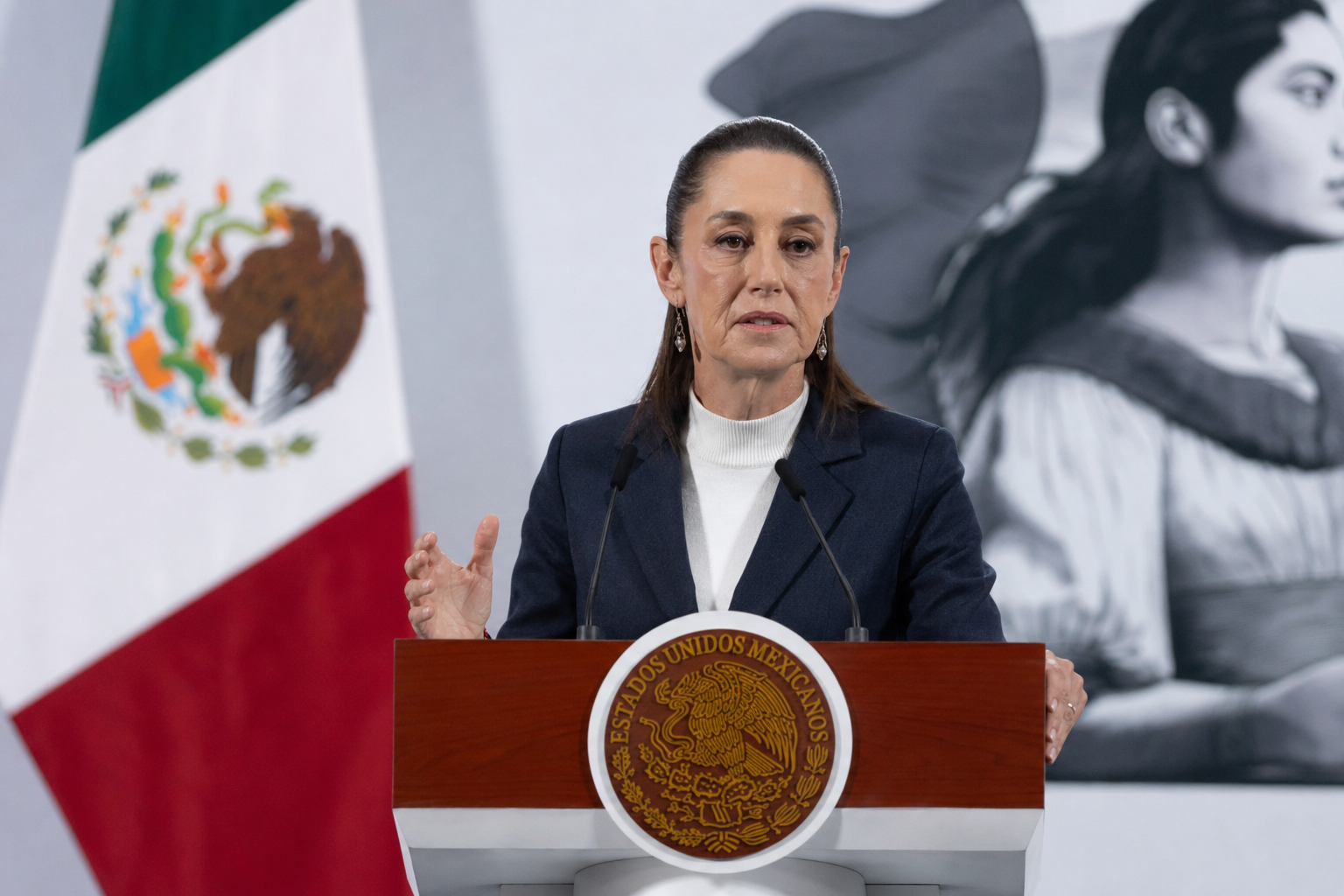
Mexico’s President Claudia Sheinbaum has officially declared universal healthcare coverage for every one of the country’s 130 million citizens. Free of charge. No exceptions. What was once a fragmented, employment-based system is now, by presidential declaration, a national right.
A Decades-Long Gap, Closed Overnight
For decades, Mexico operated a two-tier healthcare system that left tens of millions of people behind. Formal workers registered with employers received coverage through the IMSS — the Mexican Social Security Institute — while their counterparts in the informal economy, rural areas, and the self-employed were left to navigate an underfunded patchwork of public clinics. The result was predictable: unequal access, delayed diagnoses, and preventable deaths concentrated among Mexico’s most economically vulnerable populations.
President Sheinbaum’s announcement eliminates that distinction entirely. Under the new framework, every Mexican citizen — regardless of employment status, income level, or geographic location — is entitled to full healthcare coverage at zero cost. The administration has framed it not as a social benefit but as a constitutional right, a framing that carries significant political and legal weight going forward.
What the System Covers — and What It Has to Build
The declaration covers primary and secondary care, essential medications, and preventive health services. The Sheinbaum administration has been expanding Mexico’s Bienestar (Well-Being) health infrastructure since taking office — converting and upgrading existing public clinics, training community health promoters, and dramatically expanding the IMSS-Bienestar program that targets unserved rural communities. The government has also taken over management of public hospitals previously run by states with inconsistent standards.
The central challenge facing the announcement is infrastructure. Declaring a right and delivering on it require different things. Health experts and opposition legislators have immediately raised questions about whether Mexico’s existing facilities, staffing levels, and supply chains can absorb the full demand of universal coverage. The country currently faces a shortage of specialists in rural areas, and wait times at public clinics in urban centers are already long. The administration has acknowledged these gaps but argues the declaration accelerates investment and political accountability in ways that a gradual rollout would not.
Regional and International Reaction
The announcement has drawn attention far beyond Mexico’s borders. In Latin America, the move puts pressure on neighboring governments still operating mixed or privatized healthcare systems. In the United States, it has already become a reference point in domestic healthcare debates, with advocates on both sides citing Mexico’s declaration — some as evidence that universal coverage is achievable, others as a cautionary tale about unfunded mandates and implementation risk.
The World Health Organization has long identified universal health coverage as a foundational global health goal, and Mexico’s declaration represents one of the most explicit steps toward that goal taken by a major economy in recent years. Whether it succeeds in practice will determine how the announcement is ultimately remembered.
What This Means for 130 Million People
For the roughly 30 to 40 million Mexicans who were previously uninsured or underinsured, this declaration is the most significant change to their access to healthcare in their lifetimes. On paper, they now have the same entitlement as a formally employed worker in Mexico City. What that means in practice — how quickly clinics are staffed, how reliably medications are supplied, how accessible specialist care becomes — will depend entirely on execution. But the declaration has been made, the political commitment is on record, and the baseline has shifted. What comes next is the harder test.
Stay informed on the stories that matter most. Follow Your Daily Updates on Facebook and bookmark yourdailyupdates.news for breaking news and analysis.