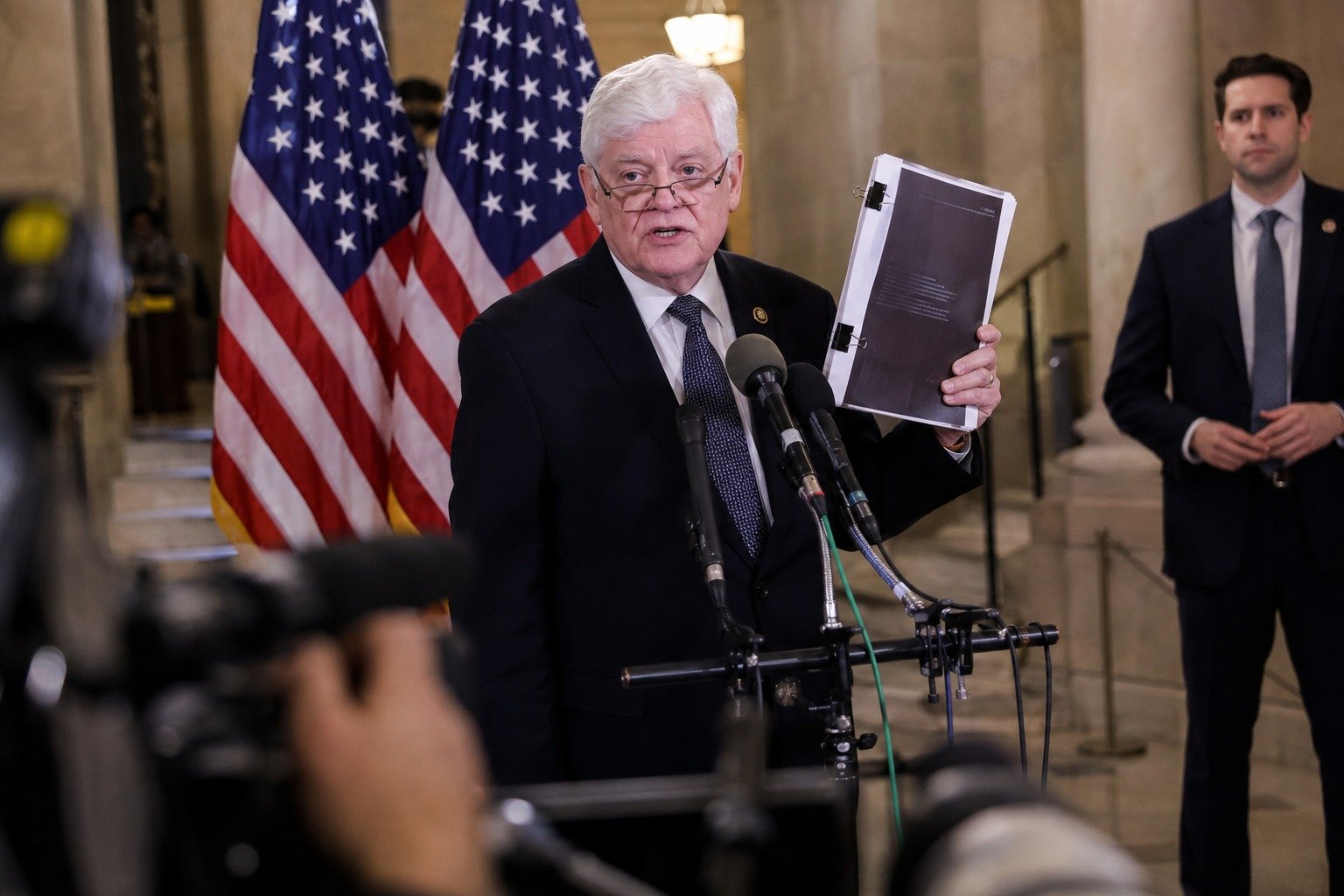
Thirteen articles of impeachment against President Donald Trump are sitting in the U.S. House of Representatives right now — and most Americans have no idea they exist.
Rep. John Larson, a Connecticut Democrat who turns 77 this year, introduced the articles earlier this spring. The filing is sweeping in scope, laying out a list of alleged abuses of power that touch nearly every corner of the presidency — from the war powers reserved to Congress to the treatment of immigrants inside the country.
What the articles allege
According to Larson’s filing, the charges accuse the president of circumventing Congress on war powers in connection with military action tied to Venezuela and Iran. They also cite the deployment of National Guard troops into American cities, the alleged abuse of the pardon power, and the use of detentions and deportations that, the articles say, targeted people based significantly on race, ethnicity, or political opposition.
The document goes further, accusing the administration of illegally militarizing domestic law enforcement, ordering unlawful detentions, retaliating against protected speech, illegally refusing to spend money appropriated by Congress, and attempting to deny birthright citizenship to certain children in violation of the 14th Amendment. In Larson’s framing, these are not isolated controversies but a pattern of conduct that crosses constitutional lines.
Larson did not stop at impeachment. He simultaneously called for invocation of the 25th Amendment, arguing that the president’s conduct warranted every constitutional check available to the legislative branch.
A symbolic stand, not a likely vote
It is important to be clear about where this effort actually stands. The articles have been filed and introduced — not passed, not advanced through committee, and not scheduled for a floor vote. In a House controlled by Republicans, they have essentially no path forward.
That reality is not lost on Larson or his supporters. Impeachment articles filed by a minority member in an opposition-controlled chamber are widely understood as a way to put alleged misconduct formally on the congressional record, rather than a realistic attempt to remove a president. Critics will dismiss the move as a political message; supporters argue that documenting the conduct matters regardless of the math.
Why it still resonates
Even as a long shot, the filing raises questions that are not going away: How far can a president stretch the war powers without congressional authorization? When is it appropriate to deploy the military domestically? And who gets targeted by the machinery of federal enforcement — and on what basis?
Those debates over the limits of presidential power have intensified across this term, and Larson’s articles gather many of them into a single document. Whether the public sees the effort as a long-overdue stand or a symbolic gesture, it forces a conversation about accountability at the highest level of government.
The question now belongs to the public as much as to Congress: should the conduct described in these articles be grounds for impeachment — or is this a debate destined to stay on paper?