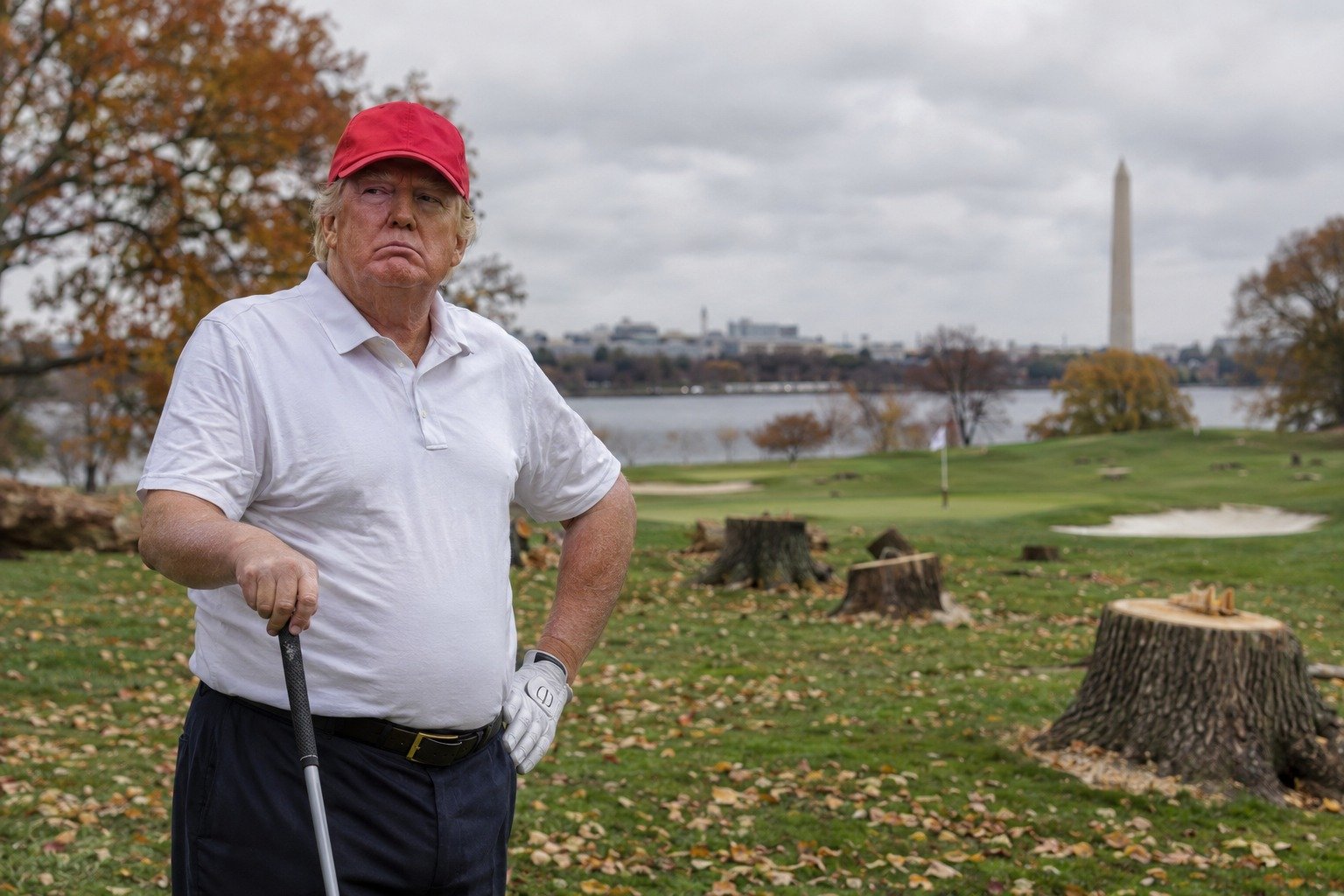
A federal judge has hit pause on the Trump administration’s plan to shut down East Potomac Park and its public golf course in Washington, D.C. — stopping the closure just one day before the gates were set to lock.
On Saturday, Nov. 14, U.S. District Judge Ana Reyes of the District of Columbia issued a temporary restraining order blocking the administration from closing the park and its course. The closure had been scheduled for Sunday, Nov. 15. Reyes’ order runs through Nov. 28, according to reporting from the Associated Press, PBS, CBS News and CNN.
It is important to be clear about what this is — and what it is not. A temporary restraining order is a short-term emergency measure designed to preserve the status quo while a court considers a case. It is not a final ruling, and it does not permanently kill the project. But it does mean that, for now, the course stays open to the public.
More than 500 trees already gone
The order came after significant damage had already been done. By the time Reyes stepped in, the National Park Service had already cut down more than 500 trees at the site. In her order, Reyes barred any further tree removal and required the Justice Department to give notice of future actions, according to CBS News.
For a park that has served as one of the capital’s most accessible green spaces, the loss of hundreds of trees before a judge could even weigh in is a striking detail — and one that sits at the heart of why preservationists rushed to court.
A championship course on public land
The administration’s plan would close the course for roughly 15 months and rebuild it as a championship-style layout designed by renowned golf course architect Tom Fazio.
The lawsuit was brought by the D.C. Preservation League and two local golfers, who are represented by the legal advocacy group Democracy Forward. They argue the redesign would turn an accessible, affordable public course into one that everyday golfers can no longer afford to play. Trump denies that the project would price people out.
It is worth underlining one basic fact: East Potomac is public National Park land. It is not a Trump-owned club or private property. The question in this case is about what happens to a public resource that belongs to everyone.
Judge opens inquiry into officials’ statements
Reyes did not limit her order to the closure itself. In sharp language, she wrote that “the Government reverse-engineers additional justifications for the Park’s closure.”
She also opened an inquiry into whether senior officials at the Interior Department, the Justice Department and the National Park Service misrepresented facts to her court. According to CBS News, Reyes intends to appoint former U.S. Attorney Jessie Liu to lead that inquiry. The Justice Department opposes the move.
To be precise: this is an inquiry, not a finding. No court has concluded that any official engaged in misconduct. But a federal judge openly questioning whether the government has been straight with her is a serious moment, and it raises real questions about how this project was justified in the first place.
Trump vows an expedited appeal
Trump responded on Truth Social on Sunday, Nov. 15, calling the ruling a “highly destructive and political decision.” He also wrote, “They don’t call it Trash Island for no reason!”
Trump said his administration will “immediately appeal, on an expedited basis,” signaling that the fight over the course is about to move to a higher court.
What happens next
The restraining order remains in effect through Nov. 28 unless a higher court intervenes. Meanwhile, the National Capital Planning Commission is scheduled to take up the proposal on Dec. 3, giving the federal planning body its own chance to weigh in.
For now, further tree removal is on hold. But the bigger questions remain wide open: Who should get to decide the future of public parkland in the nation’s capital? Should a course that has long served everyday local golfers be closed for more than a year and rebuilt into a championship venue? And did the officials pushing this plan give the court the full story?
Those are the questions the courts — and the public — will be watching closely in the weeks ahead.