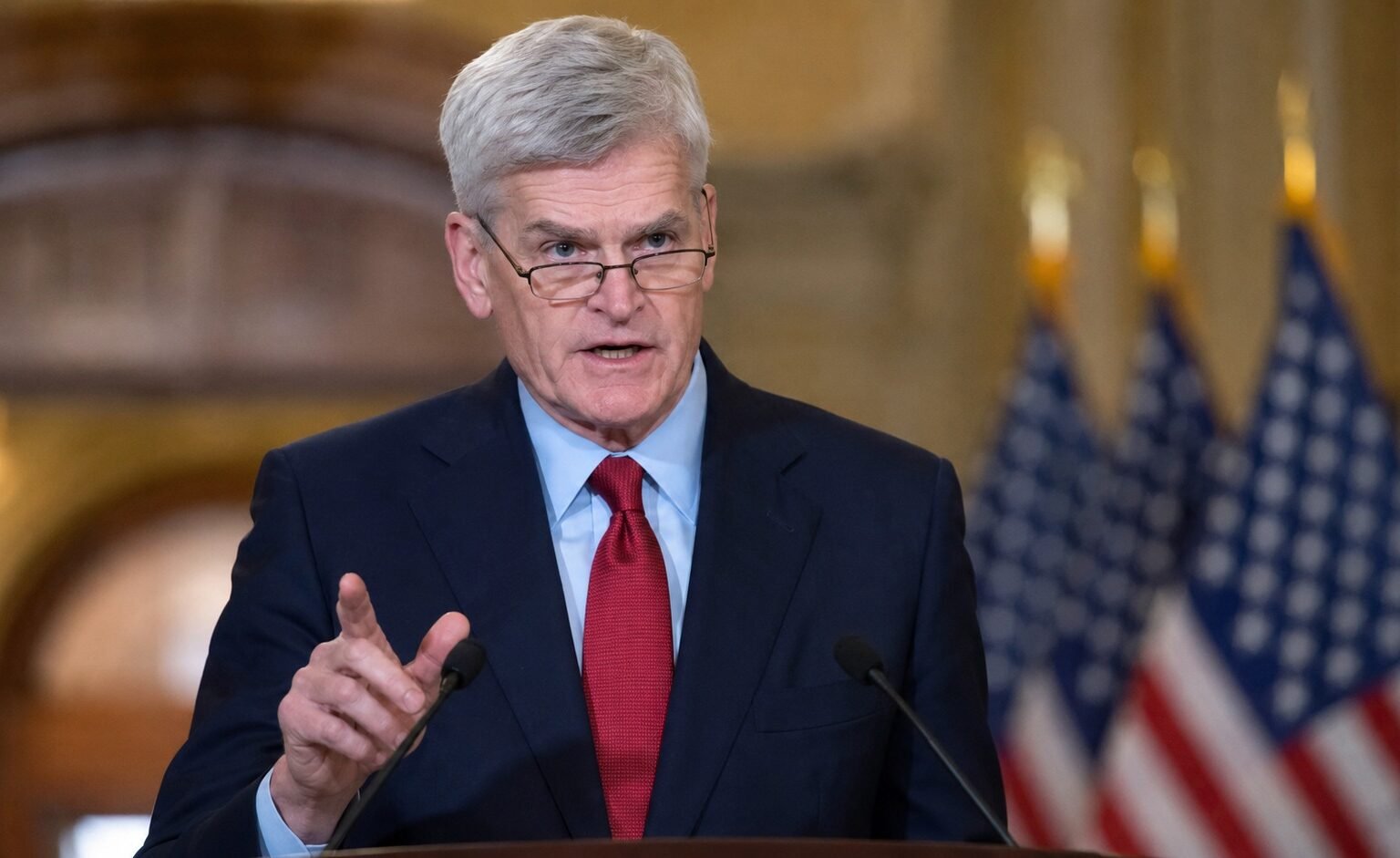
Republican Sen. Bill Cassidy of Louisiana has launched one of the sharpest intra-party attacks yet on President Donald Trump’s Iran deal, calling the agreement the “worst foreign policy blunder in decades” and declaring that “Reagan is rolling over in his grave.” The blistering criticism, delivered in mid-June, puts a sitting Republican senator squarely at odds with his own party’s president over the terms of the ceasefire that ended the war with Iran.
It’s the Deal, Not the War
The distinction Cassidy is drawing matters. His objection is not to the decision to confront Iran militarily — it is to the agreement Trump negotiated to bring the conflict to a close. In Cassidy’s view, the ceasefire trades away the long-term leverage the United States had built up through years of military and economic pressure, and does so in exchange for a deal whose terms he considers dangerously generous to Tehran.
According to the agreement, Iran is permitted to rebuild its nuclear infrastructure, the United States lifts a wide range of sanctions, the Strait of Hormuz reopens to Iranian traffic, and a substantial reconstruction fund is established to help rebuild the country. For critics like Cassidy, each of those provisions chips away at the pressure campaign that was supposed to keep Iran from ever reaching a nuclear weapon.
Invoking Reagan Against a Republican President
The reference to Ronald Reagan is not incidental. For decades, Reagan has been the gold standard of Republican foreign policy — the president credited by the party with facing down adversaries from a position of unyielding strength. By invoking his memory against a sitting Republican president, Cassidy is making the most pointed argument available within his own party: that Trump’s approach represents a betrayal of conservative principles on national security, not an extension of them.
Cassidy’s core warning is that the deal hands Iran a path back toward a nuclear weapon while simultaneously easing the economic strain that was meant to force concessions. In other words, he argues, the United States gave up its strongest cards — sanctions and military leverage — and got an agreement that lets Iran rebuild rather than disarm.
GOP Infighting in the Open
What makes the moment significant is not simply the substance of the criticism but its source. When a member of the president’s own party publicly brands his signature foreign policy achievement a historic blunder, it signals that the disagreement has moved beyond private grumbling into open conflict. Cassidy’s language — “worst foreign policy blunder in decades” — leaves little room for a quiet reconciliation.
The dispute now centers on a single question: does the agreement actually contain Iran, or does it quietly give Tehran everything it wanted? Supporters of the deal frame it as the end of a costly war and a return to stability, including the reopening of a critical shipping lane. Detractors like Cassidy see a short-term headline purchased at the cost of long-term security.
What This Means for Americans
For ordinary Americans, the stakes are concrete. A deal that allows Iran to rebuild its nuclear program could reshape security in the Middle East for a generation, with ripple effects on energy markets, military commitments, and the risk of future conflict. When scrutiny of that deal is coming not from the opposition but from inside the president’s own party, it raises the accountability question that voters ultimately have to weigh: was this agreement a genuine path to peace, or a costly miscalculation dressed up as one?
Stay informed on the stories that matter most. Follow Your Daily Updates on Facebook and bookmark yourdailyupdates.news for breaking news and analysis.