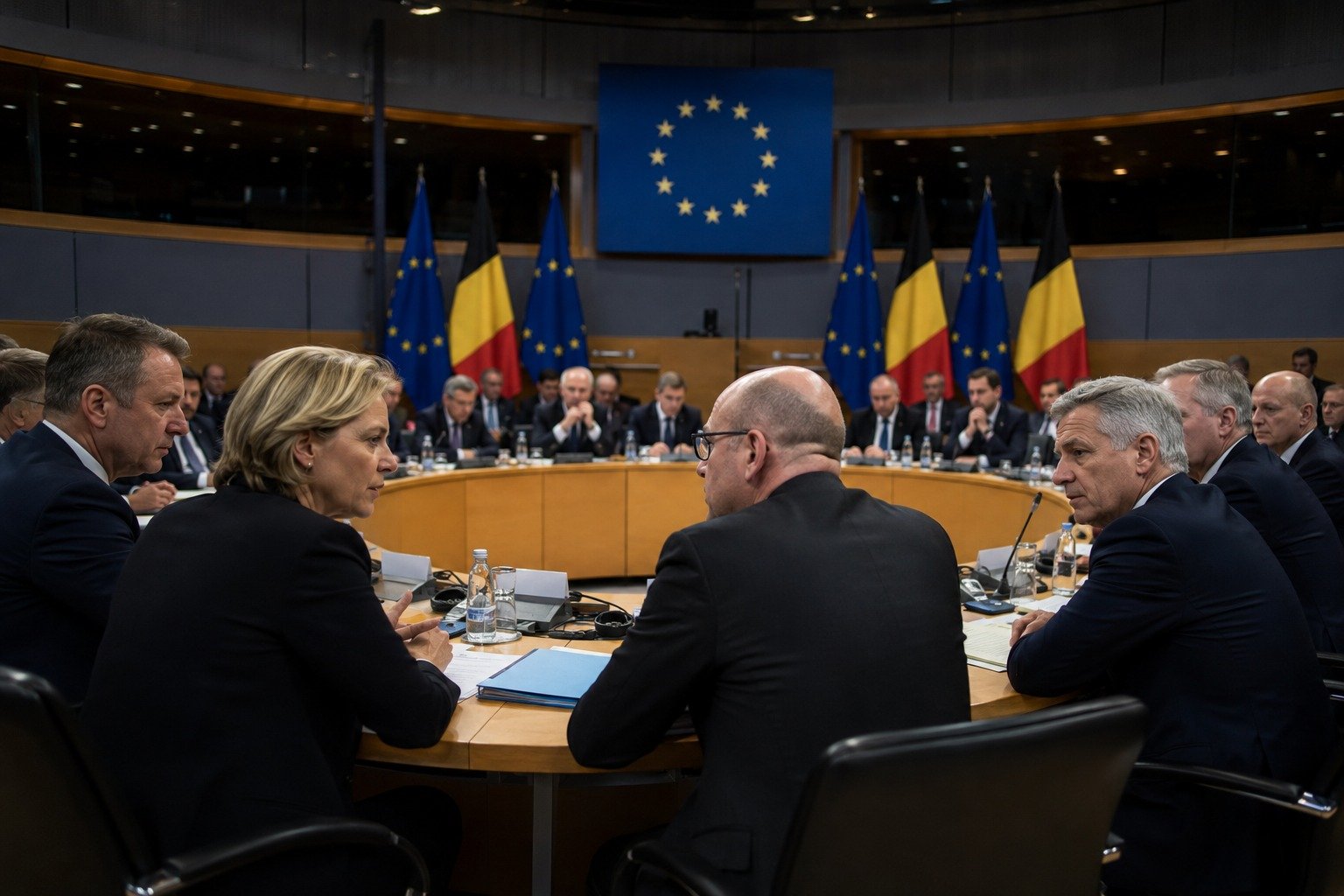
Belgium has launched one of the most aggressive diplomatic offensives in Europe over the Gaza war, announcing sweeping sanctions against Israel and pushing the entire European Union to suspend its landmark trade agreement with the country. The move signals a deepening fracture inside the 27-member bloc — and it’s forcing every European government to pick a side.
What Belgium Is Demanding
Belgium’s government has called on the EU to suspend its Association Agreement with Israel — a comprehensive partnership covering trade, research cooperation, and aviation access that forms the backbone of economic ties between the bloc and Israel. At the same time, Belgium has moved unilaterally, banning imports of goods produced in Israeli settlements in the occupied West Bank and expanding its arms embargo. Belgium now joins a small group of EU member states — including Spain and Slovenia — that have taken formal steps to restrict military exports to Israel.
Beyond trade and arms, Belgium announced additional sanctions targeting specific Israeli officials and is pushing for EU-level action through Brussels. The government has framed its position as a matter of international legal obligation, not just political choice.
Growing European Pressure
Belgium is far from alone. Spain, Ireland, and Slovenia have all backed the push to reconsider or suspend the EU-Israel Association Agreement — the central trade framework that gives Israel preferential access to European markets. The pressure has grown to the point that United Nations experts formally called the immediate suspension of the trade deal a “minimum requirement” under international law, citing Israel’s conduct in Gaza. The European Commission itself has now proposed suspending trade concessions with Israel and imposing sanctions on extremist Israeli government ministers and violent settlers in the West Bank.
The EU did reach consensus in May 2026 on a targeted sanctions package against Israeli settlers and Hamas leaders — a sign that some collective action is possible. But the harder question of suspending the full Association Agreement remains deadlocked.
Germany and Italy Are Blocking It
Not every EU member state is on board. Germany and Italy have actively blocked efforts to suspend the EU-Israel trade pact, making it impossible to reach the consensus required for bloc-wide action. Both countries have argued against using trade as a tool of political pressure, putting them at direct odds with Belgium, Spain, Ireland, and Slovenia. The divide inside Europe is now impossible to ignore — on one side, countries pushing for real economic consequences; on the other, major EU powers resisting any move that could rupture relations with Israel.
What the EU-Israel Association Agreement Actually Is
The EU-Israel Association Agreement, in force since 2000, gives Israel significant preferential access to European markets — covering goods, services, and research programs. Israel participates in Horizon Europe, the EU’s flagship scientific research program, under this agreement. Suspending it would have real economic consequences for both sides, which is precisely why the debate is so contentious. Critics of suspension argue it would harm Israeli civilians and EU economic interests alike. Supporters argue that maintaining normal trade relations while a war in Gaza continues sends the wrong signal about Europe’s commitment to international law.
What This Means for Americans
The EU’s internal fight over Israel trade policy matters beyond Europe. The United States is Israel’s most important ally and largest source of military aid — and how Europe moves on this question shapes the global diplomatic environment around U.S. policy. If the EU eventually suspends its trade agreement, it would increase pressure on Washington to re-examine its own approach. For American taxpayers who fund billions in annual aid to Israel, the direction of European policy is a direct signal of where the international consensus is heading — and whether the U.S. will find itself increasingly isolated in its stance.
Stay informed on the stories that matter most. Follow Your Daily Updates on Facebook and bookmark yourdailyupdates.news for breaking news and analysis.