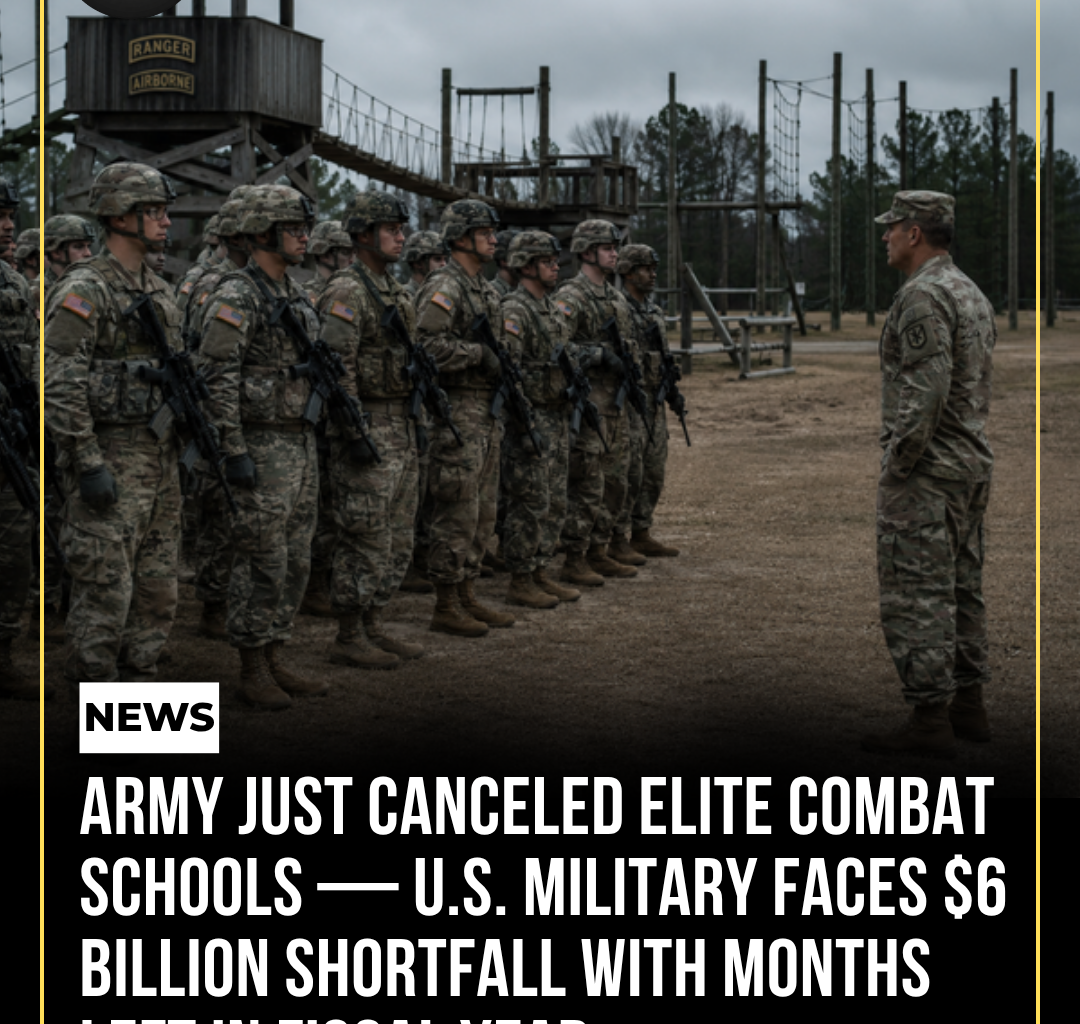
The U.S. Army has quietly begun canceling some of its most demanding training programs — not because of a change in strategy, but because it has run out of money. With months still remaining in the fiscal year, the military is staring down a budget shortfall estimated between $4 and $6 billion, and the cuts are already hitting hard.
Among the casualties: the Sapper Course, one of the Army’s most grueling combat engineering schools, has been suspended. The Sapper Course is widely regarded as one of the most physically and mentally demanding programs in the Army’s training pipeline. Soldiers who complete it earn the Sapper tab — a distinction that signals elite-level expertise in combat engineering, demolitions, and small-unit tactics. Suspending it mid-year doesn’t just affect the soldiers who were enrolled. It sends a signal about where the Army’s finances actually stand.
Artillery training at Fort Campbell has also been paused. And in one of the more striking moves, the Army has trimmed the minimum flight hours required for pilots — a decision that raises serious questions about operational readiness at a time when global tensions are anything but settled. Fewer flight hours mean less proficiency. Less proficiency means a readiness gap that, in a real-world conflict, could cost lives.
The shortfall isn’t a mystery. Three major spending pressures have been draining the budget simultaneously: the deployment of National Guard troops to the southern border, ongoing support for overseas operations, and a years-long effort to modernize aging military infrastructure. Together, those three commitments are burning through roughly $1.1 billion per year beyond what was originally budgeted. Add that up over several years, and the gap becomes impossible to paper over.
What concerns defense officials most isn’t just the dollar figure — it’s the timing. The fiscal year doesn’t end until September. Canceling training programs mid-year means soldiers who were slated to build critical skills this cycle simply won’t. In most specialties, that means waiting until next fiscal year at the earliest for another opportunity. In high-demand fields like combat engineering or aviation, those aren’t slots that can be casually rescheduled. The readiness impact compounds over time.
Congressional leaders have been briefed on the situation. The Army has been transparent with Capitol Hill about the scale of the shortfall. But as of now, no emergency supplemental appropriation has been passed. The legislative calendar has not moved quickly enough to provide relief before the current round of cuts took effect. Whether Congress will act before the fiscal year closes remains an open question.
The Army has made clear it is doing what it can with the resources it has. Officials have emphasized that core combat readiness and active deployment support remain protected. The cuts have been targeted at training pipelines and administrative overhead rather than units currently deployed or on standby. But in an institution where readiness is built through sustained, cumulative training, even targeted cuts in the pipeline carry long-term costs.
The broader picture is one of a military institution caught between competing financial demands and a constrained budget environment. The border mission, the overseas commitments, and the infrastructure modernization push are all legitimate priorities — but they were never fully funded in combination. That bill is now coming due, and the Army’s elite training schools are paying part of it.