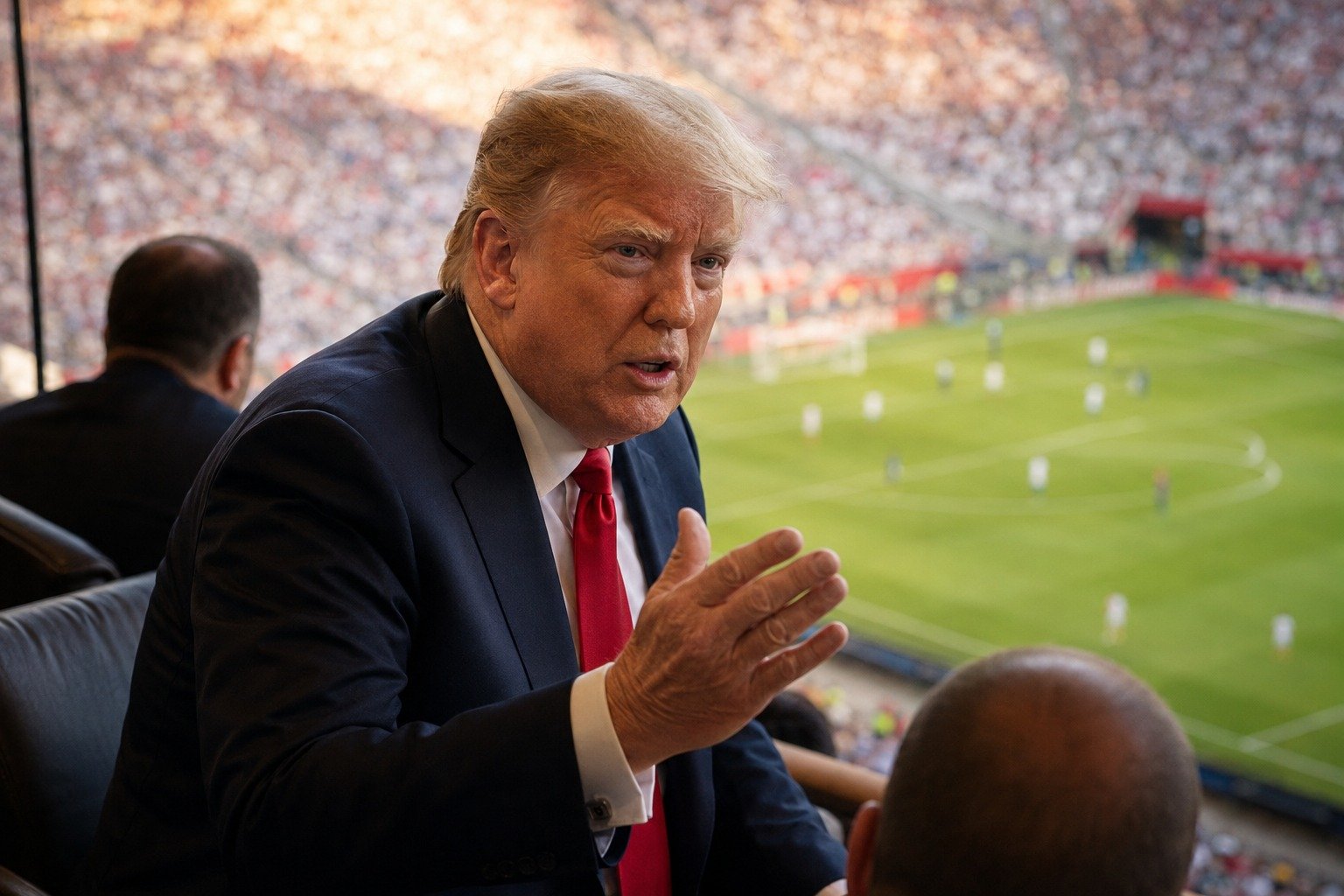
Donald Trump reached into the World Cup — and now dozens of European lawmakers want answers. More than 30 Members of the European Parliament are circulating a letter demanding that FIFA investigate its own president, Gianni Infantino, after Trump personally intervened on behalf of the United States men’s national team during the tournament’s knockout round.
The controversy traces back to July 1, when American striker Folarin Balogun was shown a red card in the group-stage match against Bosnia and Herzegovina. Under the tournament’s rules, a straight red card carries an automatic suspension — meaning Balogun would ordinarily have been forced to sit out the United States’ next match.
That is not what happened. According to the lawmakers, Trump made direct contact with Infantino, and shortly afterward FIFA lifted Balogun’s suspension, clearing him to play in the round of 16. The intervention did not change the result on the field: the United States went on to lose to Belgium 4-1 and was eliminated from the competition.
For the members of the European Parliament now raising the alarm, the final score is beside the point. What troubles them is the precedent — the idea that a head of state could pick up the phone and prompt the governing body of world soccer to reverse a disciplinary decision made on the pitch.
The effort is being led by MEPs Barry Andrews, Lara Wolters and Niels Fuglsang, who initiated the letter and have been gathering signatures from colleagues across the chamber. As of July 7, roughly 35 lawmakers had signed on. The letter urges national football associations to press FIFA’s Ethics Committee to open a formal investigation into how the suspension was overturned and what role outside pressure played in the decision.
The lawmakers frame the episode as part of a broader concern about political neutrality at the top of the sport. In their letter, they point not only to the Balogun reversal but also to a FIFA prize that was awarded to Trump himself, arguing that the accumulation of such moments raises legitimate questions about whether the organization is maintaining the independence its own rules require.
It is important to be precise about where this stands. This is a call for a probe, not an investigation that has already been opened. No formal inquiry has been launched, and the letter is still collecting signatures. FIFA’s Ethics Committee has the authority to review conduct by officials, but any decision to act would come later, and only if national associations take up the request.
Still, the symbolism is hard to miss. One of the most powerful figures in the world appeared to lean on the head of global soccer to undo a referee’s call in favor of the host nation’s team — and lawmakers an ocean away decided the matter was serious enough to put their names to a formal demand for scrutiny.
The questions the episode raises are likely to outlast the tournament itself. Should a sitting president be able to intervene in the officiating of an international sporting event? And if the governing body accommodates that kind of request, what does it mean for the fairness the sport promises every other nation on the field? For now, the answer rests with FIFA’s Ethics Committee — and with whether the lawmakers’ letter gathers enough momentum to force the issue.