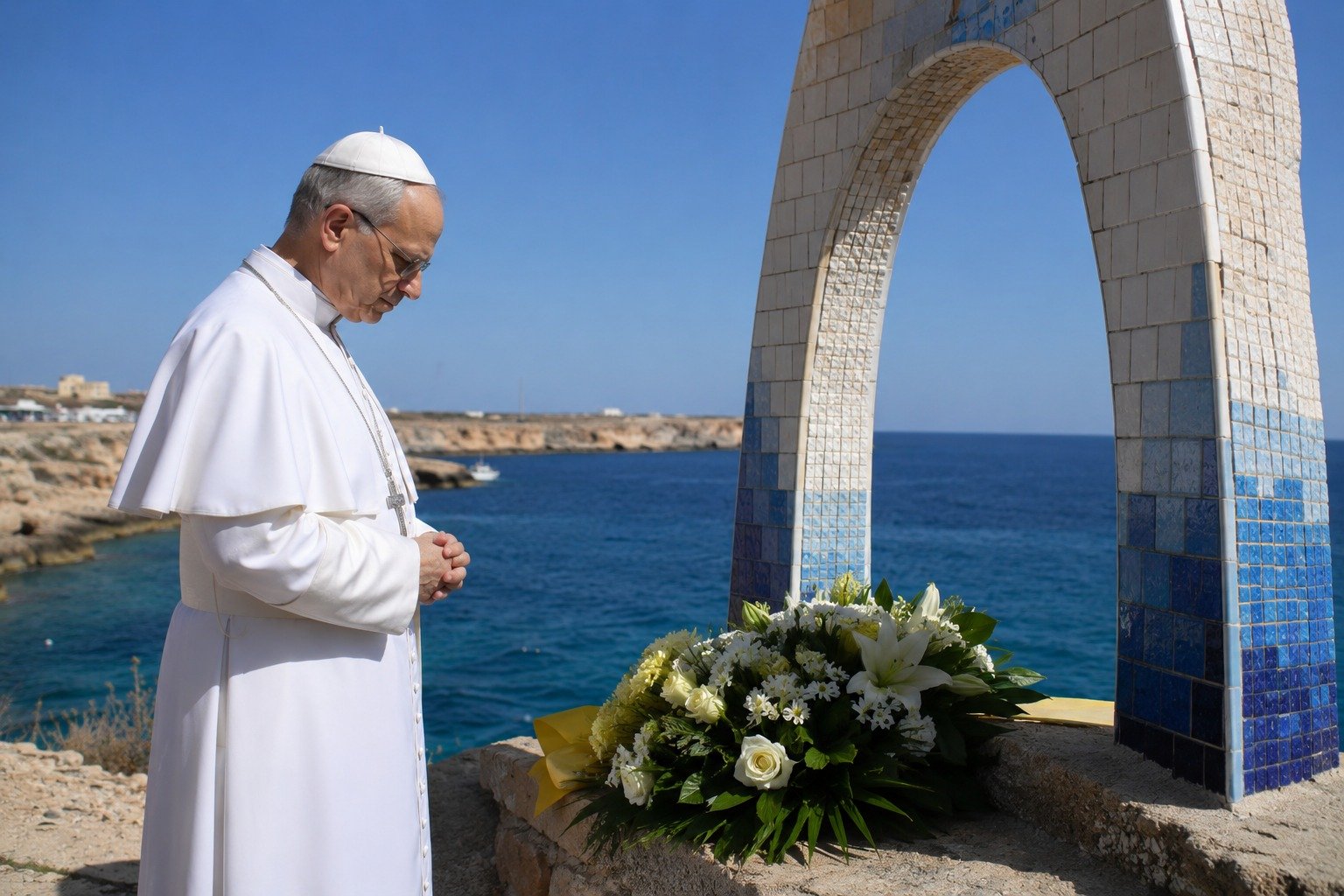
Pope Leo XIV traveled to the Italian island of Lampedusa on July 4, 2026, and used the visit to press Europe on one of its most divisive questions: how it treats the migrants who risk everything to reach its shores. Standing at the edge of the continent, he laid a wreath for those who have died at sea and called on European nations to “receive, protect, support and integrate migrants.”
Why Lampedusa Matters
Lampedusa is a small island closer to the coast of North Africa than to the Italian mainland. For decades it has been the first piece of European soil that hundreds of thousands of people reach after crossing the Mediterranean in overcrowded, often unseaworthy boats. It has become a symbol of both hope and tragedy.
The waters around the island are among the deadliest migration routes in the world. Thousands of men, women and children have drowned attempting the crossing. That grim reality is what makes the island such a powerful stage for a moral message.
What the Pope Did
During the visit, Pope Leo laid a wreath to honor the migrants lost at sea. He then stopped at the “Door of Europe,” a ceramic-tiled monument that overlooks the Mediterranean and stands as a memorial to those who never completed the journey.
It was from that threshold that he delivered his appeal to the continent. His words were not a decree or a policy directive. They carry no force of law and change no border rule. What they carry is moral weight, delivered at the exact spot where the human cost of Europe’s migration debate is most visible.
The trip deliberately echoed history. Lampedusa was the destination of the first journey Pope Francis took after his election in 2013, when he condemned what he called a “globalization of indifference” toward migrants. By returning to the same island, Pope Leo signaled that the church intends to keep the issue at the center of its public witness.
Reactions and Implications
Advocates for migrants welcomed the appeal, framing it as a reminder that the people crossing the Mediterranean are not statistics but human beings. Critics of Europe’s hardline border policies argued the visit put a spotlight on the gap between the continent’s stated values and the way it treats those arriving in desperation.
The appeal lands as many European governments continue to tighten asylum rules and expand efforts to stop boats before they reach land. Whether the pope’s words move any of those leaders remains an open question. Moral pressure and political policy do not always meet.
What This Means for Readers
The debate over how wealthy nations treat migrants is not confined to Europe. It echoes arguments playing out across the United States and much of the world about borders, compassion and responsibility. When one of the most recognizable moral voices on the planet stands at a memorial for the drowned and asks nations to do better, it forces a question that no country handling migration can avoid: what do we owe the people who arrive at our door?
Stay informed on the stories that matter most. Follow Your Daily Updates on Facebook and bookmark yourdailyupdates.news for breaking news and analysis.