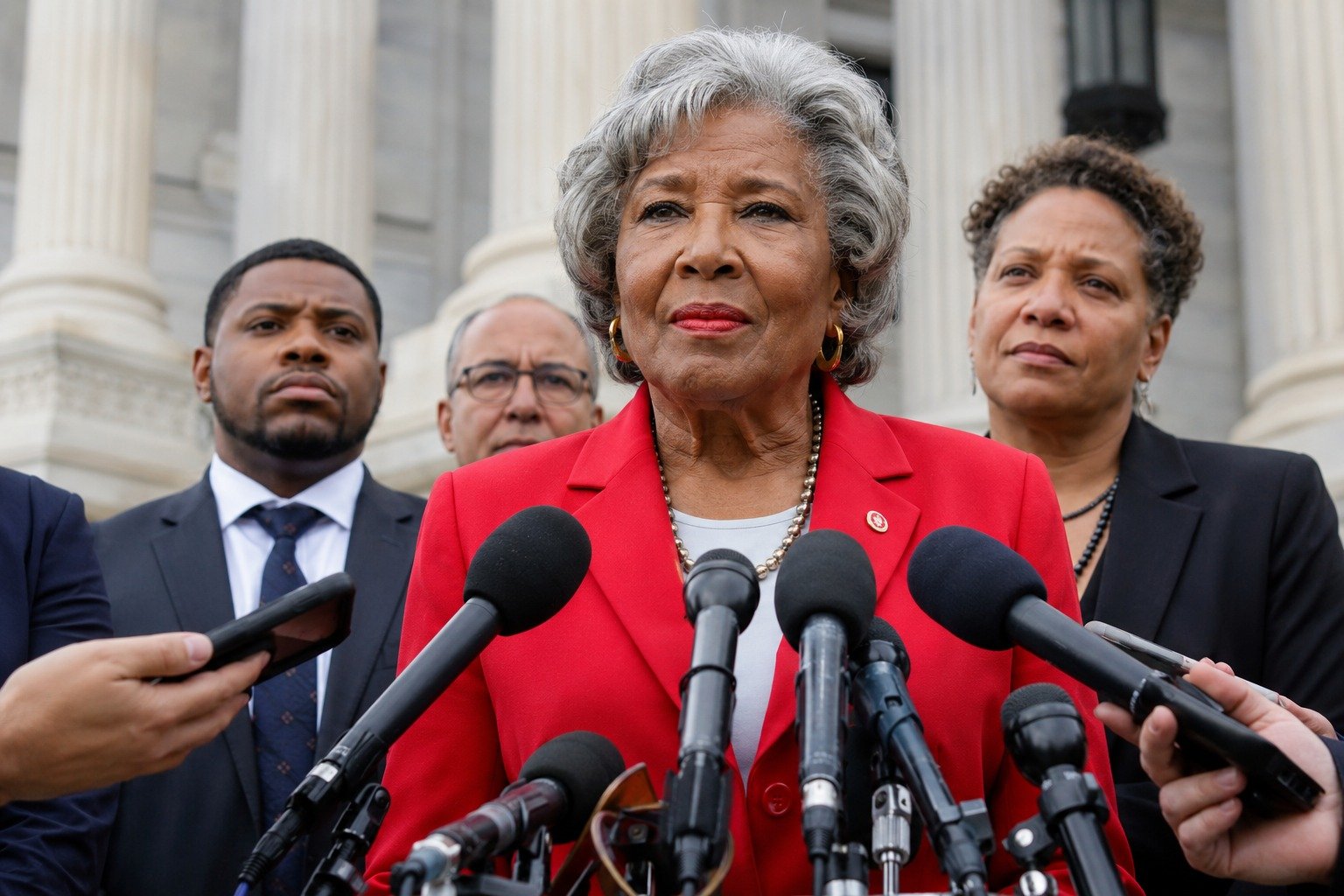
A federal judge has handed Rep. Joyce Beatty a decisive courtroom victory over Donald Trump, ruling that his name was illegally added to the John F. Kennedy Center for the Performing Arts and blocking the planned shutdown of one of the nation’s most famous cultural institutions. U.S. District Judge Christopher Cooper found that Trump’s handpicked board broke the law when it moved to rename the storied venue after him.
How the Fight Started
The battle traces back to late 2025, when a board reshaped by Trump appointees voted to rename the Kennedy Center in his honor. Beatty, a Democrat from Ohio who serves as an ex-officio member of the Center’s board, sued to stop the renaming, arguing it violated the law governing the federally chartered institution.
The stakes grew sharply in early 2026. Following a stretch of declining ticket sales, the administration abruptly announced the Kennedy Center would shut its doors, framing the closure as a pause for renovations. Beatty amended her lawsuit to challenge that shutdown as well, and the case landed in Judge Cooper’s Washington, D.C. courtroom.
What the Judge Ordered
Cooper’s ruling reversed the renaming and halted the shutdown. His order requires the administration to remove all signage bearing Trump’s name from the building, scrub his name from the Center’s website, and withdraw every trademark application filed for a “Trump Kennedy Center.” The defendants were given a tight window to comply and must submit sworn proof to the court that they have done so.
The judge went further, separately blocking the plan to wind down the Center’s programming and close its doors. He also ordered that Beatty’s voting rights as an ex-officio trustee be restored, reversing a move that had sidelined her on the board.
A Ruling That Can Still Be Appealed
Importantly, this is a preliminary ruling, not a final settled outcome. The administration retains the right to appeal, and the judge did not categorically bar a future closure if it is carried out through proper, lawful deliberation. Cooper also allowed necessary repair work at the Center to continue while the larger legal questions play out.
In other words, the door is not permanently shut on either side. But for now, the practical effect is clear: Trump’s name comes down, the trademark push stops, and the Kennedy Center stays open.
Reaction and What It Means
Beatty framed the decision as a win for the rule of law, casting it as a check on an administration that tried to stamp its identity on a public institution and then shutter it with little warning. Supporters of the ruling see it as an affirmation that even the most powerful officials must follow the statutes that govern federal institutions.
For everyday Americans, the case is about more than a building or a name on a wall. The Kennedy Center is a national cultural landmark supported in part by public resources, and the fight over its control tests whether such institutions answer to the law and the public — or to whoever happens to hold power. A court has now said, at least for the moment, that the rules still apply.
Stay informed on the stories that matter most. Follow Your Daily Updates on Facebook and bookmark yourdailyupdates.news for breaking news and analysis.