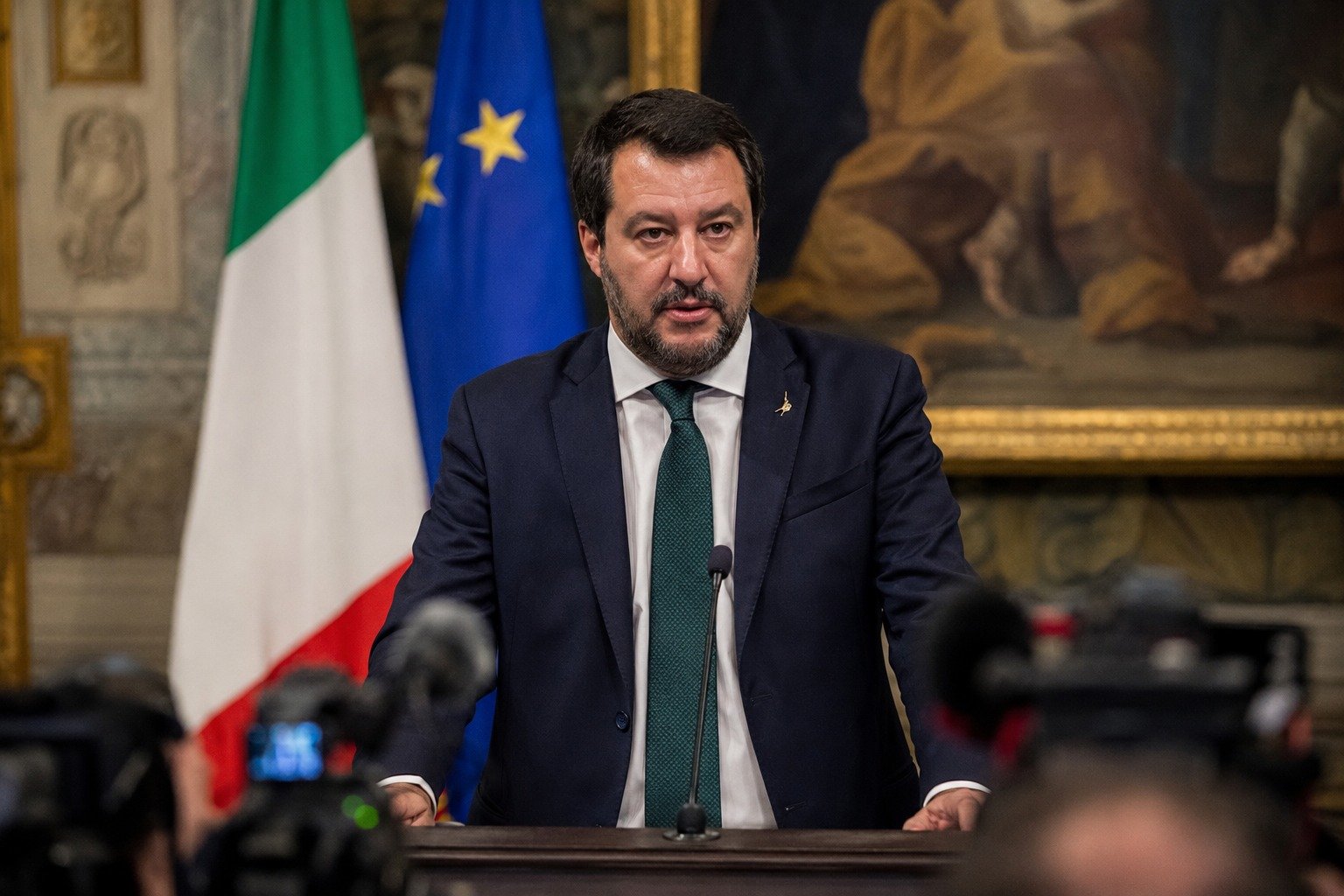
Italy is moving toward one of the toughest sentencing measures in Europe. Deputy Prime Minister Matteo Salvini and his League party are pushing to make chemical castration available as a sentencing option for people convicted of the most serious s*x crimes, including offenses against children. This week the Italian Parliament took a first concrete step, approving the creation of a committee that could begin drafting such a law.
A Push, Not Yet a Law
It is important to be precise about what has actually happened. This is a legislative push, not a law in force. No offender is being ordered onto any treatment as a result of this vote. The committee step opens the door to legislation and signals political intent, but it does not enact anything on its own. Any binding rule would still have to be written, debated, passed by both chambers, and survive constitutional review.
The phrase “chemical castration” is also more dramatic than the mechanism it describes. It does not refer to a surgical procedure. In practice it means reversible, hormone-blocking medication that lowers testosterone and reduces sexual drive – the same class of drugs used elsewhere as a voluntary treatment. In the proposals circulating in Rome, it would be offered as part of sentencing rather than as a permanent physical act.
How the Proposal Took Shape
Salvini, who leads the right-wing League and serves as a deputy prime minister in Italy’s governing coalition, has long campaigned on a law-and-order platform. He has repeatedly called for chemical castration for the worst s*x offenders, framing it as a matter of protecting children and giving courts a stronger deterrent. A string of high-profile assault cases has kept the issue in Italian headlines and fueled public anger.
The parliamentary vote to establish a committee is the furthest this idea has advanced. Supporters see it as the first real machinery for turning a slogan into statute. Opponents see it as a political signal designed to dominate a news cycle. Either way, the measure now has an official venue in which it can be developed – and that is what makes this moment different from previous rounds of rhetoric.
A Deeply Contested Idea
Supporters argue that s*x offenses, especially those against children, demand serious accountability, and that giving judges the option of hormone-suppressing treatment could reduce the risk of repeat offenses. For many Italians furious over recent cases, the proposal lands as a promise that the justice system will finally treat these crimes with the gravity they deserve.
Legal scholars and human-rights groups are far more cautious. They warn that mandatory medical measures tied to sentencing raise real constitutional and ethical questions in a country whose constitution protects personal dignity and bodily integrity. They also note that the evidence on whether such treatment actually prevents reoffending is mixed and far from settled – most studies involve voluntary programs, not court-imposed ones. Critics say hardline politics is running ahead of the science.
What This Means
For now, this remains a proposal advancing through committee – a marker of where Italy’s governing coalition wants to steer the debate, not the law of the land. Whether it becomes enforceable policy will depend on whether an actual bill is written, how it defines consent and reversibility, and whether it can survive the courts. The debate over how societies punish and prevent the most serious crimes, without crossing lines on human rights, is one that reaches well beyond Italy’s borders.
Stay informed on the stories that matter most. Follow Your Daily Updates on Facebook and bookmark yourdailyupdates.news for breaking news and analysis.