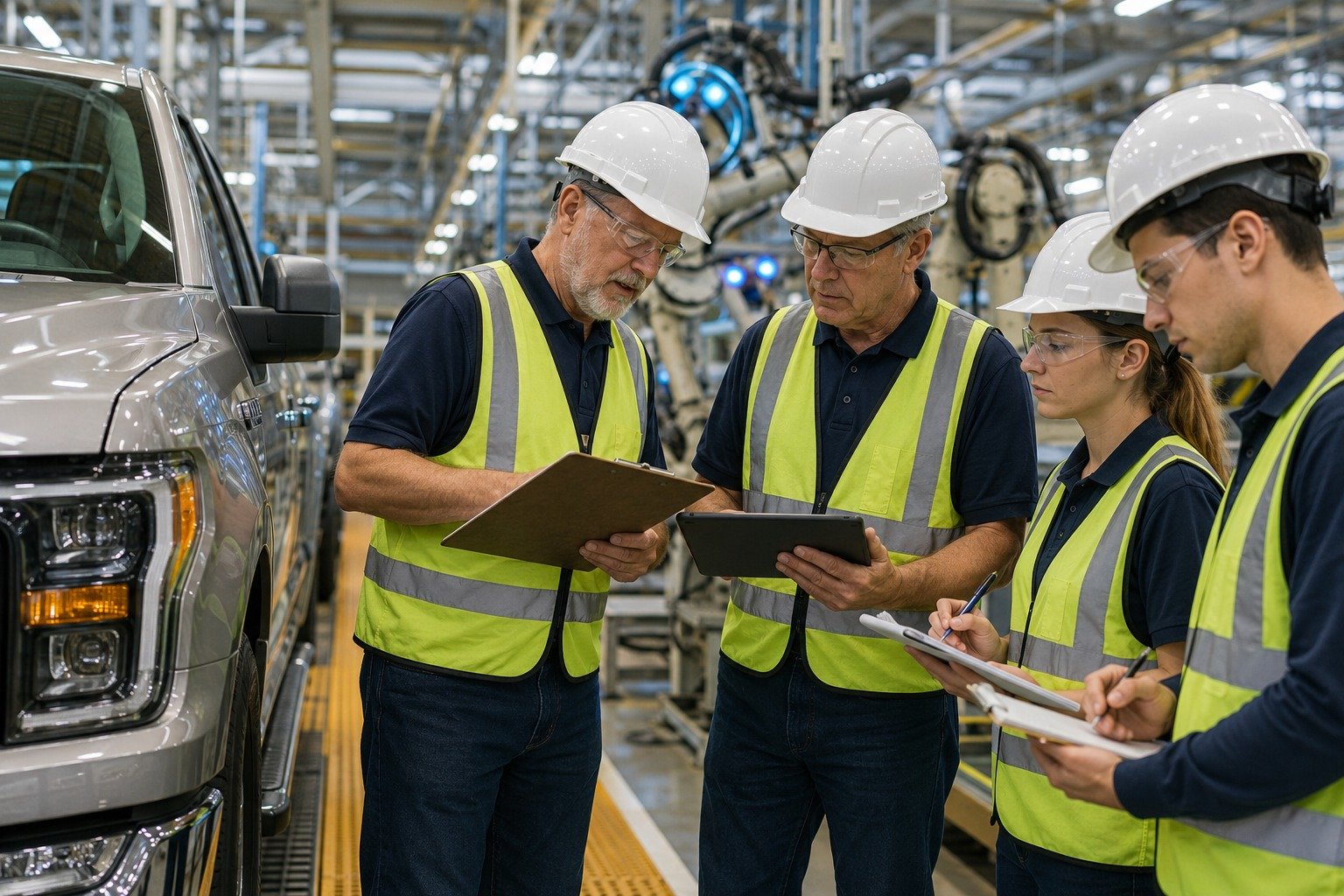
Ford spent years betting that automation could solve its quality problems. It couldn’t — at least not on its own. Now the automaker has quietly brought back about 350 veteran engineers, many of them retirees and longtime supplier specialists, to do the work its automated and AI-driven quality systems failed to deliver.
The reversal, detailed by Ford executives in recent interviews, is a striking admission from one of America’s largest manufacturers: the technology it leaned on to guarantee build quality fell short, and the fix came down to experienced human beings.
What AI Was Missing
Chief Operating Officer Kumar Galhotra put the miscalculation plainly. Ford had assumed that feeding its design requirements into artificial intelligence systems would automatically produce high-quality vehicles. Instead, the company found the tools were missing something that can’t be coded or downloaded: decades of hard-won, hands-on engineering judgment.
That practical knowledge — the instinct to spot a flaw before it becomes a recall, the memory of how a component behaved on a line ten years ago — is exactly what the automated systems lacked. The machines could process the data they were given. They could not supply the experience.
The Veterans Are Retraining the Machines
Importantly, this is not Ford abandoning AI. The roughly 350 returning engineers — known internally as the “gray beards” — aren’t replacing the technology. They’re fixing it. The veterans now train younger staff, run weekly design reviews, and reprogram the AI tools so they flag defects before parts ever reach the assembly line.
It amounts to a strategic shift from “find and fix” — catching problems after the fact — to a preventive model that hunts down flaws before a vehicle is ever built, let alone sold. Human expertise is doing the steering; the technology is doing the work it’s actually good at, now that experienced people are directing it.
Hundreds of Millions in Savings
The payoff has been measured in real money. CEO Jim Farley credited the move with driving down warranty and recall costs, describing the cumulative savings as “hundreds and hundreds of millions of dollars of a tailwind” for the company. Warranty and recall expenses have been a persistent drag on Ford’s bottom line for years, and the decline marks a meaningful turnaround.
The results showed up where customers notice them most. In 2026, Ford topped the closely watched J.D. Power Initial Quality Study for the first time since 2010 — a milestone the company directly tied to bringing experienced engineers back into the room.
What This Means for Workers
Ford’s experience cuts against the prevailing narrative that automation can simply replace skilled labor. The company learned the hard way that the people it spent years learning to do without were the ones who could make the technology actually work. For workers watching companies rush to swap human judgment for algorithms, it’s a powerful data point: experience isn’t a cost to be cut — it’s an asset that pays for itself many times over.
The lesson lands hard in an era of automation hype. The AI worked far better once experienced humans were back in charge of it. Sometimes the smartest investment a company can make is in the people it already had.
Stay informed on the stories that matter most. Follow Your Daily Updates on Facebook and bookmark yourdailyupdates.news for breaking news and analysis.