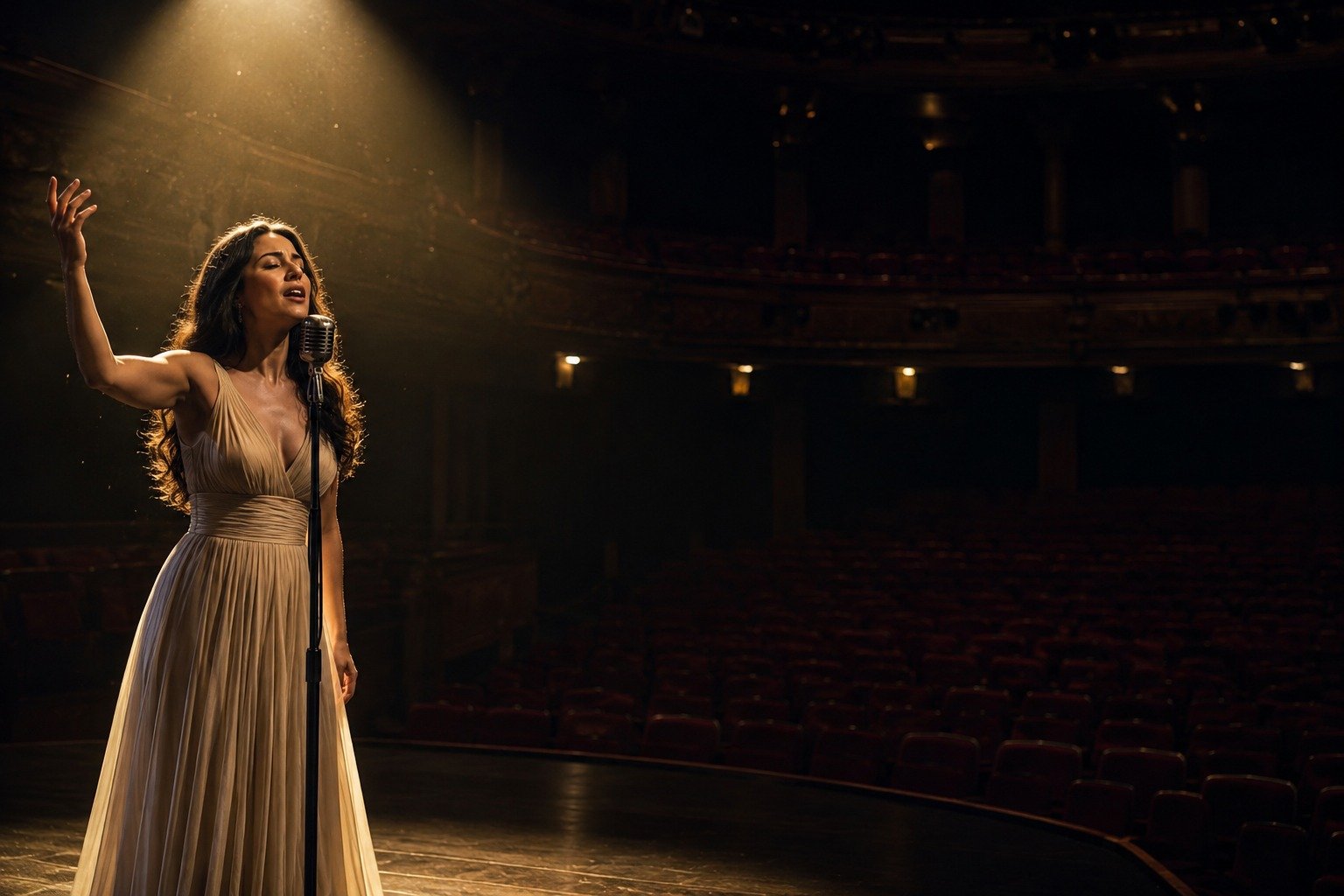
An Iranian court has sentenced singer Parastoo Ahmadi to 74 lashes after she performed a concert online without wearing a hijab — a punishment that has reignited global outrage over Tehran’s treatment of women and artists. The 29-year-old vocalist and seven of her fellow musicians were convicted by the Qom Provincial Criminal Court, which also handed each of them a two-year ban on leaving the country and a two-year ban on any artistic activity.
A Song That Became a Crime
The performance at the center of the case took place in December 2024. Ahmadi released a livestreamed concert on YouTube — billed as the “Caravanserai” concert — in which she sang to an empty venue, accompanied by a small ensemble of musicians. She wore a flowing gown, her hair uncovered, openly defying Iran’s mandatory hijab law. The video spread quickly, turning a quiet recital into an act of public resistance.
Within days of the concert, Ahmadi and members of her team were detained. Prosecutors charged her with “offending public decency,” a vague catch-all frequently used by Iranian authorities to punish women who appear in public without the required head covering. What began as a piece of music became, in the eyes of the state, a criminal offense.
The Full Weight of the Sentence
The sentence, reported in mid-June 2026 roughly a year and a half after the concert, goes far beyond the 74 lashes that have drawn international headlines. Each of the eight artists also received a two-year ban on foreign travel and a two-year prohibition on engaging in any artistic work. Taken together, the penalties are designed not just to punish a single performance but to silence the performers long after the physical sentence has been carried out.
For a working musician, a two-year ban on artistic activity is a career-altering blow. It strips away the ability to record, release, or perform — the very things that define an artist’s life and livelihood. The travel ban compounds the isolation, cutting the artists off from international audiences and support networks that might otherwise amplify their case.
Defiance in the Face of Punishment
Ahmadi has not framed her performance as an accident or oversight. She has described singing freely as a right she could not give up — the simple act of performing for the people she loves, in the country she calls home. That defiance has made her a symbol for a movement that refuses to disappear.
Her case lands against the backdrop of the “Woman, Life, Freedom” uprising, the wave of protests that erupted after the 2022 death of Mahsa Amini in the custody of Iran’s morality police. Years later, the crackdown on women who reject the hijab continues, and Ahmadi’s sentence is a stark reminder that the state’s appetite for control has not eased. Human rights advocates have condemned the ruling as a flagrant assault on free expression and women’s rights.
What This Means
The image of a government ordering 74 lashes for a woman who dared to sing uncovered is the kind of injustice that crosses borders. It speaks to a broader fight over who gets to control women’s bodies, women’s voices, and the right to create art without fear. Each high-profile case like Ahmadi’s puts pressure on the world to keep watching — and to refuse to let these sentences be carried out in silence.
Stay informed on the stories that matter most. Follow Your Daily Updates on Facebook and bookmark yourdailyupdates.news for breaking news and analysis.