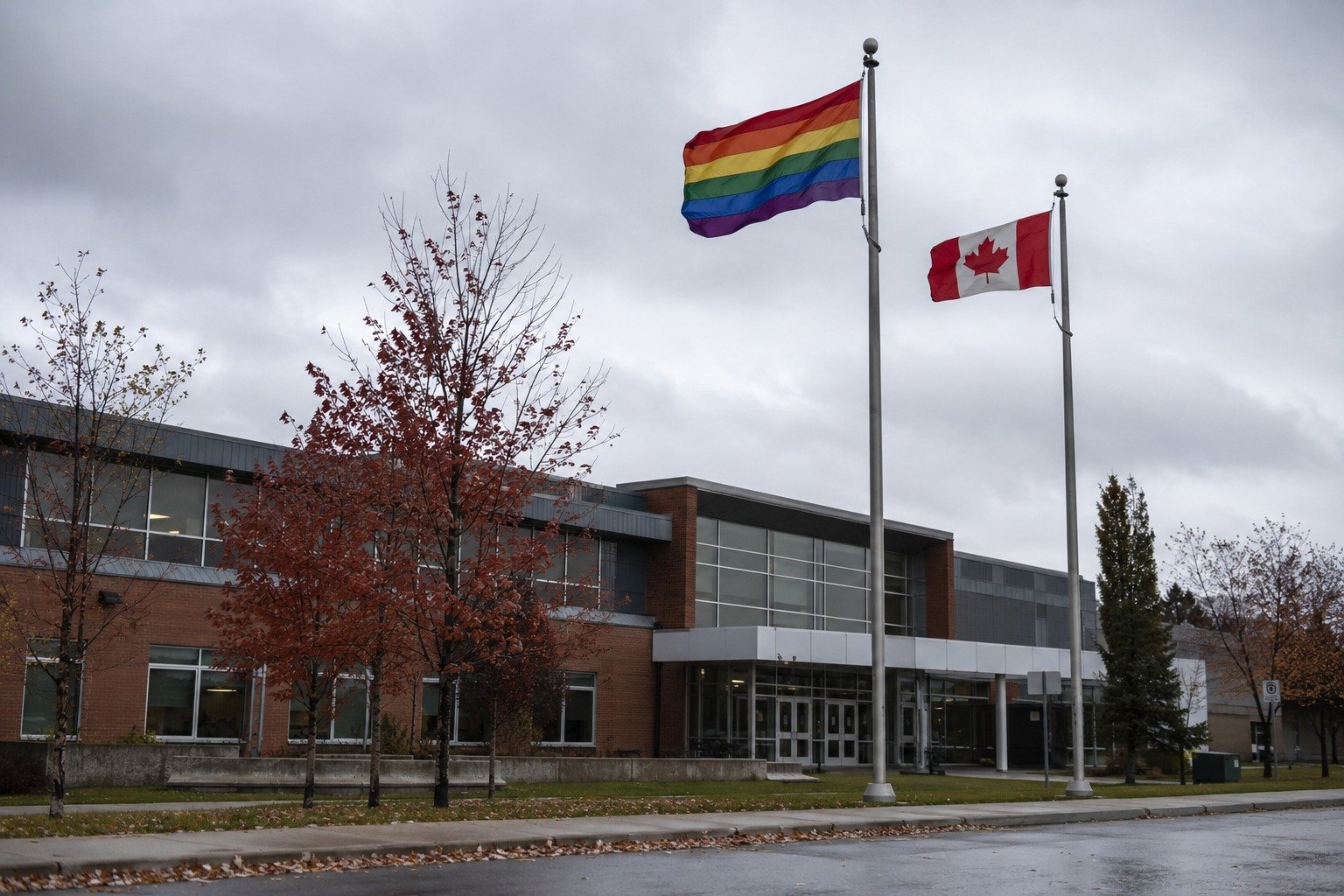
Starting September 1, schools across the Canadian province of Alberta could be barred from flying the Pride flag, the result of a new provincial law that supporters of LGBTQ students warn is a deliberate step backward. The change comes through Bill 25, government legislation that would strictly limit which flags can fly at schools – and the rainbow flag is not on the approved list.
What Bill 25 Actually Does
Introduced by Alberta’s provincial government on March 31, 2026, Bill 25 would restrict the flags flown at schools to just two: the Canadian flag and the Alberta flag. The Pride flag is never named in the text of the legislation. It does not need to be. Because the rainbow flag is not an official government flag, it falls outside the two permitted categories – and would effectively be excluded from school grounds once the rules take effect.
It is worth being precise about the legal status of the measure. Bill 25 is the government’s proposed law, and the regulations that would spell out any exemptions are still being written. It has not finished every stage of becoming a fully settled statute. But the government has set it on a track to take effect September 1 – meaning the flags could come down just as a new school year begins. Major outlets including CBC and The Globe and Mail have reported on the bill and its expected reach.
“Neutrality” Or A Targeted Rollback?
The government has framed the policy as a move toward neutrality in schools, arguing that public institutions should fly only official government flags and stay out of contested cultural debates. To its supporters, the rule is about consistency and keeping schools focused on education rather than activism.
Critics see something very different. For years, the rainbow flag outside a school has functioned as a simple, visible signal to students that they are safe and welcome there. To LGBTQ youth – who are statistically among the most vulnerable to bullying, isolation, and mental health struggles – that small piece of fabric on a flagpole can carry real weight. Remove it, opponents argue, and the message of belonging disappears with it. They contend that a policy aimed at a single, recognizable symbol of one community is not neutral at all, but a targeted rollback of LGBTQ visibility dressed up in the language of fairness.
Students And Educators Push Back
The response from inside Alberta’s school communities has been swift. Students, teachers, and parents across the province have begun organizing against the measure, warning that it sends a chilling message to young people who already feel on the margins. Educators argue that a flagpole is not a partisan battleground – it is a daily, wordless reminder to kids walking through the front doors that their school sees them and stands with them.
The fight has also reignited a broader debate playing out in many places: who gets to decide what a flag means, and what a school is allowed to say to its most vulnerable students. For supporters of the bill, the answer is the elected government. For its opponents, the decision to strip a symbol of safety from school grounds is exactly the kind of move a democracy should scrutinize closely.
Why It Matters
Flag policies may sound like a small administrative detail, but they are often where larger fights over inclusion get decided in public. What happens in Alberta will be watched well beyond the province, because the underlying question – whether governments can quietly legislate a community’s symbols out of public spaces – resonates far past one school year or one flagpole. For LGBTQ students and the adults who support them, the stakes are personal: a sense of safety that took years to build can be reversed with a single line of legislation.
The fight over what a flag means, and who gets to decide, is far from over.
Stay informed on the stories that matter most. Follow Your Daily Updates on Facebook and bookmark yourdailyupdates.news for breaking news and analysis.