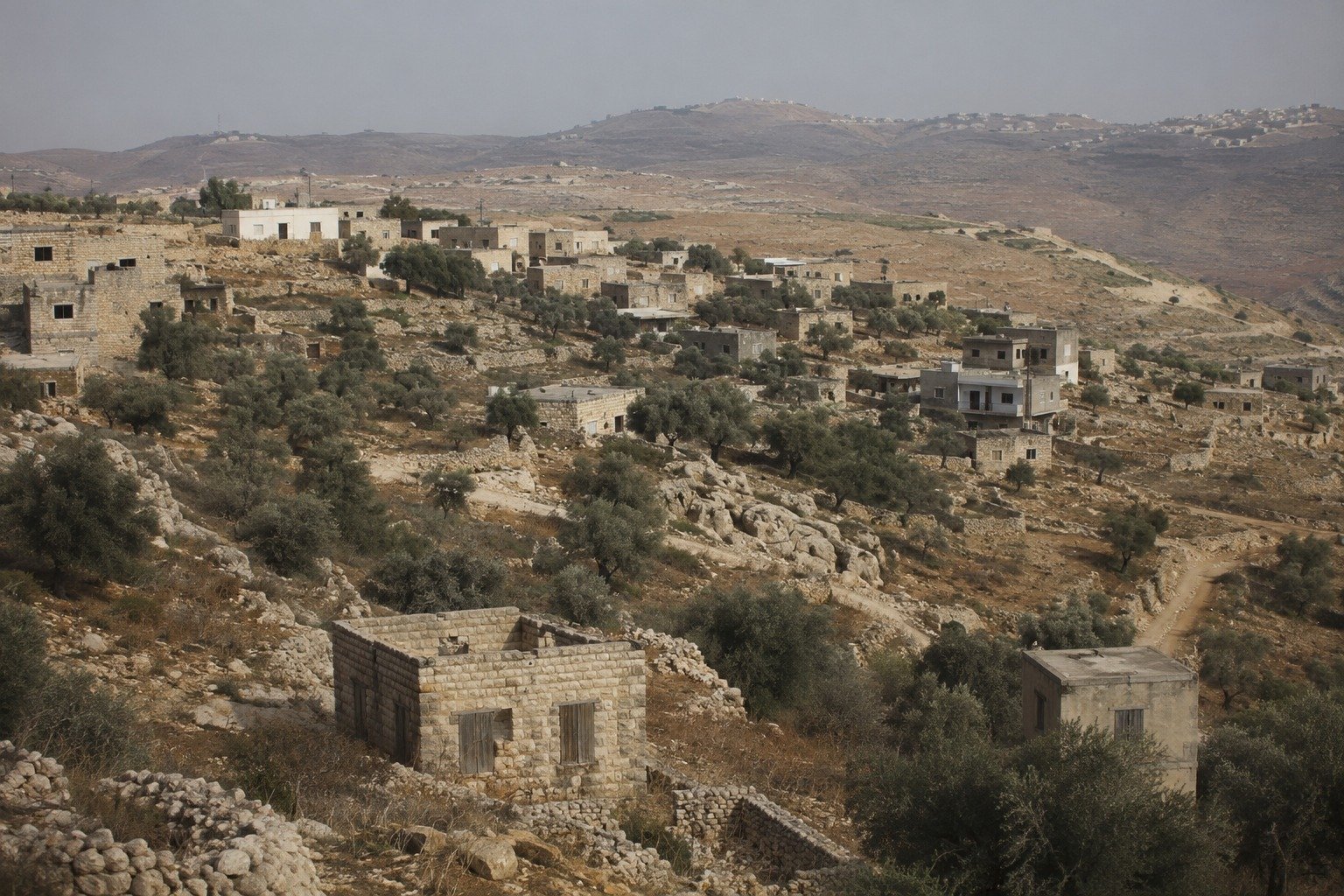
Amnesty International has accused the Israeli government of carrying out a state-driven campaign of “ethnic cleansing” against Palestinians in the occupied West Bank, in a sweeping new report the human rights group says points to a deliberate push toward annexation. The 149-page report, released this week, argues that the forced displacement of Palestinians is not the work of rogue settlers alone but the product of a concerted government policy.
It is one of the gravest characterizations Amnesty has leveled at Israel to date, and the organization is pressing world governments to respond before what it describes as annexation becomes irreversible.
“State-Sanctioned, State-Driven, State-Implemented”
The central claim in Amnesty’s report is about the role of the state. For years, much of the displacement in the West Bank has been attributed to violent settlers acting independently of the Israeli government. Amnesty argues that framing misses the bigger picture.
According to the group, the campaign is “state-sanctioned, state-driven and state-implemented.” In Amnesty’s telling, settler violence is not a side effect or an unfortunate byproduct — it is one instrument among many in a broader government strategy. “Settler violence is a core component of a state-sanctioned campaign of ethnic cleansing,” said Amnesty Secretary General Agnès Callamard, who urged the international community to act before annexation is locked into place.
The Numbers Behind the Accusation
Amnesty’s report leans heavily on United Nations data to make its case. It says that more than 100 West Bank villages have been fully or partially emptied between January 2023 and April 2026. The displacement, the group says, has hit some of the most vulnerable communities hardest.
Roughly 5,910 people have been forced from their homes, according to the figures cited in the report, with 117 predominantly Bedouin and herding communities pushed out by a combination of home demolitions, settler attacks, and access restrictions that make daily life unsustainable. The UN’s humanitarian office has separately tracked thousands of individual displacement incidents tied to the destruction of homes and structures over the same period.
Amnesty ties this directly to settlement expansion, framing the displacement as clearing the way for an accelerating annexation agenda in Area C, the portion of the West Bank under full Israeli control.
Israel’s Response and the Debate Ahead
Israel’s government has rejected accusations of this kind in the past, disputing the “ethnic cleansing” characterization and defending its actions in the West Bank as legitimate security measures. The accusation is Amnesty’s — a characterization made by the rights group, not an established legal finding — and it is certain to be contested sharply.
Still, the scale of the report and the data it marshals have already reignited a fierce international debate. Amnesty is calling on world governments to move from statements of concern to concrete action, arguing that silence amounts to watching a forced displacement unfold in real time. Critics of that view counter that the situation is far more complex than a single accusatory framing allows.
What This Means for Americans
The United States is Israel’s closest ally and its largest provider of military aid, which means American taxpayers and policymakers are never far from the center of this debate. When a major human rights organization accuses a close U.S. partner of a state-driven campaign of ethnic cleansing, it raises direct questions about American foreign policy, the conditions attached to aid, and how Washington responds to allegations of war crimes and crimes against humanity by an ally.
How the U.S. and other governments answer Amnesty’s call will help shape not only the future of the West Bank, but the credibility of the international human rights system itself.
Stay informed on the stories that matter most. Follow Your Daily Updates on Facebook and bookmark yourdailyupdates.news for breaking news and analysis.