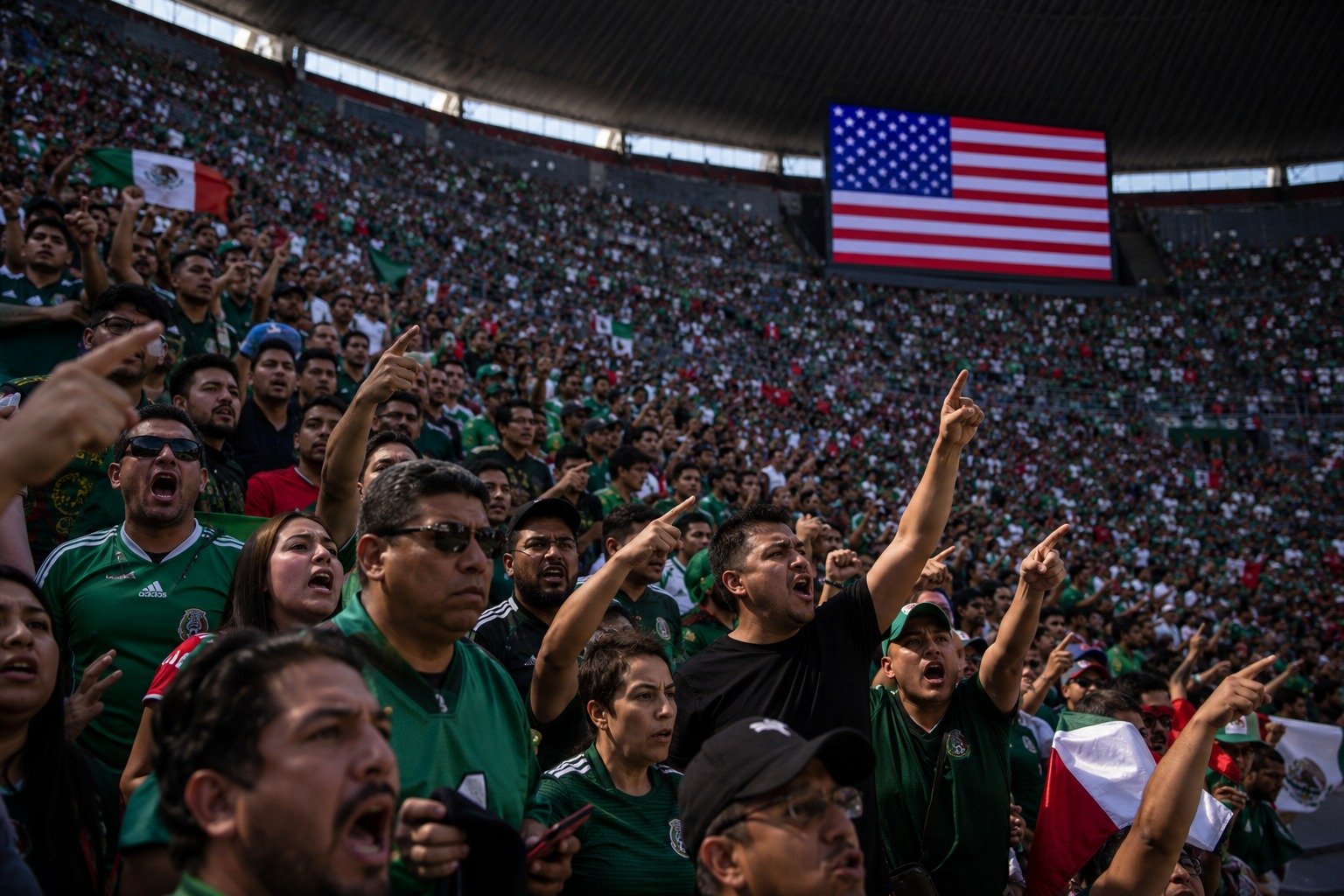
The 2026 World Cup opened with a moment its organizers almost certainly did not script. As the tournament’s first match got underway between host Mexico and South Africa in Mexico City, the American flag flashed across the stadium displays – and the crowd responded with a wave of audible boos that echoed through the stands.
It was not a one-off. Boos for the U.S. flag were also reported at the official World Cup fan festival in Toronto, hundreds of miles to the north in one of the tournament’s other host cities. Two countries, two separate crowds, and the same unmistakable reaction on day one of an event meant to celebrate unity.
A Tournament Built on Partnership
The 2026 World Cup is historic before a single trophy is lifted. For the first time, three nations – the United States, Mexico, and Canada – are co-hosting the tournament together, splitting matches across stadiums in all three countries. The arrangement was pitched as a showcase of North American cooperation, a continent coming together to stage the world’s biggest sporting event.
That framing made the opening-day reception all the more striking. When a flag draws sustained jeers during the very ceremony meant to unite the host nations, it signals something deeper than ordinary sports rivalry. It reflects a mood – and right now, the mood toward the United States among its closest neighbors is sour.
The Backdrop No One Can Ignore
The boos did not come from nowhere. The months leading into the tournament have been marked by escalating friction across the continent. Repeated tariff threats aimed at both Mexico and Canada have rattled trade relationships that millions of jobs depend on. Sweeping mass deportation operations have strained ties with Mexico in particular. And open talk of annexing Canada – once unthinkable in mainstream political conversation – has further inflamed tensions to the north.
For ordinary fans in Mexico City and Toronto, the World Cup offered a rare public stage to register how they feel. Sports crowds are not focus groups, but tens of thousands of people jeering in unison is its own kind of polling. The message was loud, spontaneous, and impossible to spin away.
What Comes Next
The reaction raises an obvious question heading deeper into the tournament. The U.S. men’s national team will play its own matches in the coming days, including fixtures on home soil. If the flag alone drew this kind of response on opening day, the welcome awaiting American players – and American fans traveling abroad – could be tense.
For Americans watching from home, the moment is a reminder that foreign policy does not stay confined to negotiating rooms and press conferences. It spills into stadiums, into the way a country is received on the world stage, and into the goodwill – or lack of it – that greets ordinary citizens abroad. Decisions made in Washington are being felt in the stands of Mexico City.
Stay informed on the stories that matter most. Follow Your Daily Updates on Facebook and bookmark yourdailyupdates.news for breaking news and analysis.