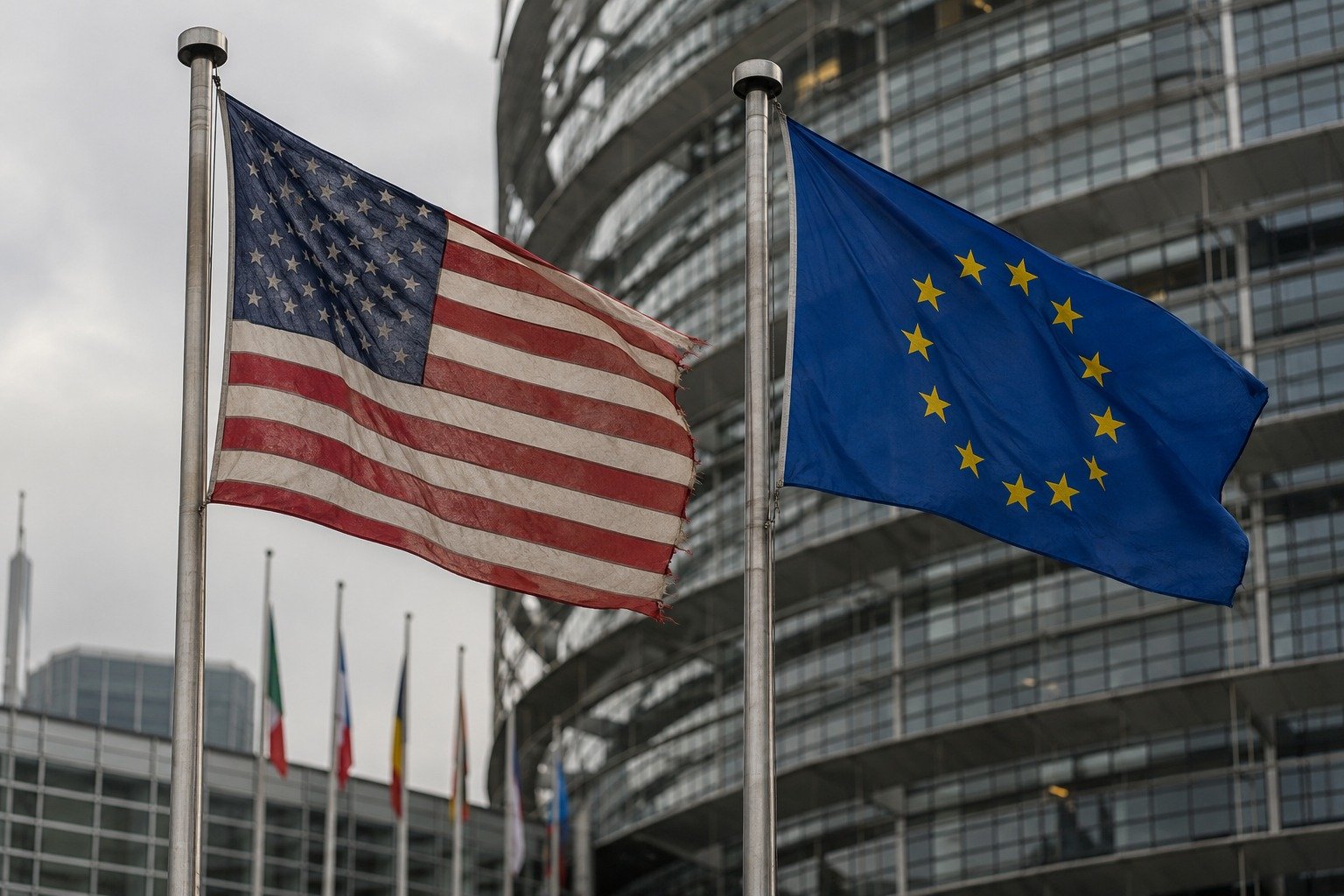
Only 11% of Europeans now view the United States as an ally that shares their interests and values — a striking measure of how far America’s standing with its closest partners has slipped. The figure, down from 16% just six months earlier and 22% in November 2024, comes from a sweeping new survey by the European Council on Foreign Relations (ECFR).
The ECFR polled 19,481 people across 15 European countries in May 2026. It is not a snapshot of a single bad week or an outlier sample. It is a steady, measured decline in trust among the very democracies the United States has spent roughly 80 years calling friends — and it has accelerated since President Donald Trump returned to office.
A “necessary partner,” but not an ally of shared values
The headline number deserves careful framing. Most Europeans have not written the United States off. About half of respondents still describe the U.S. as a “necessary partner” — a country you work with because circumstances require it, even when warmth and shared purpose have faded. What has collapsed is the sense that common values sit underneath that relationship.
At the same time, the survey found that roughly a quarter of Europeans now regard the United States as a rival or an outright adversary. That a meaningful share of citizens in allied democracies place the U.S. in the same category as a competitor is, by itself, a remarkable shift in how the transatlantic relationship is perceived from the European side.
Doubts about America’s defense commitment
Perhaps the most consequential finding had nothing to do with values and everything to do with security. In every single country polled, a majority of respondents doubted that the United States would actually come to their defense if they were attacked. That promise — that allies will show up for one another — is the foundation the entire Western alliance has rested on since the end of the Second World War.
When majorities across allied nations no longer believe that commitment is reliable, the alliance’s deterrent power is quietly eroded. Deterrence depends not only on military capability but on the credibility of the pledge behind it. If adversaries sense that European confidence in American backing has weakened, the strategic calculations across the continent shift with it.
Why the trend matters
The ECFR data traces a clear downward line: 22% in November 2024, 16% by late 2025, and just 11% by May 2026. Each step lower reflects a relationship being treated as transactional rather than foundational. Alliances are not held together by hardware alone. They are held together by trust — the expectation that the other side will be there when it counts.
For European governments, the findings sharpen an ongoing debate about strategic autonomy: how much should Europe invest in its own defense and decision-making if it can no longer assume steady American support? For the United States, the survey is a warning about the slow cost of treating long-standing partnerships as optional. Trust, once spent, is far harder to rebuild than it was to lose.
The numbers do not mean the transatlantic relationship is over. Half of Europeans still see the U.S. as a partner they need. But the share who see a friend who shares their values has narrowed to a sliver — and that gap between necessity and trust is the story these figures tell.