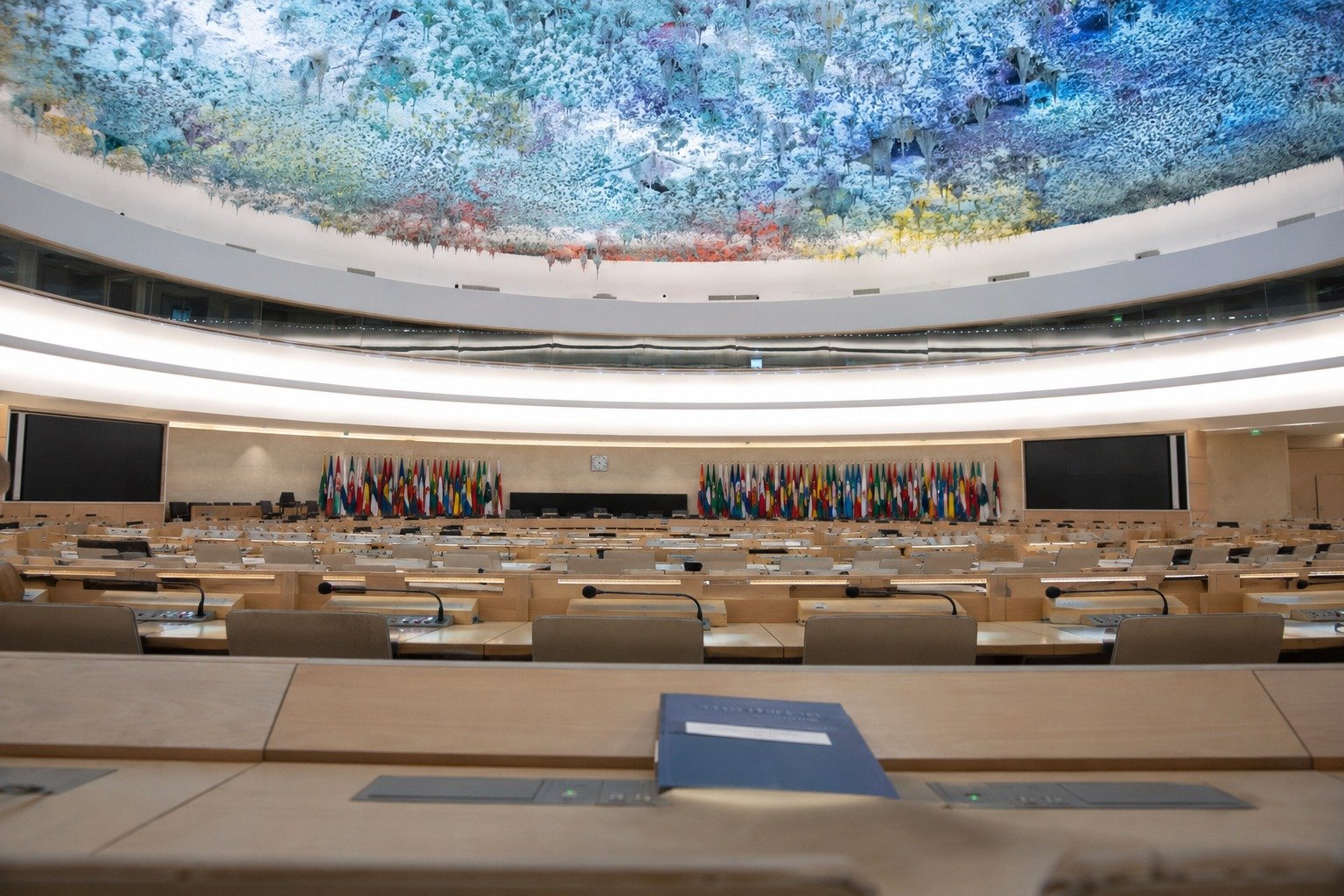
A new United Nations inquiry has concluded that Palestinian civilians across Gaza and the West Bank are caught in an impossible position – subjected to severe, systematic human rights violations by multiple armed actors at once. The UN Independent International Commission of Inquiry on the Occupied Palestinian Territory released its findings to the Human Rights Council in Geneva, describing a population “trapped” between Israeli forces, armed settlers, and Hamas.
The report is notable for refusing to assign blame to any single side. Instead, it documents wrongdoing by several actors, while drawing distinctions about who bears primary responsibility for which abuses. The throughline is the civilian population, which the Commission says continues to pay the price regardless of which armed group holds the ground.
What the Commission Found
The Commission concluded that Israel bears primary responsibility for settler violence in the West Bank. According to the report, attacks on Palestinian communities have not been isolated incidents but have functioned as an extension of state policy – killing people, driving families off their land, and entrenching the occupation. The Commission found that Israeli authorities enabled such attacks through support and, for decades, granted effective impunity to those who carried them out.
Investigators described settler violence as working toward the same strategic objectives pursued by the state: maintaining the occupation, expanding settlements, annexing territory, and displacing Palestinians from their homes. In the Commission’s framing, the line between unofficial settler action and official policy has become difficult to draw.
Accountability on All Sides
At the same time, the Commission did not exempt Palestinian armed factions from scrutiny. It attributed war crimes – including murder and torture – to Hamas-affiliated forces in Gaza, describing a fear-based form of rule that has terrorized the very civilians already caught in the wider conflict. The finding underscores the report’s central message: accountability is owed by everyone wielding power over Palestinian lives, not just one party.
That even-handed approach distinguishes this inquiry from more one-sided accounts of the conflict. By documenting abuses committed by Israeli forces, by settlers, and by Hamas-affiliated forces, the Commission frames the suffering of Palestinian civilians as the product of multiple overlapping threats rather than a single villain.
The Human Toll
For the people living it, the report’s conclusion is brutal in its simplicity. Whether the threat comes from soldiers, settlers, or militants, the result is the same – displacement, fear, and a daily struggle to survive. Families describe being unable to safely farm their land, move between towns, or trust that the institutions meant to protect them will hold anyone accountable.
The Commission’s mandate is to investigate and document violations, not to prosecute. Its reports are intended to build a factual record that can inform future legal and diplomatic action. Whether that record translates into consequences depends on the political will of governments and international bodies that have, so far, struggled to enforce accountability in the region.
What Happens Next
The report is now before the Human Rights Council in Geneva, where member states will weigh its findings. Israel has historically rejected the Commission’s mandate, arguing that it is biased, and Hamas has dismissed criticism of its own conduct. That leaves the inquiry’s documentation as a contested but detailed account that human rights advocates say cannot be ignored.
For readers far from the conflict, the report is a reminder of how civilians become the casualties of disputes they did not start and cannot control. The question it raises is whether the international community will treat accountability as a principle that applies to every actor – or whether, once again, the findings will be filed away while the people they describe continue to live in danger.
Stay informed on the stories that matter most. Follow Your Daily Updates on Facebook and bookmark yourdailyupdates.news for breaking news and analysis.