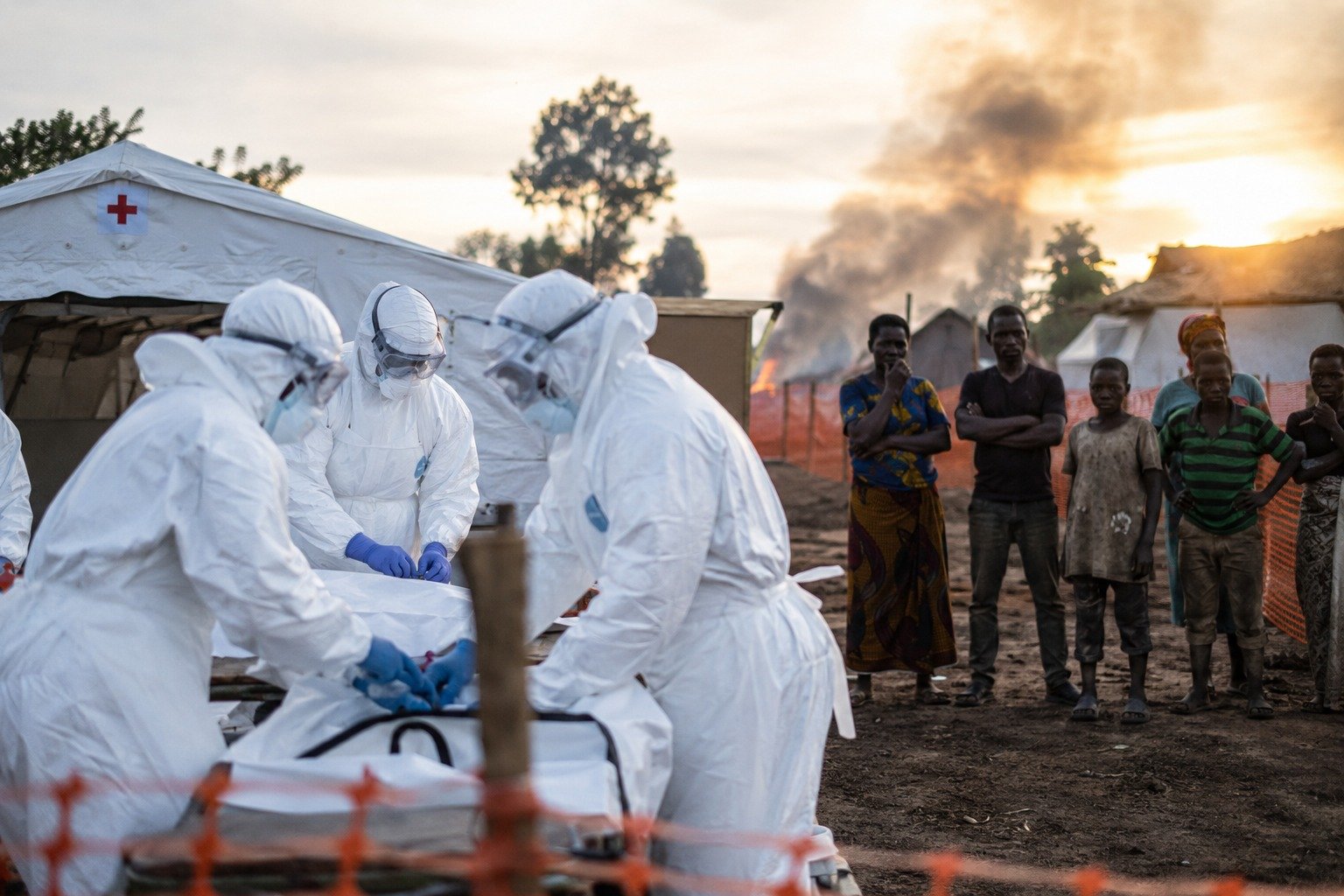
A rare strain of Ebola with no approved treatment and no vaccine is rapidly spreading across Africa, and the World Health Organization is now warning that 10 countries could be at risk. The outbreak, caused by the Bundibugyo strain, has already killed at least 177 people in the Democratic Republic of Congo — and it is not staying contained.
Violence at the Treatment Center
The crisis exploded into violence on May 21, when angry residents stormed and set fire to the Ebola treatment center in Rwampara, in Congo’s Ituri province. The community had been demanding access to the bodies of relatives who died inside. Ebola patients’ bodies remain highly contagious after death, and strict health protocols prevent the traditional burial practices that are central to local culture — a restriction fueling deep fury in communities already devastated by the outbreak.
An Associated Press journalist on the ground witnessed people breaking into the center and setting fire to structures inside, including what appeared to be the body of at least one suspected Ebola victim. The WHO warned that attacks on health facilities are one of the most dangerous obstacles to containing the virus — when treatment centers are destroyed, patients scatter, contact tracing collapses, and the virus spreads faster.
A Strain With No Cure and No Vaccine
The Bundibugyo strain is one of the rarest Ebola variants ever recorded. Unlike the Zaire strain — the one responsible for the catastrophic 2014–2016 West Africa outbreak that killed more than 11,000 people — Bundibugyo has no approved vaccine or antiviral treatment available. Health workers are relying entirely on supportive care and isolation protocols. The WHO has described the current spread as “rapidly worsening,” and the Africa CDC has officially put 10 neighboring nations on high alert.
The Outbreak Is Crossing Borders
Uganda confirmed new Ebola cases this week — at least three new infections — signaling that the outbreak has already crossed an international border. Health officials are scrambling to prevent what could become a full regional emergency. The Africa CDC has activated emergency response protocols and is coordinating with national health ministries across Central and East Africa to accelerate contact tracing, border screening, and community education efforts.
International health experts warn that the combination of community resistance, destroyed treatment infrastructure, and a strain with no medical countermeasures makes this one of the most challenging Ebola responses in years. With 177 confirmed deaths in Congo and the virus now confirmed beyond its borders, the window to contain the outbreak before it spreads further is closing fast.
Stay informed on the stories that matter most. Follow Your Daily Updates on Facebook and bookmark yourdailyupdates.news for breaking news and analysis.