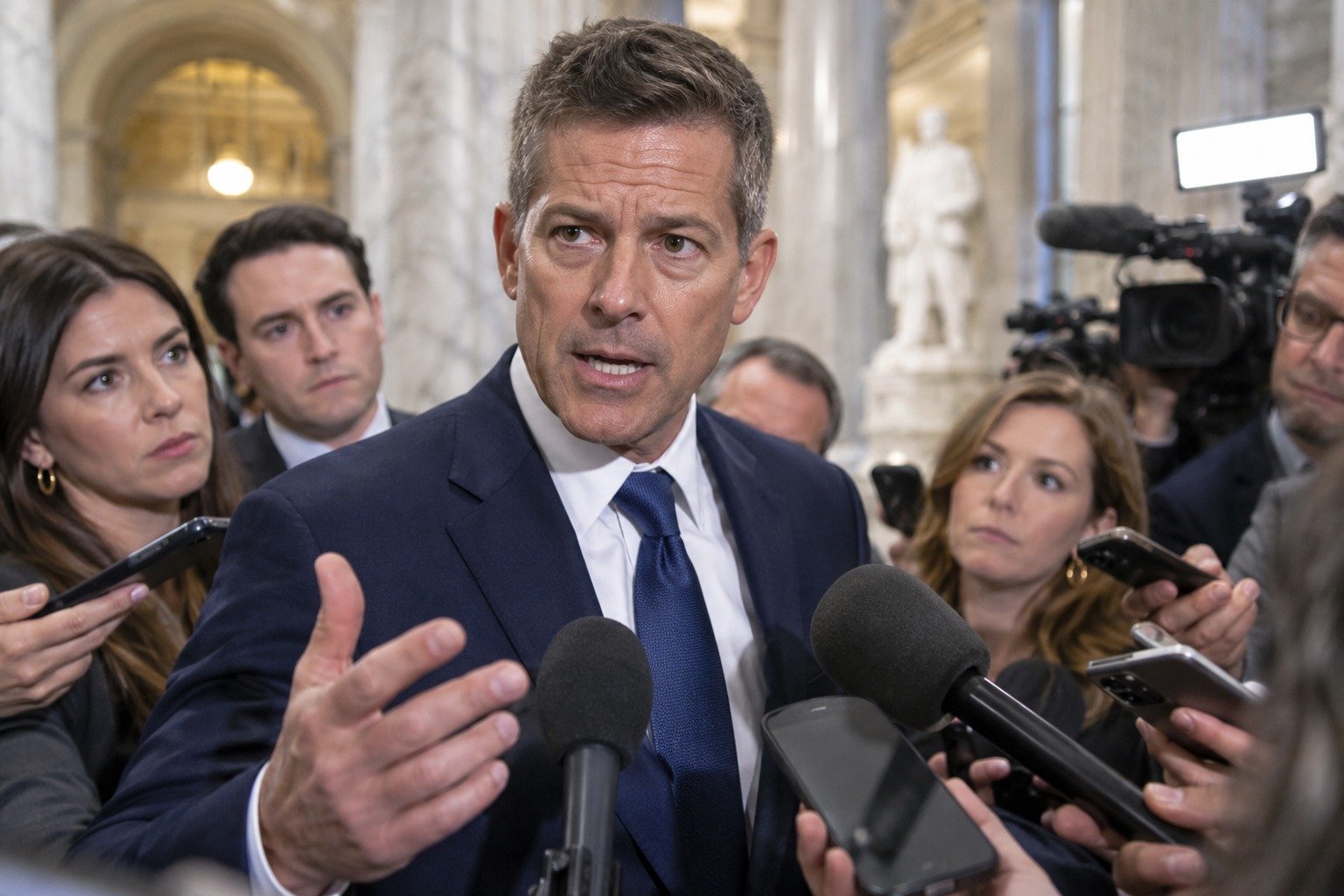
Days after a nationwide FAA ground stop left more than 20,000 flights canceled, Transportation Secretary Sean Duffy walked into a meeting with Senate Republicans on Tuesday, November 17, with a bigger number than before: $50 billion to overhaul the nation’s air traffic control systems, several of which still run on decades-old technology.
It is a request, not a done deal. Nothing has been voted on, and nothing has been approved. But the size of the ask – and the reaction from members of Duffy’s own party – tells you a lot about how fragile America’s air travel system has become, and how unready Washington is to pay to fix it.
From $30 Billion to $50 Billion
Before the ground stop, the administration had been seeking $30 billion for FAA modernization, according to reporting from CBS News, NBC News, Axios and Fox News. After the outage, Duffy raised the request by another $20 billion. He said he “decided to put everything on the table.”
His argument for urgency was striking. Under the status quo, Duffy said, “I will replace every single tower in America in 300 years.” That is an admission of just how far behind the system has fallen – and how long travelers, pilots and air traffic controllers have been working with equipment that should have been replaced long ago.
Republican Senators Push Back
The reaction from Senate Republicans was cool at best. Sen. John Kennedy of Louisiana said he was “furious when they went from $30 billion to $50 billion.”
Sen. Rick Scott of Florida offered a very different price tag, saying the update “would cost about $10 billion.” Scott also argued that “the airlines need to put up money and have skin in this game too” – a notable point, given that the airlines are the businesses that profit most directly from the system taxpayers are being asked to rebuild.
Senate Majority Leader John Thune was noncommittal. “How we deal with that issue remains to be seen,” he said, adding that the clock is ticking in the lame-duck session.
Congress Already Spent $12.5 Billion
This is not the first time Congress has been asked to pay for air traffic control upgrades. The 2025 reconciliation law already gave the FAA $12.5 billion. Duffy says most of that money has already been committed.
That raises a fair question for both sides: if $12.5 billion is largely spoken for and the system still went down nationwide, what exactly will the next $50 billion buy – and on what timeline?
What Caused the Ground Stop Is Still Unclear
The ground stop hit on Friday, November 13. CBS News has cited overloaded routers tied to a telecom outage. More than 20,000 flights were canceled, according to Political Wire. Duffy says the root cause still isn’t known.
That uncertainty matters. It is hard to judge any price tag – $10 billion, $30 billion or $50 billion – when the people running the system cannot yet say exactly what broke.
Who Pays the Price?
The debate is happening in a narrow window. With the lame-duck session underway, any deal would have to come together quickly, and senators from Duffy’s own party have made clear they are not ready to sign off on the full amount.
While Washington argues over the number, the costs of the breakdown have already landed on ordinary people: travelers stranded at gates and left scrambling after more than 20,000 canceled flights, and the air traffic controllers and airport workers left to hold together a system running on aging equipment.
The real test now is whether Congress treats air traffic safety as essential infrastructure worth funding properly and transparently – with the airlines contributing their fair share – or lets the issue drift until the next outage.
Who should pay to fix America’s air traffic system – taxpayers, the airlines, or both? Tell us what you think.