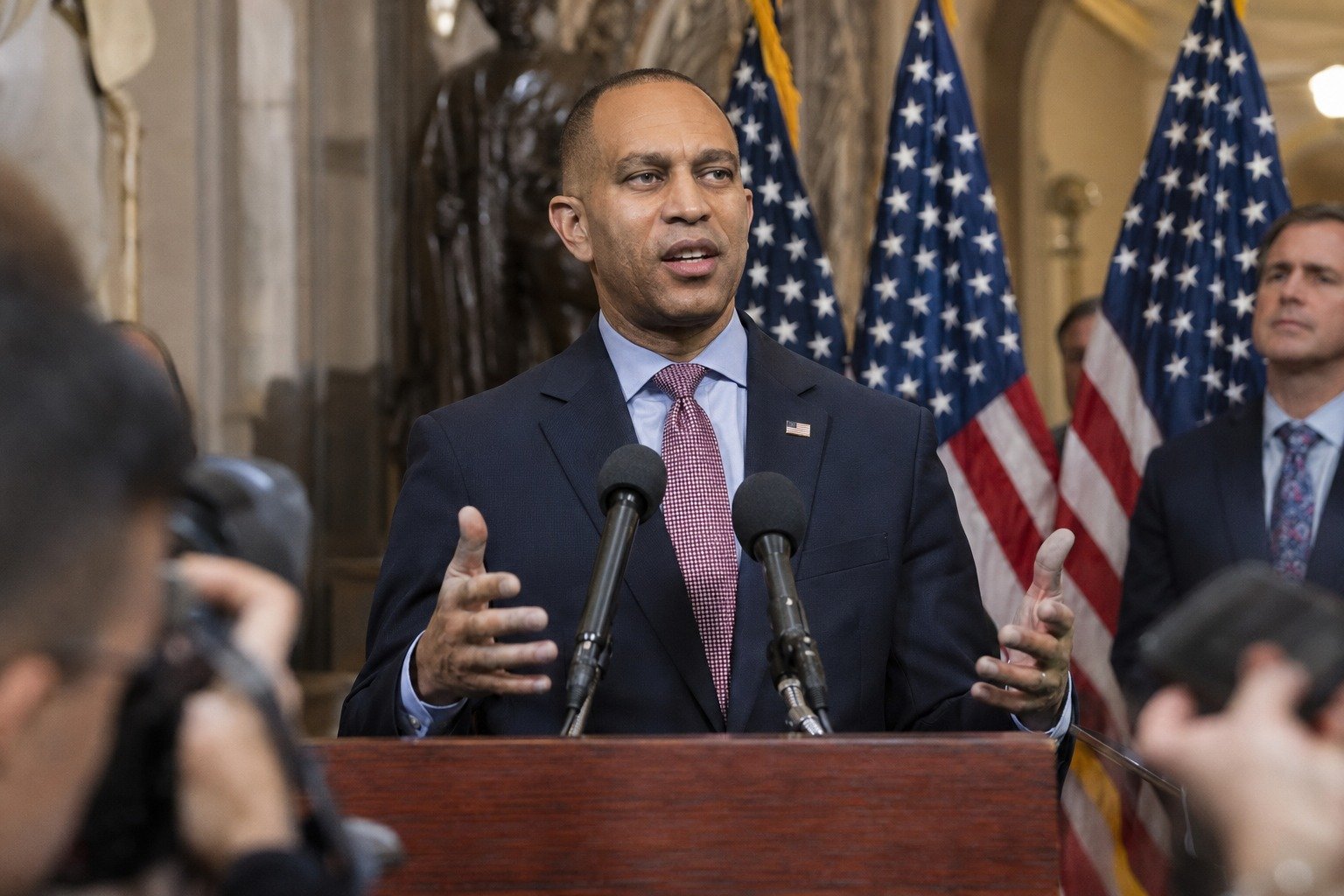
House Democrats have chosen Hakeem Jeffries as their nominee for Speaker of the House, voting 251 to 11 in a closed-door caucus election on Wednesday, Nov. 18, according to CBS News. Jeffries ran unopposed. If the full House confirms him when the new Congress convenes on Jan. 3, 2027, he will become the first Black Speaker in the history of the United States.
A Nomination, Not Yet a Gavel
It is important to be precise about where things stand. Wednesday’s vote made Jeffries the Democratic caucus’s nominee. It did not make him Speaker. Under the Constitution, the Speaker is elected by the full House of Representatives, and that vote will not happen until the new Congress is sworn in on Jan. 3.
To win the gavel, Jeffries will need 218 votes. Democrats are on track to hold more than 250 seats in the incoming House, which gives him a comfortable cushion on paper. But a cushion is not a guarantee, and the caucus vote showed that not every member is ready to hand over their support without conditions.
A Historic Leadership Team
Jeffries, who represents Brooklyn and has led House Democrats since 2023, would break a barrier that has stood for the entire history of the chamber. No Black American has ever held the Speaker’s gavel, the most powerful position in Congress and second in the line of presidential succession after the vice president.
He is not the only history-maker on the slate. Democrats nominated Rep. Katherine Clark of Massachusetts for majority leader, a role no woman has ever held. Rep. Pete Aguilar of California was elected whip and would become the first Latino to serve in that post. Rep. Joe Neguse of Colorado was chosen as assistant leader, and Rep. Ted Lieu of California was picked as caucus chair.
Taken together, the lineup reflects a House Democratic leadership that looks more like the country it represents than any before it.
The 11 No Votes
The vote was lopsided, but it was not unanimous. Several incoming progressive members voted against Jeffries and said they wanted firm commitments on a set of priorities before backing him. Among them were Darializa Avila Chevalier, Adam Hamawy, Melat Kiros, Donavan McKinney, Chris Rabb and Claire Valdez. Their demands centered on Medicare for All, Immigration and Customs Enforcement, the Citizens United campaign finance ruling, and U.S. policy toward Gaza.
Those members are signaling that a large majority does not mean the party’s left flank will simply fall in line. They want the new leadership to treat health care, immigration enforcement, money in politics and foreign policy as real agenda items, not talking points.
What Leaders Said
Jeffries kept his response short. “The results of today’s election speak for themselves,” he said after the vote, according to CBS News.
Rep. Alexandria Ocasio-Cortez of New York, one of the best-known progressives in Congress, threw her support behind him without hesitation. “There is one candidate in this race: Hakeem Jeffries,” she said, as reported by the Associated Press and PBS NewsHour.
Her backing matters. It signals that much of the established progressive wing is with Jeffries, even as some newcomers press for more.
What Comes Next
Between now and Jan. 3, the question is less whether Jeffries has the numbers and more what he will promise to keep his coalition united. Speaker elections are public, roll-call votes on the House floor, and every member’s choice is on the record. Any defections would be visible, and leaders typically work to settle disagreements well before that day.
For the incoming progressives, the coming weeks are their leverage window. For Jeffries, it is a chance to show he can hold together a large and diverse majority before it formally takes power.
What This Means for Americans
Who holds the Speaker’s gavel decides which bills reach the House floor and which ones die quietly. That power shapes everything from health care costs and wages to how immigration enforcement is funded and overseen. A Democratic majority led by Jeffries, Clark and Aguilar would set the House agenda for the next two years, and the debate inside the caucus right now will help decide whether working families see bold action or cautious compromise. Voters handed Democrats the majority. Now they will be watching to see what the new leadership does with it.
Stay informed on the stories that matter most. Follow Your Daily Updates on Facebook and bookmark yourdailyupdates.news for breaking news and analysis.