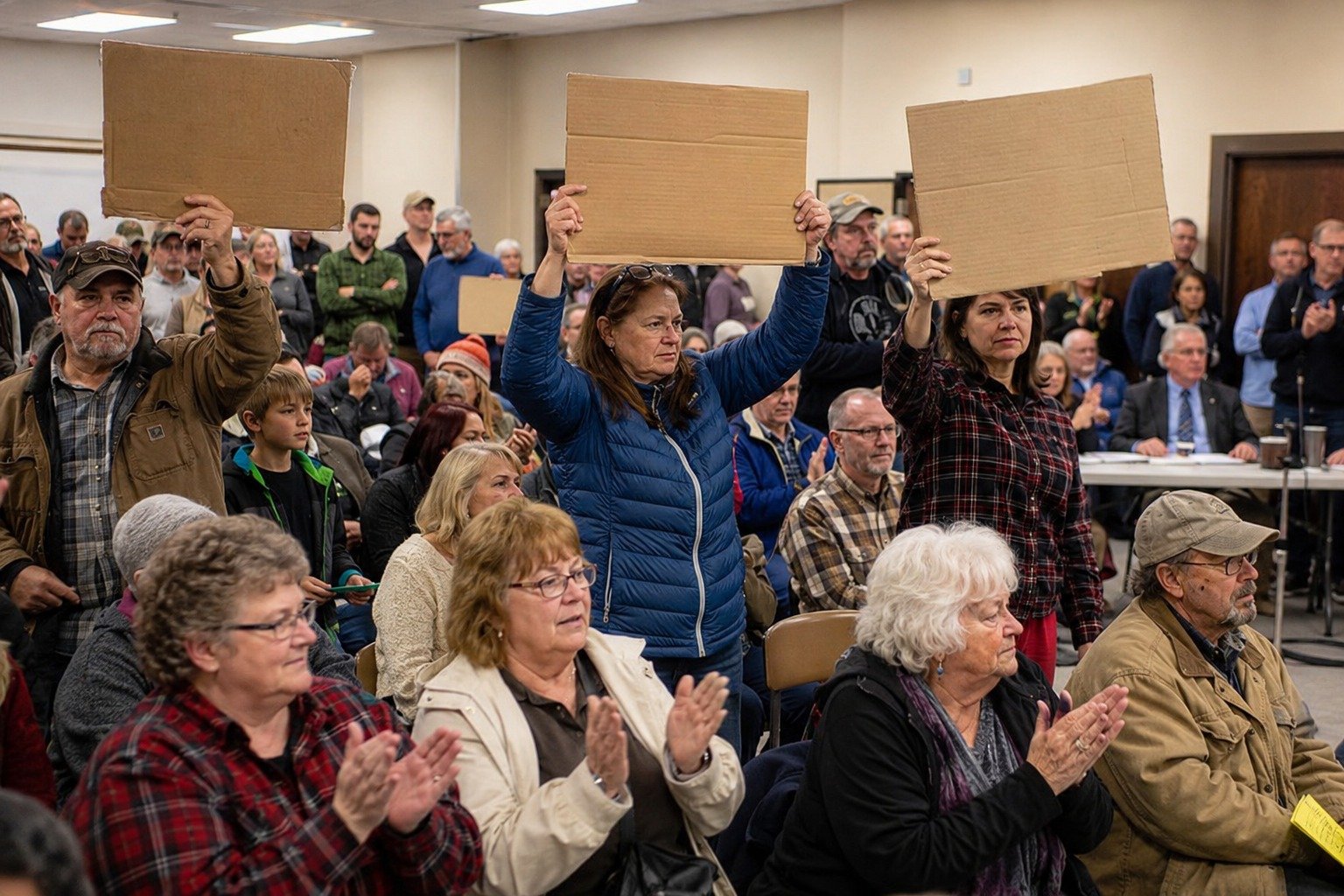
A small community in Wisconsin has done what most people assume is impossible: it pushed back against one of the largest companies on the planet and won. After months of organized opposition from local residents, Microsoft has abandoned its plan to build a sprawling 244-acre data center in Caledonia, a town in Racine County near the We Energies power plant.
The company confirmed in late November that it was no longer pursuing that specific site and said it would look at an alternate location. It was a rare and direct outcome of grassroots pressure – not a quiet corporate calculation made in a boardroom, but a retreat forced by the people who actually live there.
How a Small Town Took On a Tech Giant
The fight in Caledonia followed a pattern that is becoming familiar across the country. Microsoft, like every major tech company, is racing to build the massive data centers that power artificial intelligence and cloud computing. Those facilities need enormous amounts of land, electricity, and water – and they often land in or near residential communities that get little say in the matter.
Caledonia residents decided they would have a say. More than 2,000 of them signed a petition opposing the project. When the matter came before the local Plan Commission, roughly 40 people showed up to testify against it in person, turning what might have been a routine zoning meeting into a referendum on the town’s future.
They came armed with the questions these projects almost never want to answer in public. What happens to the local water supply when a facility that thirsty moves in? What happens to electricity demand – and to residents’ power bills – when a single complex draws as much energy as a small city? And what happens to the character of a neighborhood when a massive industrial site rises next door to family homes?
A Withdrawal, Not a Ban
It is worth being precise about what happened here, because the distinction matters. Caledonia did not pass a law banning data centers. The town did not have to. Instead, Microsoft chose to withdraw from the specific 244-acre site after the community made the political and practical cost of pushing forward too high.
That is a meaningful difference. The company has signaled it will keep looking for a location in the region, which means the broader project is not dead. But the outcome in Caledonia is still a genuine win for the residents who organized against it. Ordinary people showed up, made their case, and a trillion-dollar corporation blinked first. In a fight that is usually framed as inevitable, that is no small thing.
Part of a Growing Backlash
Caledonia is not alone. The withdrawal is one piece of a wider wave of local revolts against data centers that has been building through 2025 and into 2026. As the AI boom collides with small-town America, communities from coast to coast are scrutinizing the strain these facilities place on local water systems, electrical grids, and quality of life.
For years, the conventional wisdom held that towns had little leverage against companies of this size, and that the promise of jobs and tax revenue would always win the day. Caledonia is part of the evidence that the conventional wisdom may be wrong – that organized residents, armed with petitions and a willingness to show up, can still shape what gets built in their own backyards.
What This Means for Americans
The bigger question now is how many other communities will realize they have this same power. As more data centers are proposed near towns and suburbs nationwide, the residents who live there are learning that the early, organized opposition that worked in Caledonia can work elsewhere too. The cost of these facilities – in water, in power, in disrupted neighborhoods – is increasingly being weighed by the people who have to live with it, not just the executives who profit from it.
Stay informed on the stories that matter most. Follow Your Daily Updates on Facebook and bookmark yourdailyupdates.news for breaking news and analysis.