A federal plan to build one of the largest immigration detention centers in the country – a warehouse in Social Circle, Georgia, capable of holding up to 10,000 people – has collapsed. And it collapsed because a U.S. senator and a small town refused to let it happen quietly.
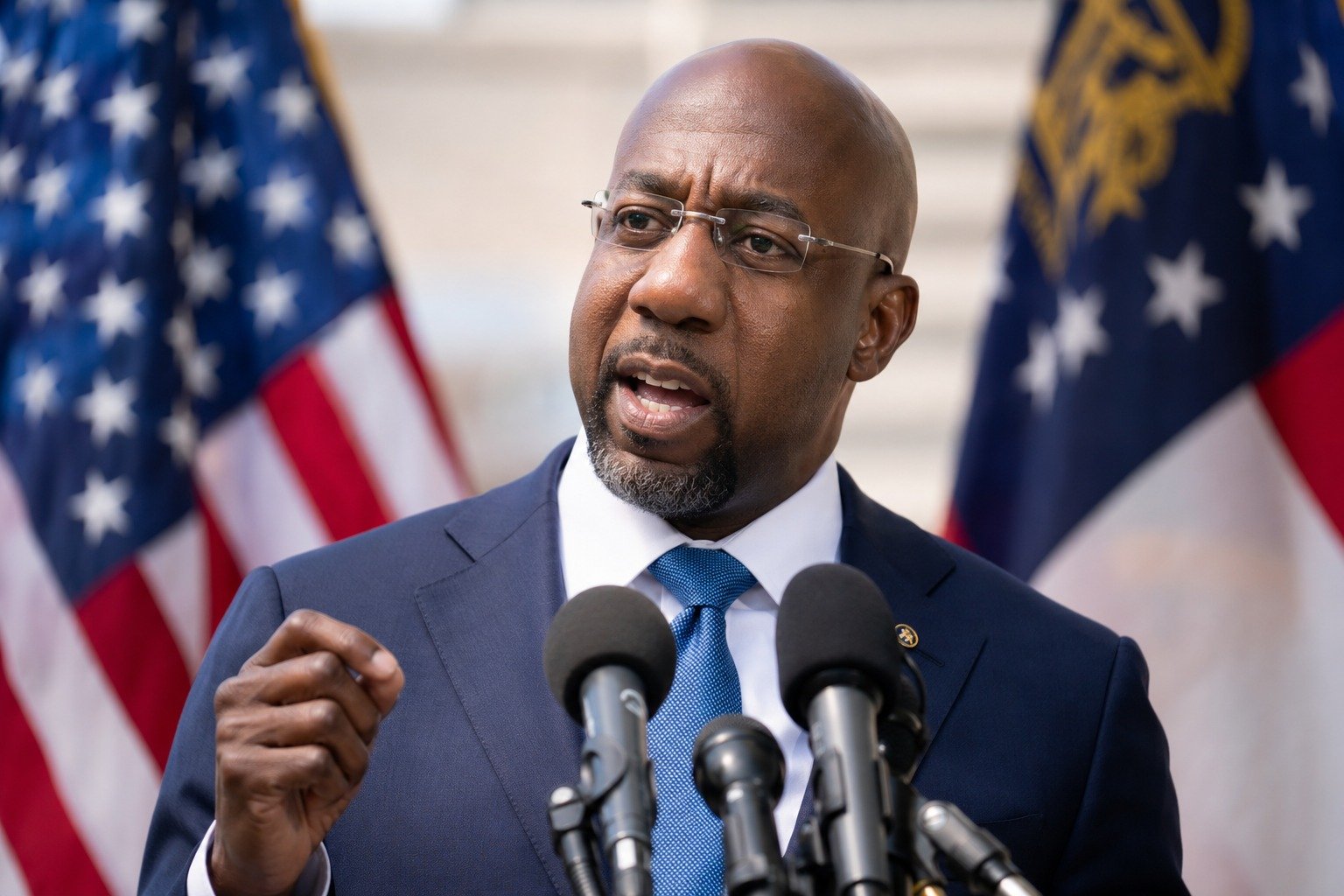
Sen. Raphael Warnock (D-GA) helped stop the project by filing an amendment to block the federal purchase of the Social Circle warehouse and a second site in Oakwood, while elevating a local fight into a national story. The Department of Homeland Security has now cancelled the Social Circle plans and moved to sell or give away the warehouses it had already acquired.
A 10,000-Person Facility Bought in the Quiet
According to public reporting, DHS had quietly purchased a roughly 1.2 million-square-foot warehouse in Social Circle – a footprint close to 20 football fields – with the intent of converting it into an ICE detention center. Internal planning pointed to a capacity of as many as 10,000 detainees, a figure that would have made it one of the biggest immigration lockups in the United States.
What made the plan striking was how little public input preceded it. A facility of that scale carries enormous consequences for a community’s infrastructure, its economy, and its identity – yet residents of Social Circle learned about it largely after the acquisition was already in motion.
The Town That Locked the Water
Social Circle did not wait for Washington to act. City leaders placed a lock on the facility’s water meter and warned that a 10,000-person detention center would overwhelm the town’s water, sewer, roads, and schools. In practical terms, a detention center cannot operate without water and sewer service – and the city controlled that switch.
That local move may have been the single most direct obstacle to the project. It is a reminder that federal power still runs into the everyday realities of municipal utilities, zoning, and community consent. A warehouse is only a detention center if it can actually house people.
Warnock and Ossoff Claim a Win
Warnock’s amendment targeted the federal purchases directly, and he paired it with public pressure that turned a local zoning dispute into a national accountability story. Sen. Jon Ossoff (D-GA) joined in celebrating the reversal, framing it as a victory for a community that refused to be steamrolled.
It is worth being precise about the credit here: Warnock helped stop the project. He did not do it alone. The town’s water-meter block and the sustained local opposition were arguably the more immediate cause of the cancellation. The outcome came from a combination of leverage in Washington and resistance on the ground.
What This Means for Americans
This is a rare example of a mass-detention plan being stopped before a single person was locked inside. For communities across the country, the lesson is concrete: large federal facilities are often assembled through quiet real-estate purchases, and the window to weigh in can close fast. Local governments still hold real tools – utilities, permitting, public scrutiny – and elected officials still have the power to force these decisions into the open.
The bigger question is how many other large detention sites are being quietly assembled in warehouses elsewhere, before anyone notices. Social Circle noticed in time. Not every town will.
Stay informed on the stories that matter most. Follow Your Daily Updates on Facebook and bookmark yourdailyupdates.news for breaking news and analysis.