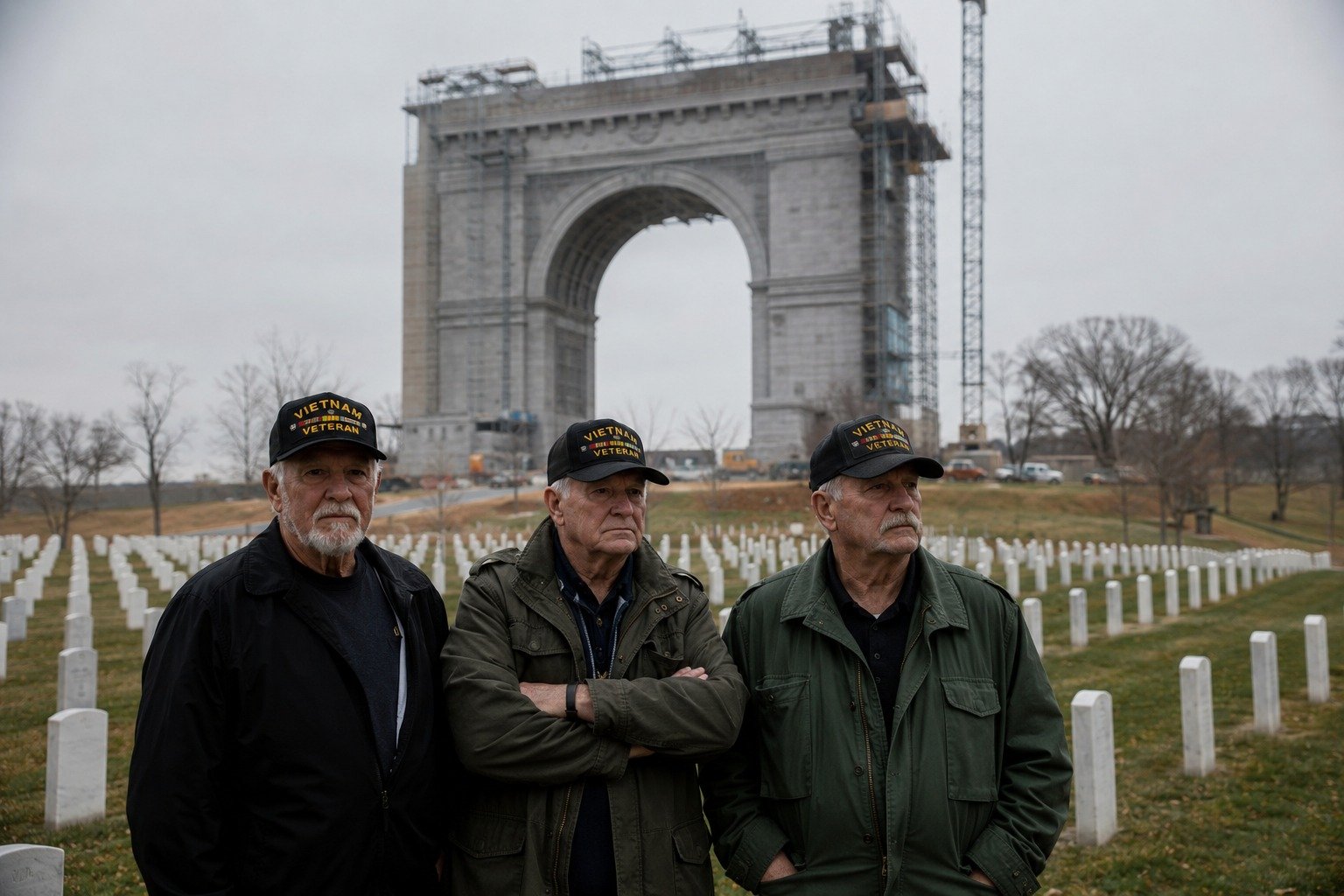
Three Vietnam War veterans have taken the federal government to court in an effort to stop one of the most ambitious monuments ever proposed for the nation’s capital: a 250-foot “Independence Arch” planned to rise near the entrance to Arlington National Cemetery. The lawsuit, filed in February in the U.S. District Court for the District of Columbia, argues the towering structure was approved without the one step the veterans say matters most — a vote in Congress.
A Monument Unlike Any Other
The proposed arch would stand 250 feet tall — one foot for every year of American independence. Inspired by the Arc de Triomphe in Paris, it would be the largest triumphal arch in the world. Renderings released earlier this year show a Lady Liberty statue crowning the top, two 24-foot eagles flanking the structure, and the words “One Nation Under God” inscribed in gold. A public observation deck would offer 360-degree views of Washington and the surrounding memorials.
To put the scale in perspective: the Lincoln Memorial, one of the most recognizable structures in America, stands 99 feet tall. The Independence Arch would be more than two and a half times its height, looming over a stretch of land that connects some of the country’s most sacred ground.
Why the Veterans Are Suing
The plaintiffs — three Vietnam War veterans joined by a retired architectural historian — are represented by Public Citizen Litigation Group. Their core argument is procedural but powerful: a monument of this magnitude cannot be built near Arlington without the approval of Congress and the independent review agencies that govern federal memorials.
The complaint alleges the project violates three federal laws: the Commemorative Works Act, which governs how monuments are placed in the capital; the National Environmental Policy Act; and the National Historic Preservation Act. The veterans also warn that the arch would disrupt a carefully designed sightline linking the Lincoln Memorial to the hills of Arlington — a vista intended to symbolize national reconciliation and unity after the Civil War. Breaking that view, they argue, would alter the meaning of the entire memorial landscape.
For the veterans, the case is less about politics and more about precedent. They have framed their challenge as an act of loyalty to the country and its institutions — insisting that no single structure should be allowed to dominate the most hallowed burial ground in America without the public’s elected representatives ever weighing in.
The Administration’s Defense
The White House sees the project very differently. Officials have described the arch as a centerpiece of the celebrations marking America’s 250th anniversary, casting it as a tribute to generations of service members. A White House spokesman said the structure would “enhance the visitor experience at Arlington National Cemetery for veterans, the families of the fallen, and all Americans alike,” serving as a lasting reminder of the sacrifices made throughout the nation’s history.
The project has also cleared an important hurdle. In April, the Commission of Fine Arts — the federal body that reviews the design of monuments in Washington — unanimously approved the design concept, keeping the arch moving forward even as the lawsuit proceeds. Supporters argue that a grand, world-class monument is a fitting way to mark a once-in-a-generation milestone for the country.
What This Means for Americans
At its heart, this is a debate about who decides what gets built on the country’s most symbolic land — and how. Some Americans see a bold monument worthy of a 250th birthday; others see a project pushed forward too quickly, without the public input and congressional sign-off that major memorials have traditionally required. The outcome could set a precedent for how future monuments are approved for generations to come.
Now a federal judge will help decide whether construction can move ahead — or whether the project must go back through the approval process the veterans say was skipped.
Stay informed on the stories that matter most. Follow Your Daily Updates on Facebook and bookmark yourdailyupdates.news for breaking news and analysis.