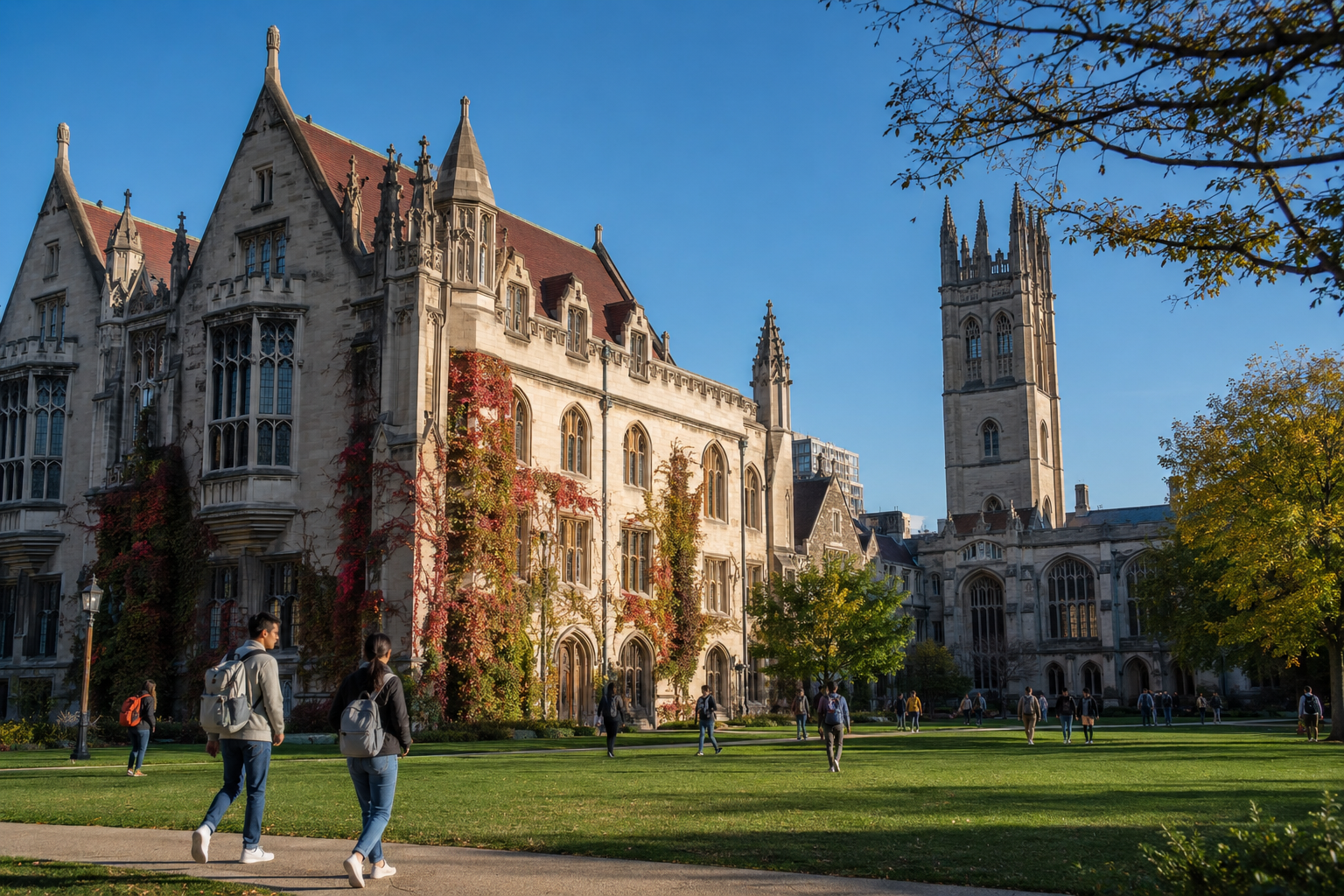
The University of Chicago just made it official: starting in Autumn 2027, tuition will be completely free for every undergraduate student whose family earns less than $250,000 a year. That’s not a scholarship with strings attached — it’s a blanket guarantee built directly into the admissions process.
A Landmark Expansion of Middle-Class Access
For generations, elite private universities have been effectively off-limits to the American middle class. Tuition at the University of Chicago — consistently ranked among the top research universities in the world — runs more than $65,000 a year. For families earning $150,000, $200,000, even $240,000 a year, that price tag meant years of debt or simply not applying in the first place.
The new policy changes that calculus entirely. Any undergraduate from a household earning under $250,000 will have tuition covered. That threshold covers roughly 60% of all American households by income — a sweeping expansion of who can realistically attend one of the country’s most selective institutions.
What the Policy Actually Covers
The specifics matter. For families earning under $125,000, the university is going even further: tuition, housing, meals, and all fees will be fully covered. That’s a complete, all-inclusive UChicago education at zero cost — no debt, no complicated financial aid calculations, no unpredictable award letters that change year to year.
The old income threshold for free tuition was $125,000. This announcement nearly doubles that ceiling, extending the tuition guarantee to families well into the middle and upper-middle class. UChicago President Paul Alivisatos framed it as a commitment to ensuring that financial barriers no longer determine who gets access to the university’s world-class academic resources.
Building on Years of Financial Aid Growth
This expansion doesn’t come out of nowhere. UChicago already provides more than $225 million in annual financial aid — a figure that has doubled since 2011. The average financial aid package for current undergraduates exceeds $75,000. The university has been quietly building toward this moment for over a decade.
But individual aid packages — even generous ones — come with uncertainty. Families have to reapply each year, income fluctuations can change awards, and the process is opaque. A guaranteed free tuition policy removes all of that. If your family earns under $250,000, the math is simple: you won’t pay tuition.
Pressure on Elite Universities Is Working
UChicago isn’t acting in a vacuum. Elite universities have faced mounting scrutiny over cost, access, and whether their stated commitment to diversity and opportunity matches their actual admissions and financial aid practices. Harvard, Princeton, MIT, and others have expanded free tuition programs in recent years. UChicago’s announcement raises the bar significantly — both in the income threshold and in the breadth of what’s covered for lower-income families.
The move also comes as Congress and state legislatures across the country debate student loan forgiveness, college affordability reform, and whether elite private institutions — which sit on billions in endowments — are doing enough to serve students beyond the wealthy. This policy is a direct answer to that pressure.
What This Means for American Students
For high school students across the country, this changes the calculation on one of the most selective universities in the world. A family earning $200,000 a year — solidly middle class in a high cost-of-living city — can now tell their college-bound kid: UChicago is free. No loans, no financial aid anxiety, no compromise on institutional quality. The announcement takes effect in Autumn 2027, giving prospective students time to plan.
Stay informed on the stories that matter most. Follow Your Daily Updates on Facebook and bookmark yourdailyupdates.news for breaking news and analysis.