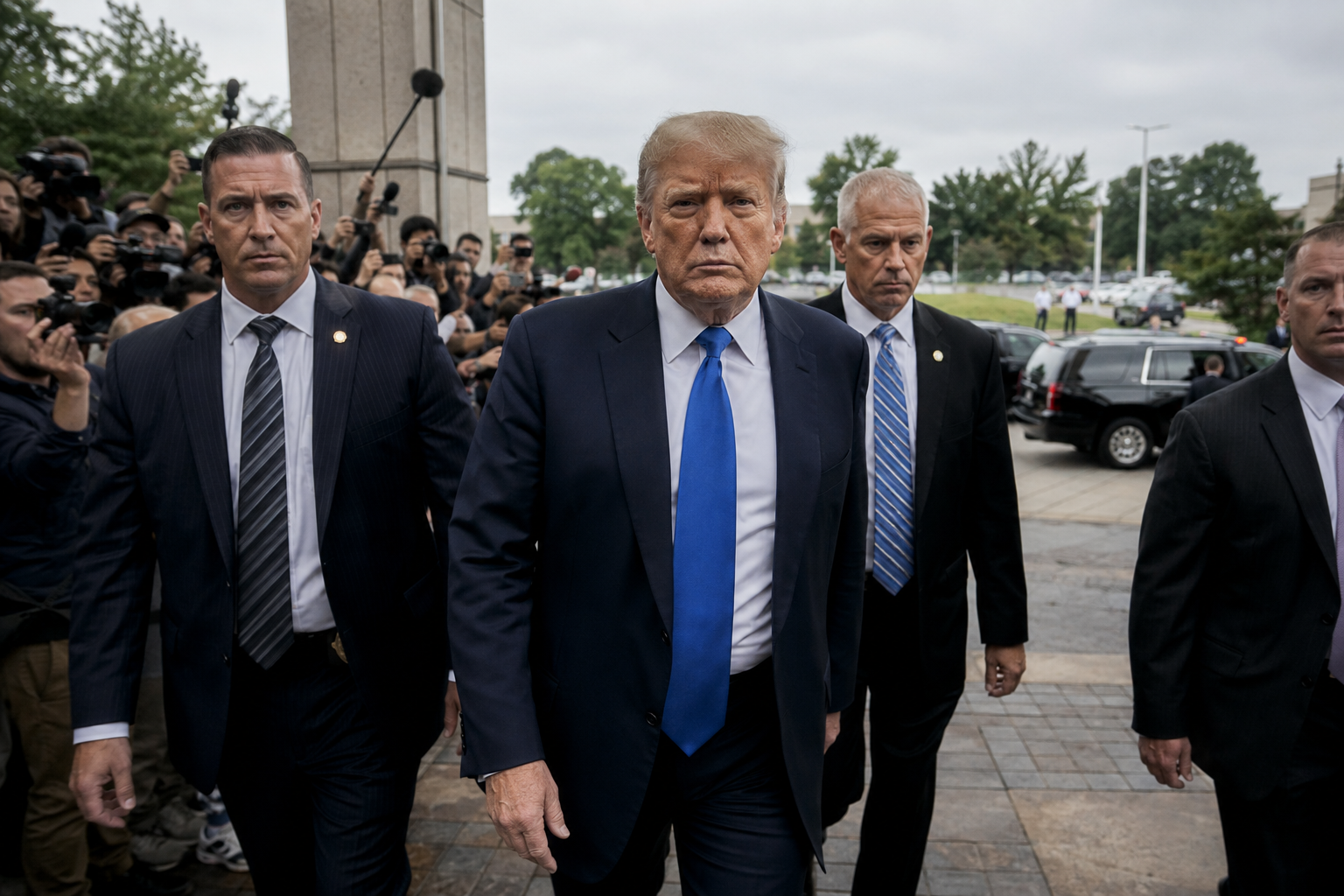
President Trump is heading to Walter Reed National Military Medical Center on Tuesday for a medical checkup — his third visit in just 13 months. The unusual frequency has drawn renewed scrutiny from independent physicians who say the White House has consistently failed to provide the level of health transparency Americans deserve from a 79-year-old commander-in-chief.
Three Visits in 13 Months: Not Normal
Presidents typically make one annual visit to Walter Reed for a routine physical. Anything beyond that is a signal that either something unexpected has come up, or the medical team needs more regular monitoring than a once-a-year exam provides. Trump’s third visit in 13 months — during a period the White House is calling routine — is statistically unusual, and it has prompted independent physicians to ask questions the administration hasn’t publicly answered.
The White House announced the visit as a “routine annual physical,” but Trump’s last visit to Walter Reed was just seven months ago. An annual physical conducted seven months after the last one is, by definition, not an annual physical. The administration’s framing has itself become a point of contention among medical observers.
The Specific Questions Doctors Want Answered
Independent physicians have raised several specific concerns they say the White House hasn’t addressed with the transparency the public deserves. First, Trump’s regular aspirin use: aspirin is not routinely recommended for cardiovascular prevention unless a patient has demonstrable risk factors for stroke or heart disease. Its documented use raises questions about what underlying conditions the president’s medical team is managing.
Second, visible swelling in Trump’s legs — which the White House has attributed to chronic venous insufficiency — is a circulatory condition that physicians say warrants monitoring for deeper cardiovascular implications. Chronic venous insufficiency can be benign, but at 79, in a high-stress environment, it’s a flag worth watching. Footage from presidential events has also shown what appears to be bruising on Trump’s hands, and medical observers have noted episodes of apparent lethargy at public appearances. The White House has dismissed all of it, citing excellent health.
What the Public Actually Thinks
The polling numbers on Trump’s health are striking. A Washington Post-ABC News-Ipsos survey from early May found that 59% of Americans do not believe Trump has the mental sharpness to lead the country effectively, and 55% say he is not in good enough physical health to serve as president. Those are significant majorities expressing doubt about a sitting commander-in-chief’s fitness for office.
The White House has pushed back on those poll numbers, but they represent a sustained pattern of public concern that three check-up visits in just over a year has done little to resolve. If anything, the frequency of visits — combined with the administration’s defensive posture on health questions — has fed rather than quieted the speculation.
What This Means for Americans
The health of a sitting president is not a private matter. It is a direct question of national security and continuity of governance. Americans have the right to know whether their commander-in-chief is capable of making clear-headed decisions in a crisis — especially at a time when the country is managing an ongoing overseas conflict and a deeply divided political environment. Whether today’s readout delivers the transparency independent physicians are asking for, or retreats behind the same carefully worded talking points, will tell its own story about what the White House is actually willing to disclose.
Stay informed on the stories that matter most. Follow Your Daily Updates on Facebook and bookmark yourdailyupdates.news for breaking news and analysis.