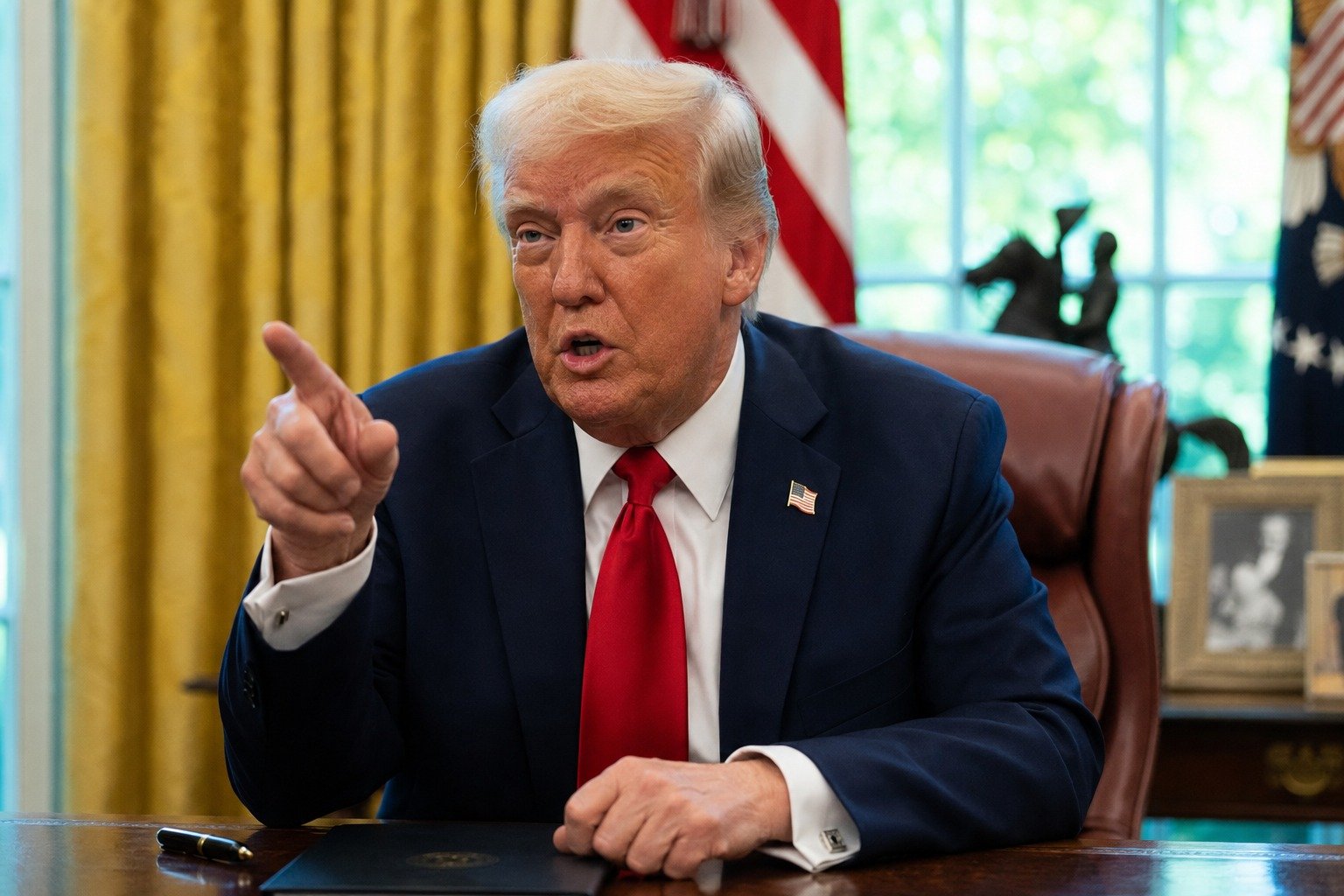
President Donald Trump used an Oval Office appearance on Monday to publicly scold two of the largest oil companies in the country, saying they had made “too much money” while ordinary Americans keep paying high prices at the gas pump. The remarks came during an executive-order signing, where the president singled out ExxonMobil and Chevron by name and pressed them to lower what drivers pay.
“But they made too much money, too much money. Chevron, too much money. Exxon Mobil, too much. Too much money,” Trump said, according to CBS News. He added, “I’m not happy about it,” claimed that one company had made twelve times what it earned the year before, and said it should “cut the retail price.”
It was a striking bit of populist theater from a president who rarely frames big corporations as the villain. But the most important thing to understand about the moment is what it was not: it was talk, not action. A president can shame a company from behind the Resolute Desk, but he cannot sign anything that forces a private business to lower its prices.
A president can pressure, but not command
Retail gasoline prices are not set by the White House. They move with global crude oil markets, refining capacity, seasonal demand, taxes, and the day-to-day decisions of companies answering to shareholders. There is no lever in the Oval Office that makes Exxon or Chevron drop the price of a gallon on command. That is why Monday’s comments land as public pressure and messaging rather than policy.
This is a distinction worth holding onto, because the framing of the remarks can make it sound like something changed. Nothing did. No order was signed compelling a price cut, and no such order would be enforceable if it were. The president expressed frustration and made a demand. Whether the companies respond is entirely up to them.
The rhetoric collides with the record
The scolding also sits awkwardly against the administration’s own posture toward the oil industry. For months the White House has championed more drilling and lighter regulation, casting fossil fuel producers as partners in an “energy dominance” agenda. Turning around to accuse those same companies of pocketing “too much money” is a sharp tonal shift, and it raises an obvious question: if the profits are the problem, what is the plan to actually address them?
The underlying complaint is real enough. Oil majors have posted enormous profits in recent years, rewarding investors with dividends and buybacks, even as the price drivers pay at the pump has stayed stubbornly high. The gap between record corporate earnings and household costs is exactly the kind of thing that fuels public anger. But naming it in a press event is not the same as doing something about it.
Populist message, limited leverage
There are tools a government can use to influence energy costs over time — releasing oil from the Strategic Petroleum Reserve, adjusting tax policy, changing how mergers and market concentration are reviewed, or pursuing antitrust scrutiny of the industry. None of those were announced on Monday. What was offered instead was a demand aimed at two companies, delivered in the language of grievance.
For a lot of Americans squeezed by high costs, hearing a president call out Big Oil for excessive profits may feel satisfying. The frustration behind it is widely shared. The catch is that pressure without policy tends to fade, and oil companies have weathered angry words from Washington many times before without changing course.
So the real question is whether this amounts to anything. Does public pressure from the president actually move ExxonMobil or Chevron to lower prices — or is this a headline today and business as usual tomorrow? Until there is a concrete tool behind the words, the safe bet is the one the industry has always made: keep the money, and wait for the news cycle to move on.