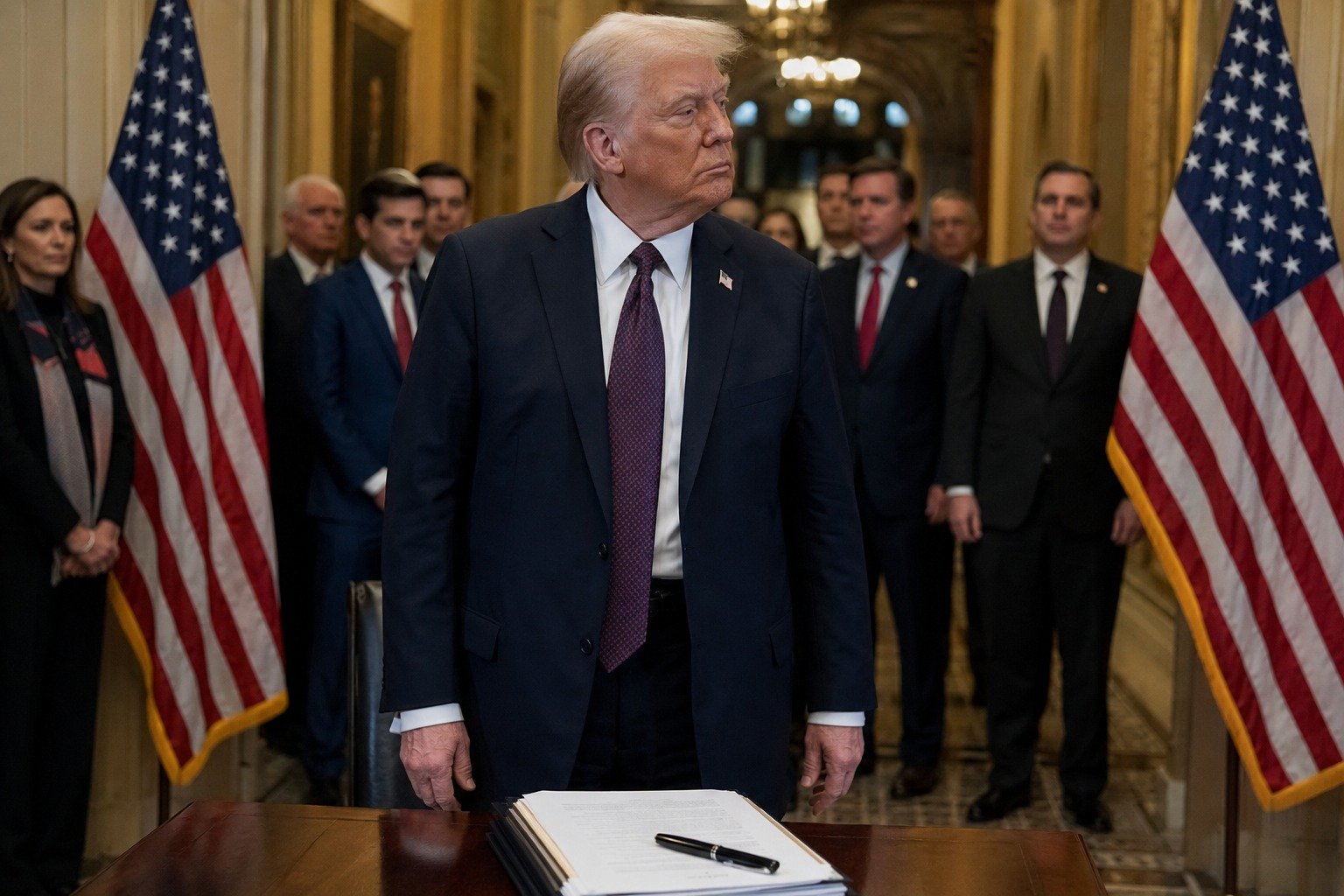
Donald Trump abruptly canceled the noon signing of the bipartisan 21st Century Road to Housing Act on Capitol Hill, declaring he will not put his name to the housing relief measure until Congress first passes his SAVE America Act, a separate election and voting overhaul. The reversal came just hours before the scheduled ceremony, blindsiding lawmakers from both parties who had voted overwhelmingly to send the bill to his desk.
A Bill With Rare Bipartisan Support
The 21st Century Road to Housing Act is not a partisan wish-list item. It cleared the House by a 358-32 vote and passed the Senate with the same kind of lopsided, veto-proof support. In an era of bitter division, that level of agreement is almost unheard of, and it reflects how deeply housing affordability has hit households across the political spectrum.
The legislation is designed to expand the supply of homes and bring down costs. One of its most talked-about provisions bans giant institutional investors from buying up single-family houses, a practice that has squeezed ordinary buyers out of the market in many communities by turning starter homes into corporate rental inventory. For first-time buyers and working families, the bill was meant to tilt the playing field back toward them.
The Last-Minute Reversal
Trump was slated to sign the bill at noon. Instead, he scrapped the event and announced an ultimatum: no housing relief until lawmakers pass the SAVE America Act, which he has framed as a national priority. The SAVE Act would impose new election and voting requirements, including demanding proof of citizenship before a person could register to vote.
The problem is that the two measures have nothing to do with each other. One is about housing supply and costs; the other is about who can register to vote. By tying them together, Trump is effectively using a popular, broadly supported bill as leverage to force through a voting law that has struggled to find majority support on its own. Democrats have already rejected the SAVE Act, and it does not have the votes to clear the Senate.
Why the Housing Bill Is Not Dead
Here is the crucial detail that the standoff cannot erase: because the housing bill passed with veto-proof majorities, it is stalled, not buried. Under the Constitution, a bill that reaches the president’s desk becomes law roughly ten days later even without his signature, as long as he does not pocket-veto it. That means the relief families were counting on could still take effect despite the canceled ceremony.
The veto-proof margins also mean that even an outright veto could be overridden. In practical terms, the refusal to sign is more a political statement than a fatal blow to the legislation. It delays and politicizes a measure that the overwhelming majority of Congress already agreed on.
Reaction and the Road Ahead
The move set off immediate backlash, with Democratic senators openly criticizing the decision to hold housing relief hostage to an unrelated voting fight. Members of both parties who backed the bill now face a tense standoff with the White House over a measure they thought was finished. The coming days will test whether the administration digs in or lets the bill become law on its own.
What This Means for Americans
For renters priced out of ownership and buyers competing against deep-pocketed investment firms, this bill was a rare piece of good news. Linking its fate to a contentious voting law injects uncertainty into relief that nearly every member of Congress supported. The question now is whether housing help that earned overwhelming bipartisan approval should be delayed to advance a voting measure most lawmakers never signed up for.
Stay informed on the stories that matter most. Follow Your Daily Updates on Facebook and bookmark yourdailyupdates.news for breaking news and analysis.