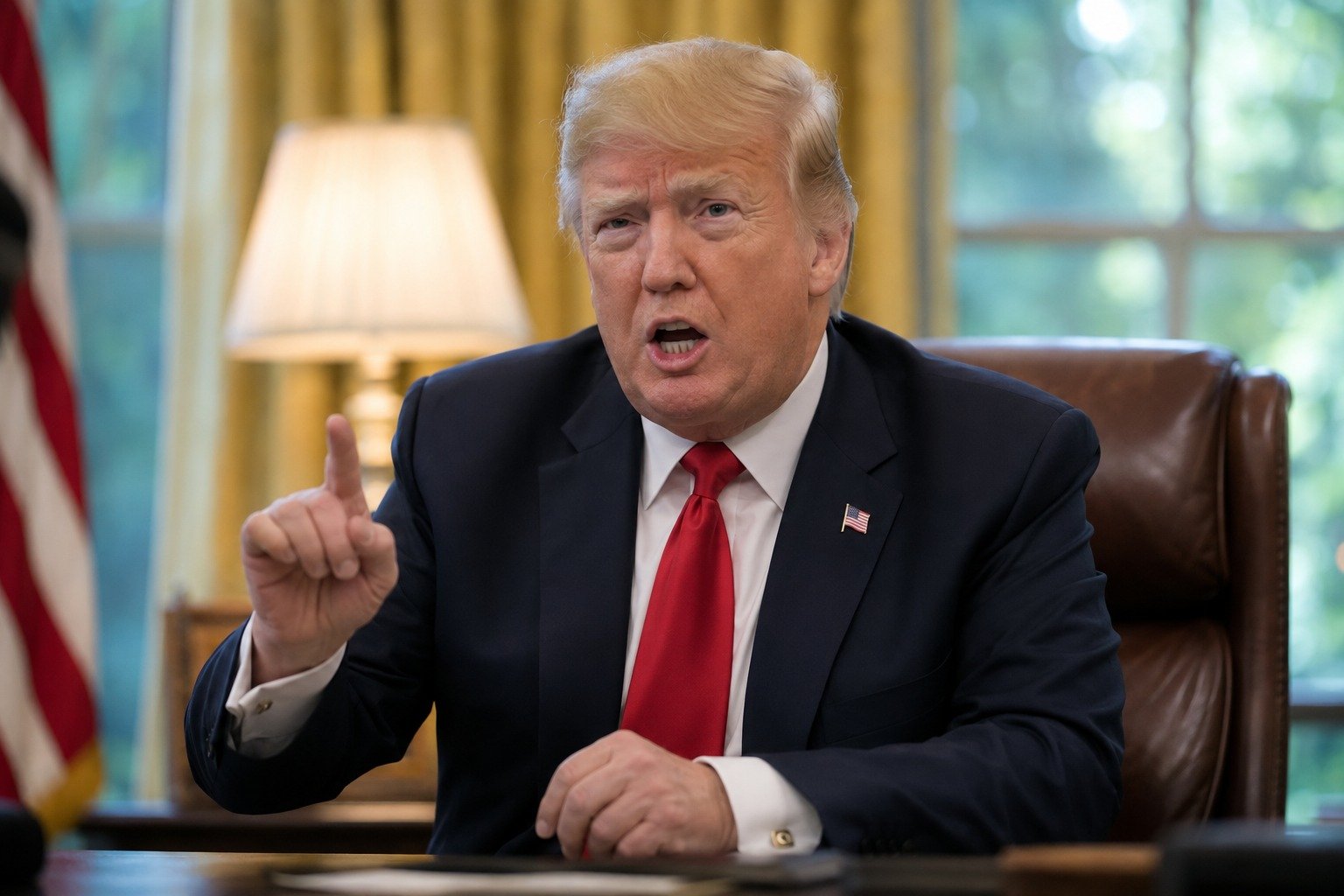
Less than 24 hours before U.S. and South Korean forces were set to begin their major annual military exercise, President Donald Trump posted on Truth Social ordering Defense Secretary Pete Hegseth to “substantially reduce” American participation in joint drills with Seoul. In the same post, he acknowledged it was “too late to cancel” this year’s exercise. Ulchi Freedom Shield 2026 began on schedule Monday morning.
What Trump Actually Ordered
The instruction was to reduce, not to cancel. Trump wrote that it was too late to call off the 2026 exercise, and the drills went ahead as scheduled on Aug. 17. Ulchi Freedom Shield runs through Aug. 27, an 11-day exercise involving roughly 18,000 South Korean military personnel. South Korea’s defense ministry confirmed Monday that the drills were “proceeding as planned.”
What has not been established is what “substantially reduce” will mean in practice. The Pentagon has released no detail on which American units, which components of the exercise, or which future drills would be scaled back. Nothing announced touches U.S. troop levels on the Korean Peninsula. For now, the order exists as a directive on a social media feed and nothing more concrete than that.
The Two Reasons He Gave
Trump offered two justifications. The first was cost and signaling. He called the exercises “costly” and said they send a signal that is “totally inappropriate and hostile” to North Korea — a country he described as having been “unthreatening and respectful” while he has been in office. He pointed to what he called his “very good relationship with Kim Jong Un.”
The second reason had nothing to do with the Korean Peninsula at all. Trump said he had asked South Korean President Lee Jae Myung to join the United States in the “denuclearization” of Iran, and that Seoul answered, “No thanks!” South Korea declined to assist in the U.S.-Israel campaign against Iran launched in late February 2026. That link is Trump’s own stated rationale, not an independently established cause.
A Separate Schedule Change, Not Connected to the Order
Some of this year’s exercise had already been rearranged before Trump posted anything. The allies had moved 20 of 40 field training events to September, citing extreme heat and a desire to balance defense posture across the full year. That was a prior allied decision made on its own terms, and it was not the result of Trump’s order. The overall exercise was still billed as similar in scale to 2024.
Why It Landed the Way It Did
Ulchi Freedom Shield is not a symbolic parade. It is the mechanism by which two allied militaries rehearse how they would actually operate together under pressure — command decisions, coordination, and the unglamorous work that determines whether an alliance functions when it is tested. Joint exercises have been a fixture of the U.S.-South Korea relationship, which has been anchored by a mutual defense treaty for more than seven decades.
That is what makes the delivery notable. A defense commitment to a treaty ally was publicly scaled back by social media post on the eve of the exercise, with the president tying it in part to that ally declining to sign on to a separate military campaign. Allied obligations were framed less as strategic commitments than as entries in a ledger of personal favors — something owed, and adjusted when not repaid.
What This Means for Americans
Alliances are not abstractions. They determine where American service members are stationed, what they train for, and how quickly help arrives if a conflict starts. When the stated reasons for narrowing a defense commitment are cost, a personal rapport with the leader of North Korea, and an ally’s refusal to join an unrelated campaign, the decision is not being driven by a threat assessment. Americans, and the troops who would carry out whatever comes next, are entitled to hear which specific capabilities are being cut and on what security grounds — and so far, no one has said.
Stay informed on the stories that matter most. Follow Your Daily Updates on Facebook and bookmark yourdailyupdates.news for breaking news and analysis.