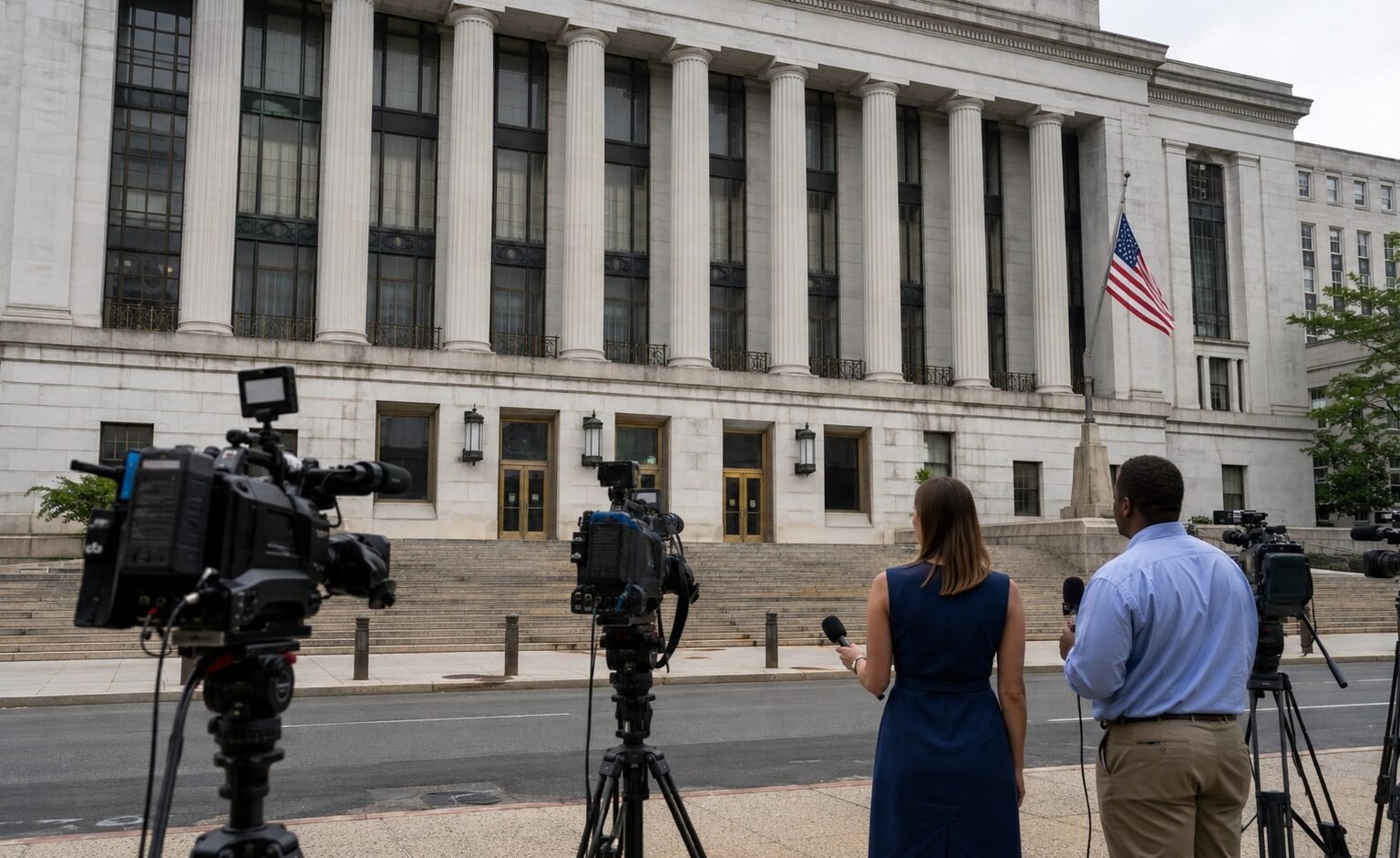
On July 10, 2026, a federal judge in Washington signed an order that erased the January 6 convictions of four members of the Proud Boys. He did not do it because he believed they were innocent. He did it because Donald Trump’s own Justice Department asked him to, and because he concluded he had no constitutional power to say no.
U.S. District Judge Timothy J. Kelly — appointed to the bench by Trump in 2017 — granted the government’s motion to dismiss the remaining January 6 case against Ethan Nordean, Joseph Biggs, Zachary Rehl and Dominic Pezzola. The dismissal was entered with prejudice, meaning the case cannot be brought again. The practical effect is that the convictions a jury returned in 2023 no longer stand.
What the jury actually found
The 2023 trial was one of the most significant prosecutions to come out of the attack on the Capitol. Nordean, Biggs and Rehl were convicted of seditious conspiracy — the most serious charge the government brought against anyone in connection with January 6, and a charge federal prosecutors rarely win. Pezzola was acquitted of the seditious conspiracy count but was convicted on other felony counts arising from the same events.
Their former chairman, Enrique Tarrio, was convicted at the same trial. He is not part of this order because his situation was already resolved separately: Trump gave him a full pardon.
This did not free anyone — they were already out
It is important to be precise about what changed and what did not. None of these four men were sitting in a prison cell when Kelly signed the order. Trump had already commuted their sentences as part of his January 6 clemency actions. Unlike the mass pardons that swept up hundreds of other January 6 defendants, these four received commutations, which cut their sentences short but left the underlying convictions intact.
That distinction is exactly what this ruling targeted. A commutation ends the punishment. It does not touch the verdict. The Justice Department’s motion went after the verdict itself — the official record that a jury of American citizens heard the evidence and found that these men conspired against the government of the United States. With the case dismissed with prejudice, that record is gone.
The judge said, in writing, that he disagreed
Kelly did not pretend this was a decision he welcomed. In a seven-page memorandum opinion, he wrote that he “lacks the authority to compel the Executive to pursue a prosecution, full stop.”
He went further, adding a line that reads less like routine docket management and more like a judge putting a marker down for history: “no one should mistake the Court’s granting of the Government’s motion for its agreement with those decisions.”
That is a Trump appointee, on the record, saying he does not agree with what the executive branch just did and that the Constitution gives him no mechanism to refuse it. Under long-settled law, the decision to prosecute — and the decision to stop prosecuting — belongs to the executive branch, not the courts. Once the Justice Department moved to drop the case, the judge’s options narrowed to almost nothing.
Why this matters beyond four names
Strip away the procedure and the shape of it is simple. A jury convicted men of conspiring to use force against the government. The person those convictions were most directly tied to won the presidency. His Justice Department then asked a court to wipe the convictions off the books. And the court, staffed by a judge he himself appointed, said it had no power to stop him.
There is no allegation here of new evidence, of prosecutorial misconduct, or of a jury that got it wrong. No appellate court found error. The convictions were not overturned on the merits. They were withdrawn by the same branch of government that obtained them, after control of that branch changed hands.
The accountability question this raises is not really about the four men. It is about whether a criminal conviction means anything when the defendant’s political ally controls the prosecutor’s office. Kelly’s opinion suggests the courts, as currently constrained, cannot answer that. That leaves Congress and voters.