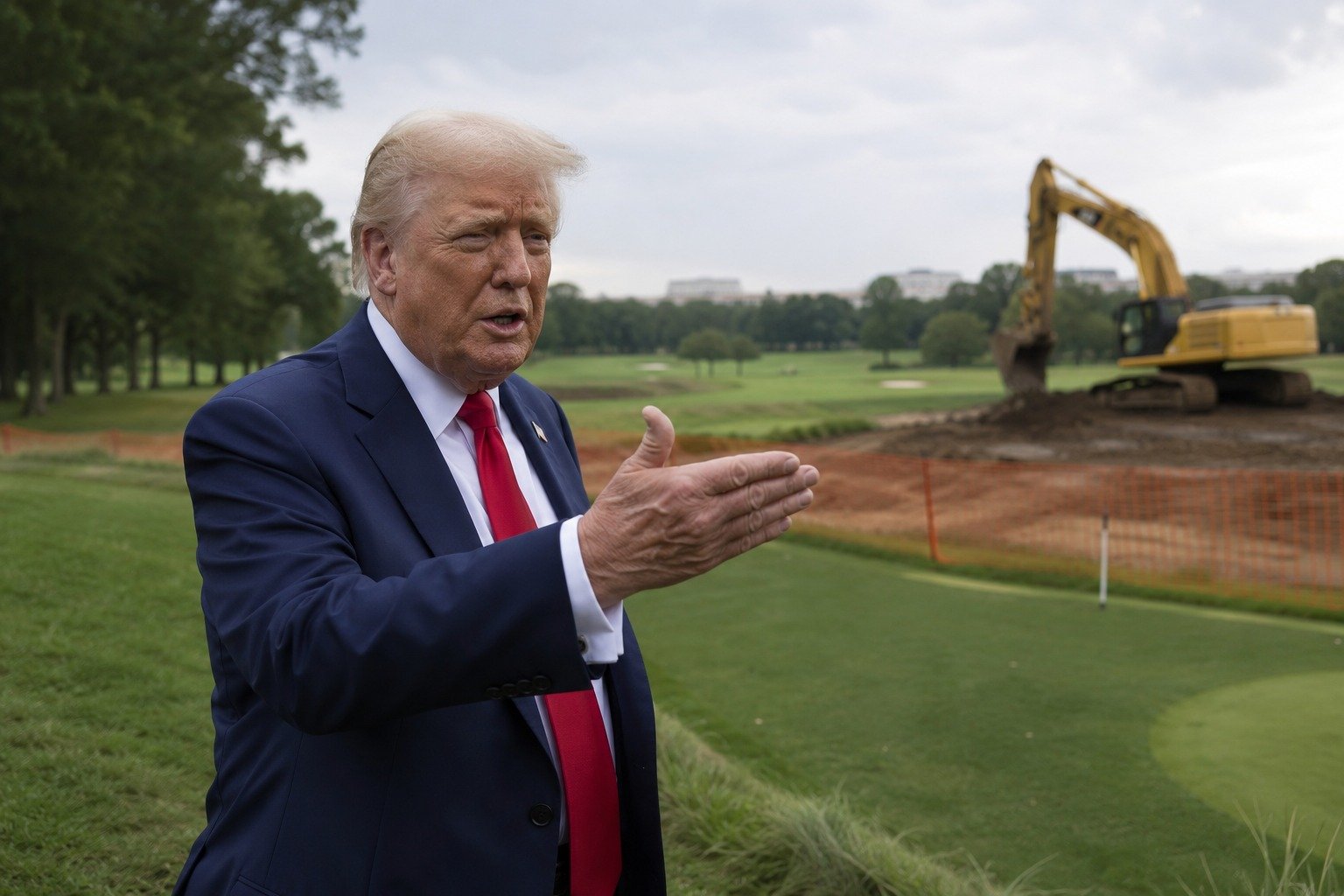
President Donald Trump says construction on the East Potomac golf course in Washington, D.C., will begin on September 1, 2026 – even after a federal judge warned that pushing the project forward while a lawsuit is still pending could carry “serious consequences.”
The announcement sets up a direct confrontation between a sitting president and a federal court, turning what might otherwise be a routine renovation timeline into a test of whether a judge’s caution carries weight when it stands in the way of a presidential deadline.
What the Judge Said
U.S. District Judge Ana Reyes warned that there could be “serious consequences” if work on the East Potomac project moves forward while the litigation surrounding it remains unresolved. That kind of language from the bench is not casual. When a judge flags “serious consequences,” it is meant to signal that proceeding could expose a party to penalties, contempt findings, or an unfavorable posture once the court rules.
The lawsuit over the renovation has not been resolved. The court has not cleared the project to begin. In that context, a public commitment to break ground on a fixed date reads less like a scheduling update and more like a decision to move ahead despite the warning.
The Details
The East Potomac golf course sits on federal parkland in the nation’s capital, making it a property where questions of public land, oversight, and process carry extra weight. Renovation plans for the site have become the subject of active litigation, and that case is what Judge Reyes referenced when she cautioned against moving forward.
Despite the open case, Trump announced that work will begin September 1, 2026. The date is now the central fact of the story. It transforms an abstract legal dispute into a concrete countdown – one the public can watch unfold against the backdrop of a judge who has already said there could be consequences for proceeding.
Setting a start date while a court warning hangs over the project is the kind of move that courts tend to remember. If a judge has cautioned a party against acting and that party acts anyway, the decision can shape how the court views the dispute going forward – and what remedies it may be willing to impose.
Reactions and Implications
Supporters of the president are likely to frame this as a straightforward matter: it is a golf course renovation, and the administration is entitled to keep its own projects on schedule. From that view, the September 1 date is simply a contractor’s calendar, not a constitutional standoff.
Critics see something larger at stake. To them, the willingness to set a firm start date in the face of an explicit judicial warning raises a question that reaches well beyond fairways and sand traps: what happens to the rule of law when a court’s caution is treated as optional? The concern is not the golf course itself, but the precedent of proceeding over a judge’s objection while the legal questions are still unsettled.
What This Means for Americans
For ordinary Americans, the dispute is a window into a much bigger principle. Federal courts exist to check power – including the power of the president. When a judge warns against an action and that action goes ahead anyway, it tests whether those checks still function as intended. The outcome of this standoff could signal how much deference the courts can expect when their warnings collide with a presidential decision, and that is a question that matters far beyond one piece of parkland in Washington.
September 1 is the line in the sand. The lawsuit is still live. And the country will get to see what happens when a federal judge’s warning meets a presidential deadline.
Stay informed on the stories that matter most. Follow Your Daily Updates on Facebook and bookmark yourdailyupdates.news for breaking news and analysis.