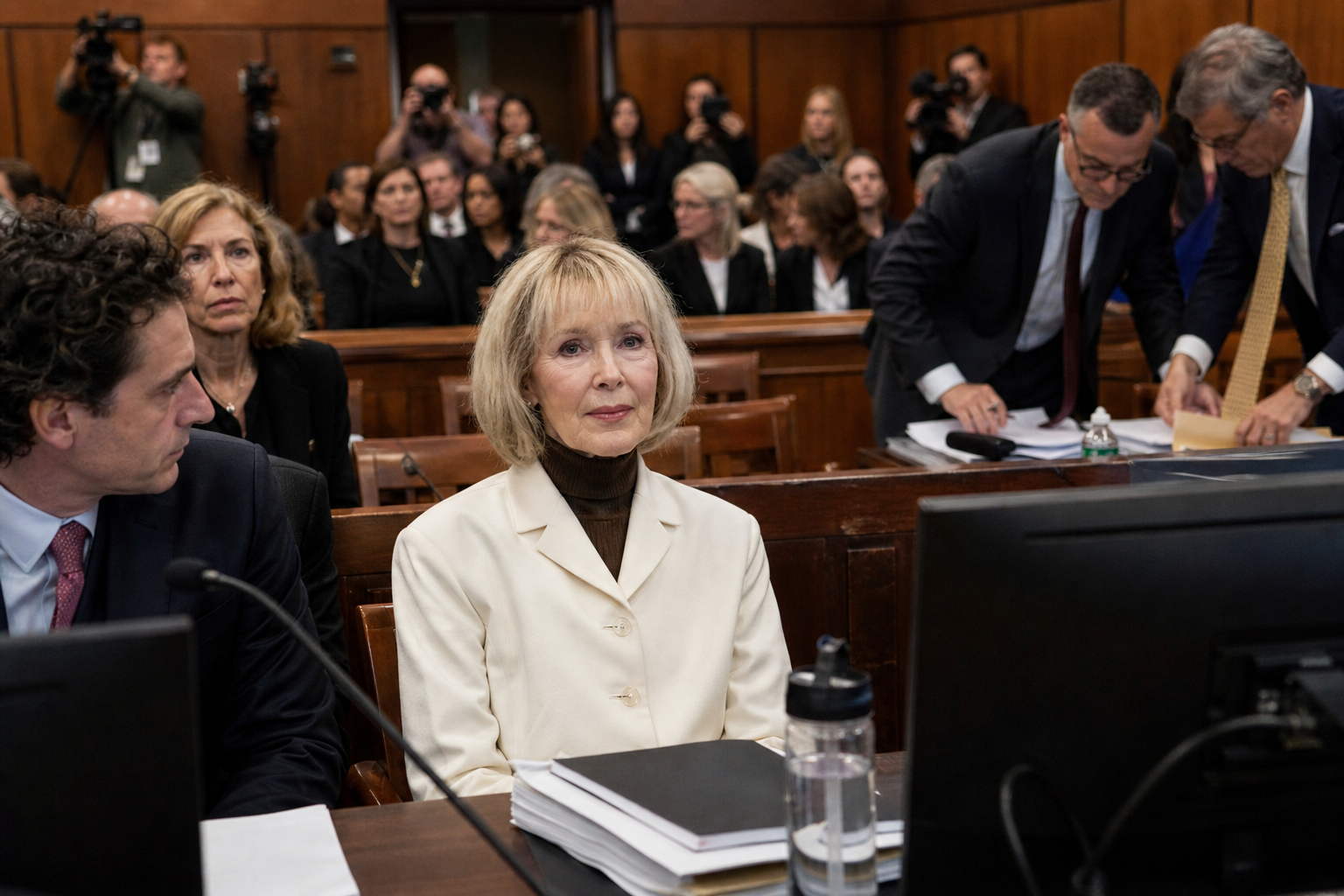
Donald Trump holds a distinction that no other U.S. president — past or present — has ever shared. A jury found him civilly liable for sexually abusing a woman. And on April 29, 2026, a federal appeals court declined to erase that finding or the $83 million defamation verdict that followed, rejecting his latest appeal by a vote of 5 to 3.
How This Case Got Here
The legal saga dates back to 2019, when writer E. Jean Carroll publicly accused Trump of sexually assaulting her in a Bergdorf Goodman dressing room in New York City in 1996. Carroll said Trump guided her into the dressing room under the pretense of helping her pick out lingerie as a gift, then assaulted her. Trump denied it immediately and forcefully — calling her a liar, saying she “wasn’t his type,” and accusing her of fabricating the story to sell a book.
Those public denials, made partly while Trump was serving as president, triggered a second lawsuit. Carroll sued for defamation, arguing that Trump’s repeated attacks on her credibility — many delivered from the bully pulpit of the White House — caused her further harm and warranted additional damages.
Two Juries. Two Verdicts. Both Still Standing.
In May 2023, a Manhattan federal jury found Trump civilly liable for sexually abusing Carroll and defaming her, awarding $5 million in damages. The jury specifically declined to find rape under the legal definition used in that case — but found that Trump had sexually abused her and then lied about it publicly. It was the first time a jury had ever held a U.S. president, current or former, civilly liable for sexual abuse.
In January 2024, a second jury returned an $83 million defamation verdict — this one focused on statements Trump made about Carroll during his first term in office. Together, the two verdicts total more than $88 million. Trump has appealed both.
His legal team’s strategy in the 2nd Circuit was twofold. First, they argued that because the defamatory statements were made while Trump held office, the federal government should be substituted as the defendant under the Westfall Act — a maneuver that would have ended Carroll’s case entirely. Second, they pressed a presidential immunity claim, arguing that official statements made during a presidency carry legal protection. The 2nd Circuit’s majority shot both arguments down — not on the merits, but because Trump’s lawyers raised them too late in the proceedings.
The Dissent Keeps the Fight Alive
Three judges dissented, and their names matter. Chief Judge Debra Ann Livingston wrote that the case raises genuine, unresolved constitutional questions about the scope of presidential immunity — questions she argued the full court should have taken up. A dissent from the chief judge of the 2nd Circuit is not a throwaway. It gives Trump’s attorneys a credible foundation for a petition to the U.S. Supreme Court.
Trump can now ask SCOTUS to hear the $83 million case. The Supreme Court is already separately considering his appeal of the original $5 million verdict. The constitutional question — whether a sitting president’s personal statements made while in office are protected from civil defamation liability — has never been definitively settled. The Court’s recent expansion of presidential immunity in the criminal context has made this question harder to predict.
What This Means
At this moment, every verdict against Trump is intact. Carroll has won every round — two juries, two appeals courts. Not a single dollar has been reversed. Whether that changes depends entirely on whether the Supreme Court decides to intervene. If it does, the ruling could reshape how much legal exposure any future president faces for statements made while governing. If it doesn’t, Trump will owe Carroll more than $88 million — a number that grows with interest.
Stay informed on the stories that matter most. Follow Your Daily Updates on Facebook and bookmark yourdailyupdates.news for breaking news and analysis.