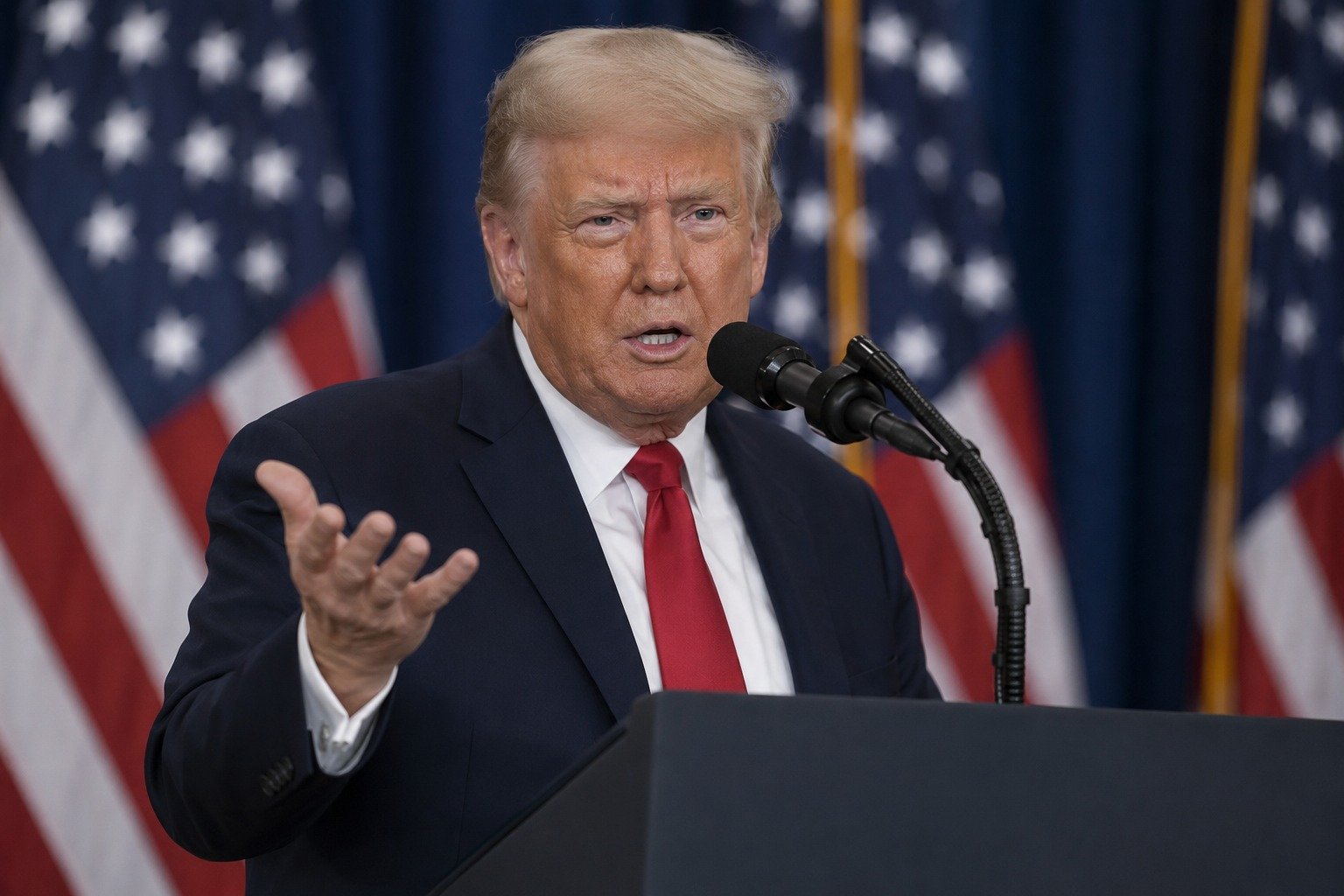
The Supreme Court has delivered a decisive answer on one of the most closely watched questions of President Donald Trump’s second term: birthright citizenship remains the law of the land. Now the president says he wants Congress to try to undo it anyway.
On June 30, 2026, the justices upheld birthright citizenship in a 6-3 decision, striking down the executive order Trump signed in January 2025 that sought to deny automatic citizenship to babies born on U.S. soil to parents who are in the country illegally or on temporary visas. Writing for the majority in Trump v. Barbara, Chief Justice John Roberts held that the order cannot be reconciled with the Fourteenth Amendment, which guarantees citizenship to virtually everyone “born or naturalized in the United States, and subject to the jurisdiction thereof.”
The lineup underscored just how firmly the Court closed the door. Justices Amy Coney Barrett and Brett Kavanaugh joined the three liberal justices in ruling against the administration, giving the majority a comfortable margin. Kavanaugh agreed that the order was invalid but wrote separately, reasoning that it violated a federal statute defining citizenship rather than the Constitution itself. Either way, the outcome was the same: the order could not stand.
Trump Turns to Congress
Rather than accept the ruling as final, Trump signaled he intends to keep fighting — this time through legislation. “The Supreme Court upheld Birthright Citizenship, which is too bad for our Country,” he wrote, adding that “we can easily make it up in Congress through Legislation” with his “complete and total support.”
It is important to be precise about what the president is and is not claiming. Trump is not asserting that he can reverse the decision on his own, and he is not announcing a second executive order to replace the one the Court just struck down. He is calling on lawmakers to pass a new federal statute that would limit automatic citizenship — a legislative path, not a unilateral one. Whether Congress would take up such a bill, let alone pass it, is far from certain given the current makeup of the House and Senate.
Why Legal Experts Are Skeptical
Even if Congress did act, constitutional scholars say the effort would likely collide with the very ruling Trump is trying to work around. The majority opinion framed birthright citizenship as a guarantee rooted in the Fourteenth Amendment, and a fact-check by FactCheck.org, along with numerous immigration-law experts, concluded that an ordinary statute cannot override a constitutional protection. To narrow or eliminate birthright citizenship, most legal analysts agree, would require amending the Constitution itself — a far higher bar that demands two-thirds support in both chambers of Congress and ratification by three-quarters of the states.
That distinction matters. The 14th Amendment was ratified in 1868, in the aftermath of the Civil War, specifically to guarantee citizenship to people the country had previously excluded. Its citizenship clause has been understood for more than 150 years to cover nearly all children born on American soil, a principle the Supreme Court reinforced as far back as the 1898 case United States v. Wong Kim Ark.
What Happens Now
For the moment, nothing changes for families. The guarantee of birthright citizenship stands exactly as it did before the executive order, and children born in the United States remain citizens regardless of their parents’ immigration status. The order that threatened that guarantee never took effect; federal judges had blocked it while the case moved through the courts, and the Supreme Court has now permanently invalidated it.
The larger question is political. The ruling represents a significant defeat for one of the administration’s signature immigration priorities, and Trump’s call for legislation ensures the debate will continue on Capitol Hill and on the campaign trail. But the constitutional reality is stark: a president who lost at the Supreme Court is now asking Congress to accomplish something that legal experts across the spectrum say a mere law cannot do. Barring a constitutional amendment, the right the Fourteenth Amendment has protected for over a century and a half appears secure.