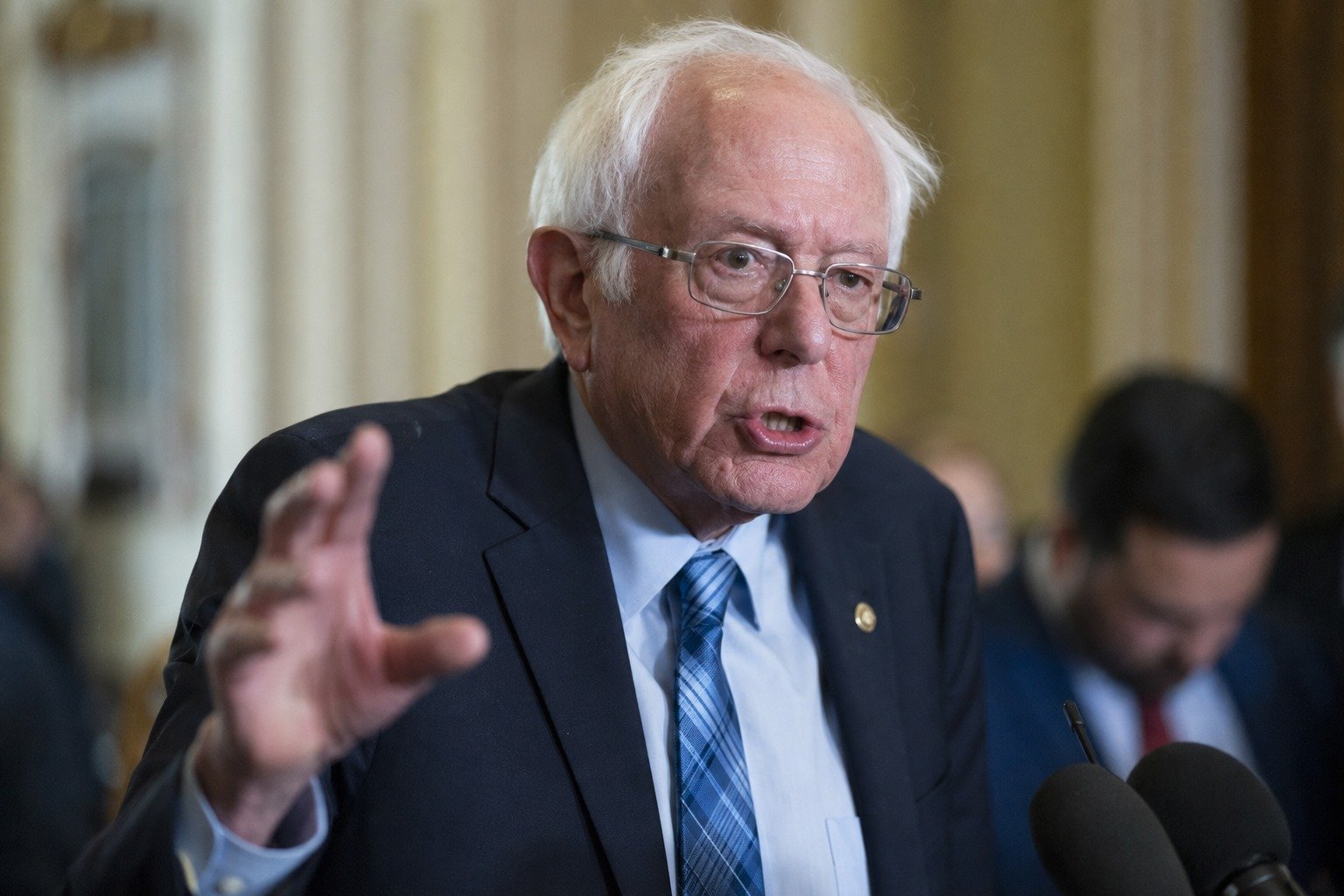
It is one of the most unlikely points of agreement in American politics. President Donald Trump and Senator Bernie Sanders — a self-described democratic socialist who has spent decades railing against the billionaire class — have separately arrived at the same instinct: as the artificial intelligence boom mints staggering fortunes, ordinary Americans should get a share of the windfall, not just the tech CEOs at the top.
To be clear from the outset: there is no joint bill, no deal, and no handshake between the two men. They disagree sharply on how to do it. What they share is a principle — that a technology built on everyone’s data and poised to reshape everyone’s jobs should not deliver its entire payday to a tiny club of investors. In a political moment defined by division, that overlap alone is enough to turn heads.
Sanders Goes First With Legislation
Sanders has put his version into writing. His American AI Sovereign Wealth Fund Act would impose a one-time 50% tax — paid not in cash but in company stock — on leading AI firms like OpenAI, Anthropic, and xAI. That equity would flow into a public fund collectively owned by the American people.
Under the Sanders plan, that fund would hand everyday Americans an ownership stake in the AI giants, along with voting rights and board representation. Over time, the senator envisions the fund generating returns that could be distributed to the public as direct payments — a check in the mail tied to the value these companies are building. It is, in essence, an attempt to convert the AI boom from a private jackpot into shared national wealth.
Trump’s Voluntary Version
Trump’s approach is looser and, crucially, voluntary. The president has floated the idea of the federal government taking equity stakes in leading AI companies — a continuation of a pattern in his second term, in which the government has acquired shares in chipmakers, miners, and other strategically important firms. Speaking to reporters, Trump said he wants Americans to be “partners” in the AI revolution rather than spectators watching a handful of executives run off with the winnings.
The difference between the two visions is fundamental. Sanders wants a mandatory, legislated stock-share written into law and applied across the industry. Trump favors optional, negotiated equity stakes struck deal-by-deal. One is a sweeping public ownership program; the other is a series of case-by-case arrangements. They land in the same neighborhood but take very different roads to get there.
Even Silicon Valley Is Floating the Idea
The notion is not confined to Washington. OpenAI CEO Sam Altman has himself floated the concept of a public wealth fund tied to AI growth that would give ordinary people an economic stake in the technology. When the politician who wants to tax these companies, the president who wants to partner with them, and the CEO running one of them all start talking about public ownership, it signals that the question of who profits from AI is moving from the fringes to the center of the debate.
What This Means for Americans
Here is why it matters to you. The AI boom is generating trillions of dollars in value, and that value is being concentrated in a small number of companies and the investors who own them. Both proposals — however different in method — are built on the same recognition: the workers whose jobs are being reshaped and whose data trained these systems currently have no stake in the upside. The fight underneath the agreement is not whether Americans deserve a cut, but whether anyone will actually deliver one.
That is the open question. Sanders’ bill faces a steep climb in Congress. Trump’s voluntary stakes depend on deals that may or may not materialize. The principle has rare bipartisan gravity behind it — but principle does not put money in anyone’s pocket. The real test is whether something concrete gets built before the window closes, or whether everyday Americans get talked about endlessly and paid nothing.
Stay informed on the stories that matter most. Follow Your Daily Updates on Facebook and bookmark yourdailyupdates.news for breaking news and analysis.