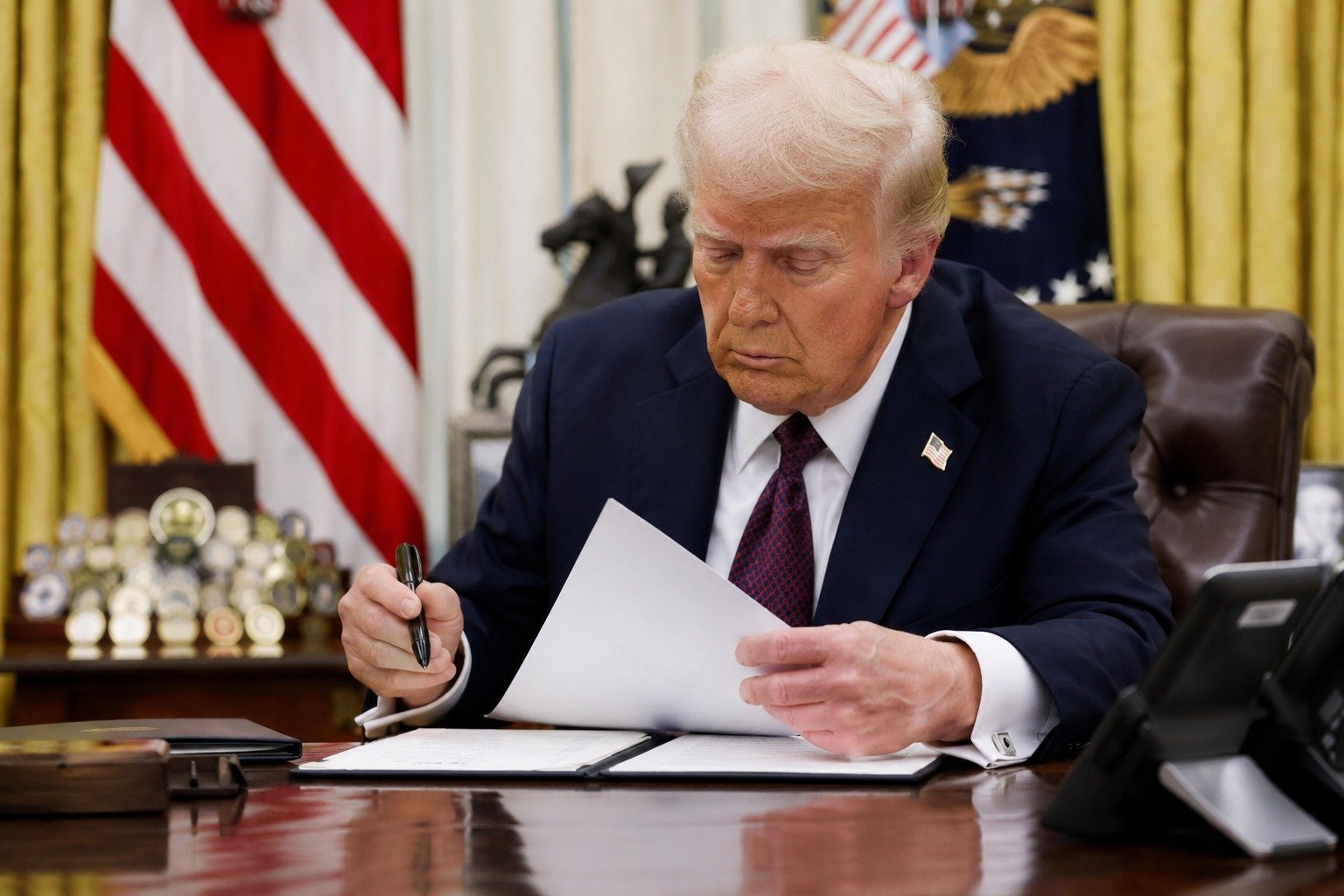
Acting Attorney General Todd Blanche — the same man who served as Donald Trump’s personal criminal defense attorney — has signed a legal settlement permanently blocking the Internal Revenue Service from ever investigating Trump’s past tax returns. The agreement explicitly declares the federal government “FOREVER BARRED AND PRECLUDED” from examining, pursuing, or reinstating any tax claims connected to Trump’s prior filings. It is one of the most sweeping legal shields ever extended to a sitting or former American president.
How the Deal Came Together
The settlement grew out of a $10 billion lawsuit Trump filed against the IRS, alleging that the agency had illegally leaked his confidential tax records to the public. Rather than fight the lawsuit in court, the Justice Department — now under Blanche’s leadership — chose to settle on terms that went dramatically further than a standard legal resolution. The DOJ dropped all pending tax claims against Trump, agreed to the permanent bar on future IRS examinations of prior returns, and established a $1.776 billion “anti-weaponization fund.”
That fund is designed to compensate individuals who claim previous administrations used federal agencies against them for political reasons. The figure — $1.776 billion — carries an obvious symbolic reference to the nation’s founding, a number that critics quickly noted appeared to be chosen for its political optics rather than any actuarial calculation.
The Scope of the Protection
The settlement’s reach is remarkable in its breadth. The protection does not apply solely to Trump as an individual — it extends to his family members, trusts, business entities, and all affiliated organizations. Every entity connected to Trump’s financial world that existed before the signing date is now shielded from IRS examination of prior-year returns. The only carve-out in the agreement: tax returns filed after the deal was signed remain subject to standard IRS review. Every prior year, however, is permanently off limits.
For context, the IRS has previously audited every president while in office, a practice that dates back decades and is designed to ensure that the nation’s most powerful official remains accountable to the same tax laws as every other American. This settlement effectively removes Trump from that system — permanently — for all years preceding the agreement.
The Conflict of Interest at the Center of the Story
The person who signed this deal on behalf of the United States government is the same person who spent years defending Trump in his most consequential criminal cases. Todd Blanche represented Trump throughout the New York hush-money trial that ended in a felony conviction, as well as in the federal documents case. He moved directly from Trump’s personal legal team to the role of acting Attorney General — and in that capacity, he signed an agreement that permanently shields his former client from IRS scrutiny.
Legal ethics experts have been blunt about the implications. The combination of prior personal representation and official governmental authority creates a conflict of interest that, in any other context, would disqualify an attorney from acting on the matter entirely. The American Bar Association’s Model Rules of Professional Conduct prohibit lawyers from acting in official capacities on matters in which they previously represented the opposing party. Whether federal conflict-of-interest laws apply here is now a central question for Congressional investigators.
The Reaction on Capitol Hill
Rep. Richard Neal of Massachusetts, the top Democrat on the House Ways and Means Committee — the committee with jurisdiction over IRS oversight — did not mince words. He called the arrangement straight-up “corruption” and said it set a precedent that must be challenged. Neal was joined by members on both sides of the aisle demanding that Blanche appear before Congress to testify about how the deal was constructed, who reviewed it for conflicts of interest, and whether any standard legal protocols were followed.
The bipartisan pushback reflects a broader concern that transcends party lines: if the Attorney General can use the power of the DOJ to permanently shield the president from tax scrutiny — particularly an AG who personally represented that president — the independence of federal law enforcement from executive control becomes a foundational question about the separation of powers.
What This Means for Americans
At its core, this story is about whether the same rules apply to everyone — including the most powerful person in the country. Every American who earns a paycheck, files taxes, or runs a small business is subject to IRS oversight. The settlement signed by Blanche carves out a permanent exception for Donald Trump and his entire financial network. Supporters argue it delivers long-overdue accountability for an agency that violated the president’s privacy rights. Critics argue it weaponizes the Justice Department as a personal legal shield — doing exactly what Trump claimed prior administrations did, but in reverse. The courts will likely have the final word.
Stay informed on the stories that matter most. Follow Your Daily Updates on Facebook and bookmark yourdailyupdates.news for breaking news and analysis.