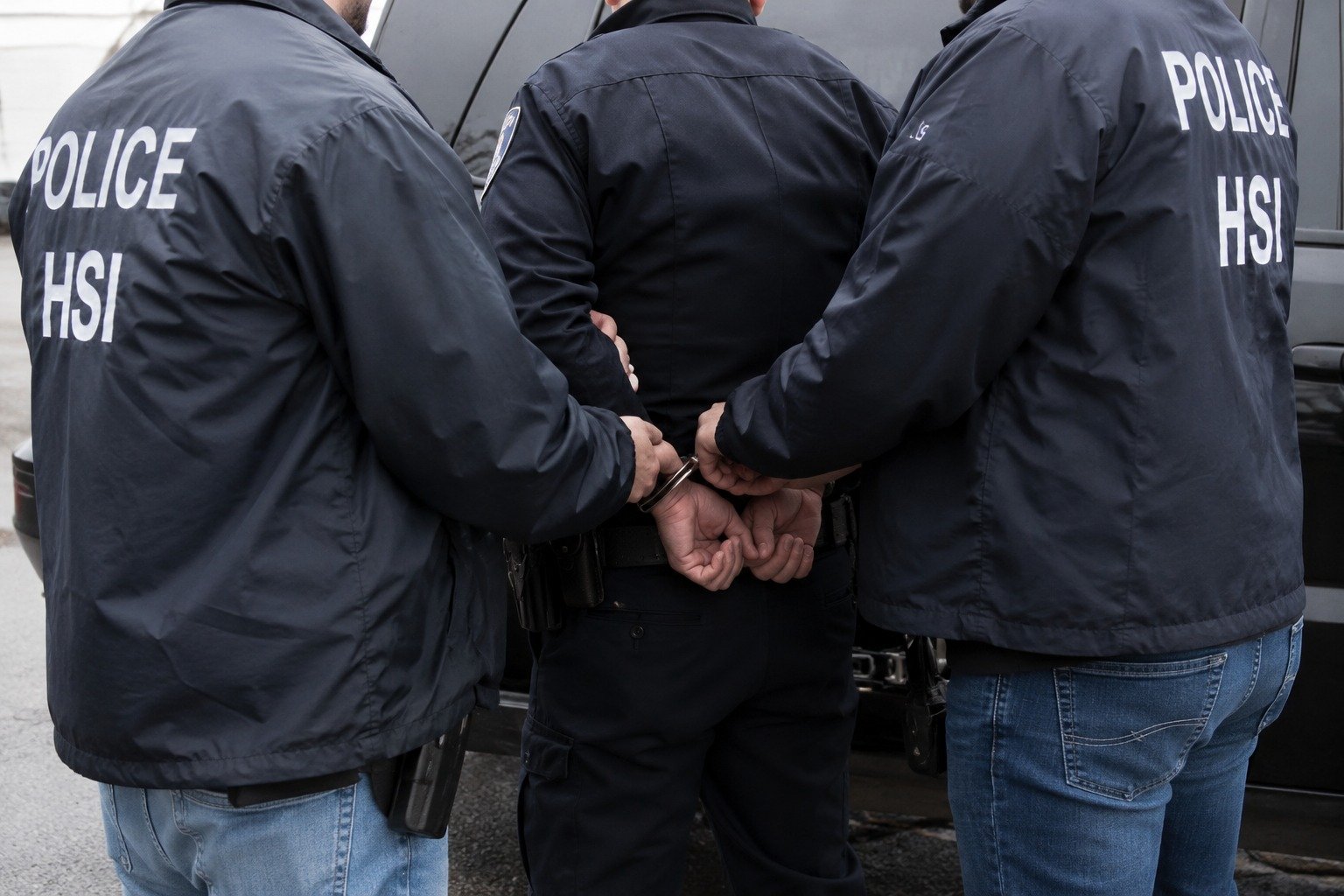
A federal immigration enforcement agent has reportedly been taken into custody by the Texas Rangers in connection with the death of an unarmed man, in what is being described as a rare case of a state law enforcement agency moving directly against a federal officer. The arrest, which is still being characterized as a developing legal matter, centers on allegations that the agent fired a fatal shot during an encounter and later submitted an inaccurate account of what occurred. None of these claims have been proven, and the agent has not been convicted of any crime.
What Is Being Alleged
According to accounts circulating about the case, investigators allege that the agent was involved in a confrontation that ended in the death of a man who was not armed. The allegations further claim that, in the aftermath, the agent filed a report that did not accurately reflect the sequence of events. State investigators are said to have treated those two issues — the shooting itself and the subsequent account of it — as separate components of the inquiry.
It is important to underscore that these remain allegations at this stage. An arrest is not a conviction, and the filing of charges reflects the position of investigators, not a finding of guilt. The agent is entitled to the presumption of innocence, and the facts may shift as the case proceeds and as official documentation becomes available.
Why a State Arrest of a Federal Officer Stands Out
The detail drawing the most attention is the jurisdictional one. When a state agency such as the Texas Rangers takes a federal officer into custody, it raises questions that do not come up in routine cases. Federal officers carry out their duties under federal authority, and disputes over who has the power to investigate, charge, and prosecute them can become legally complex.
State authorities generally retain the power to investigate crimes that occur within their borders, including those allegedly committed by federal employees. But such cases can become contested, with questions over jurisdiction, the handling of evidence, and whether a matter belongs in state or federal court. Observers on multiple sides of the debate tend to watch these situations closely because of the precedent they can set for how accountability is pursued when one branch of law enforcement investigates another.
The Questions Still Open
At this point, several key questions remain unresolved. The full details of the encounter have not been independently confirmed, and any official charging documents that would lay out the specific allegations have not been broadly verified. Until those records are public and examined, much of what is known rests on early accounts rather than established fact.
How the evidence is reviewed, which court ultimately hears the matter, and whether the case moves forward at all are all open. Cases involving allegations against law enforcement officers frequently involve internal reviews, independent oversight, and extended legal proceedings before any resolution is reached.
What This Means for Americans
For readers, the case touches a question that resonates well beyond any single incident: how the system handles allegations of misconduct by those entrusted with enforcing the law. The principle that no one is above the law and the principle that every accused person is presumed innocent until proven guilty are both central to how these matters are supposed to be resolved. A case like this puts both principles on display at the same time.
Whatever the outcome, the matter is likely to be followed closely as it moves through the legal process. Readers should expect the picture to become clearer, and possibly to change, as verified information emerges.
Stay informed on the stories that matter most. Follow Your Daily Updates on Facebook and bookmark yourdailyupdates.news for breaking news and analysis.