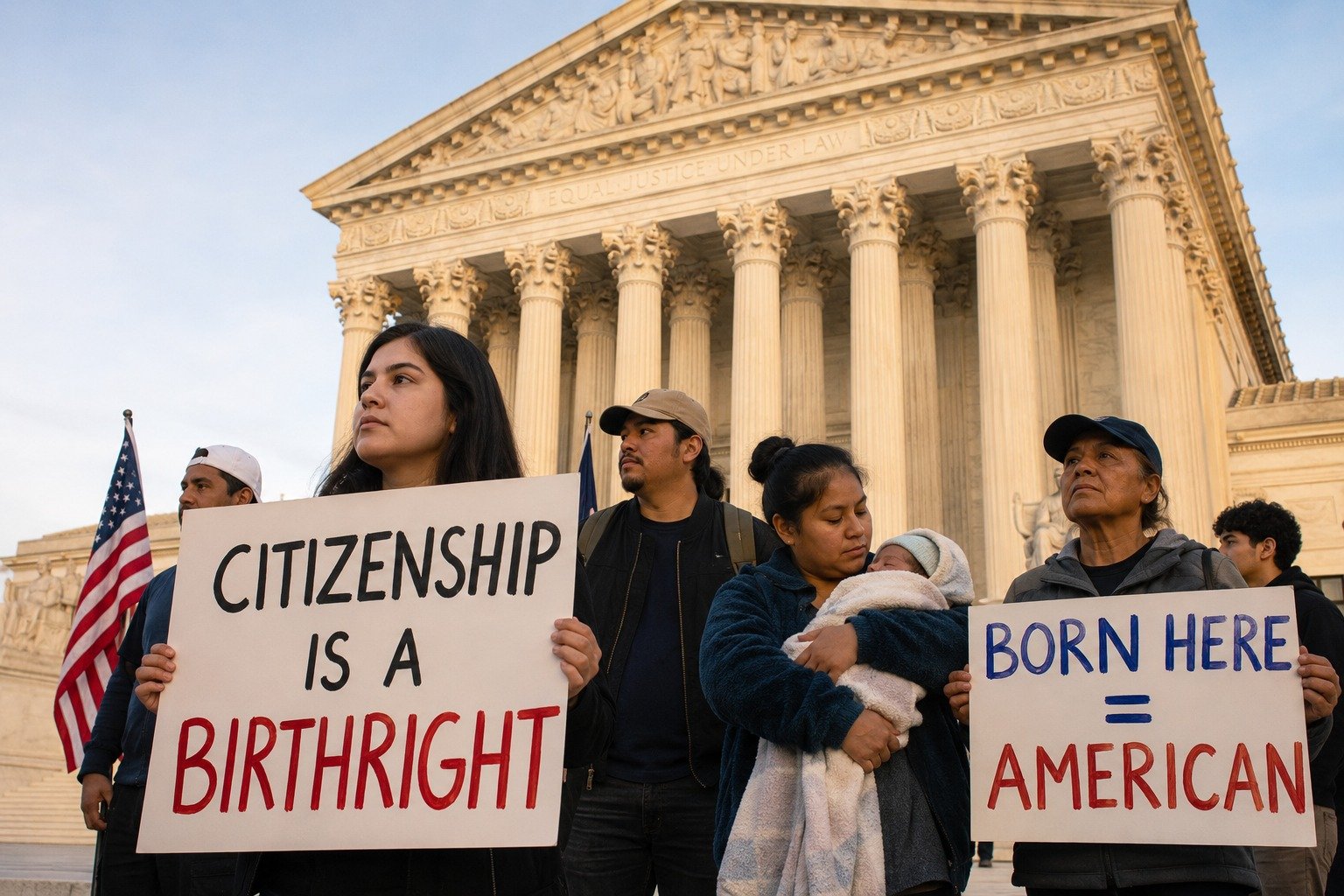
The Supreme Court has affirmed one of the most fundamental guarantees in American law: children born on United States soil are citizens. In a 6-3 decision handed down on June 30, 2026, the justices ruled that the 14th Amendment guarantees birthright citizenship to virtually every child born in the country, and struck down the executive order President Donald Trump signed on his first day back in office that sought to end it.
What the Court Decided
The case, Trump v. Barbara, centered on an executive order Trump signed on January 20, 2025. That order attempted to deny automatic citizenship to babies born in the United States to parents who were in the country illegally or who were present only on temporary visas. It marked one of the most aggressive attempts in modern history to reinterpret the Citizenship Clause of the 14th Amendment, which has guaranteed birthright citizenship since its ratification in 1868.
Chief Justice John Roberts wrote the majority opinion, grounding the decision squarely in the plain text of the Constitution. Children born in the United States and subject to its laws, the Court held, are citizens at birth. Roberts traced the guarantee back through American history, from the colonists’ demands for the rights of Englishmen to the abolitionists who described citizenship by birth as an ancient and universal rule. Five justices signed on to that constitutional reasoning.
Justice Brett Kavanaugh agreed with the outcome but on narrower ground. Rather than resting on the Constitution itself, Kavanaugh concluded that federal legislation enacted in the 1950s already grants automatic citizenship to children born on U.S. soil. His concurrence brought the total to 6-3, though it left the constitutional question resolved by the five-justice majority.
An Order That Never Took Effect
Crucially, the executive order never actually went into force. Every lower court that reviewed it blocked it from taking effect, finding it plainly at odds with more than 150 years of settled law. The Supreme Court’s ruling now closes the door permanently, ending the legal uncertainty that had hung over the policy since it was first announced.
For the roughly 150,000 children born each year to parents the order targeted, the decision removes a cloud that had loomed over their status since January 2025. Had the order survived, those children could have faced a lifetime of contested citizenship, unable to access the rights and protections that come automatically with being born American.
Reactions and Implications
Immigrant-rights advocates hailed the ruling as a decisive defense of the Constitution. Legal scholars had widely predicted the order would fail, given how clearly the 14th Amendment’s Citizenship Clause spells out the rule. The decision reaffirms that citizenship cannot be redefined by executive action, and that the boundaries of who belongs are set by the Constitution and Congress, not by presidential order.
The ruling also carries a broader message about the limits of executive power. By striking the order down 6-3, with a Roberts-led majority, the Court signaled that even sweeping first-day directives must yield to constitutional text. The question now is what the administration does next after being told, plainly, that it cannot rewrite citizenship on its own.
What This Means for Americans
For families across the country, the decision restores certainty to one of the most basic questions a nation can answer: who is a citizen. A baby born in a hospital in Texas, California, or anywhere else in the United States is an American, regardless of a parent’s immigration status. That guarantee, rooted in the aftermath of slavery and written into the Constitution to ensure it could never again be denied, remains intact.
Stay informed on the stories that matter most. Follow Your Daily Updates on Facebook and bookmark yourdailyupdates.news for breaking news and analysis.